

Kenya School Fire: Sixteen Girls Went To Sleep And Never Came Home
Sixteen girls went to sleep inside a school dormitory in Kenya. By morning, their families were preparing to bury them.
The fire broke out after midnight at Utumishi Girls Academy in Gilgil, Nakuru County. The girls inside were between 15 and 18 years old. When the flames spread through the dormitory, 16 schoolgirls were killed and 132 more were injured. Reuters reported that the fire burned for approximately two hours, while AP later described families gathering for a memorial as white coffins were lined with flowers and portraits.
This is the part that makes the story almost impossible to absorb. Police say the fire was not an accident. Investigators allege students from the same school started it.
What The Accused Students Told Police
According to investigators, students allegedly lit a mattress at the dormitory exit using paraffin and a matchstick at approximately 12:10am. The plan had been conceived hours earlier, at around 9:00pm. AP reported that nine students are in custody, accused of planning and executing the attack.
The accused students gave investigators three reasons: the school had moved examination dates forward from June 16 to June 2 without warning, the administration had imposed a fee for an upcoming cultural event that students refused to pay, and a neighbouring boys’ school had gone on strike days earlier. The grievances were directed at the school administration. The students were not trying to harm their classmates. The consequences were catastrophic.
The people accused were not outsiders. They were classmates.
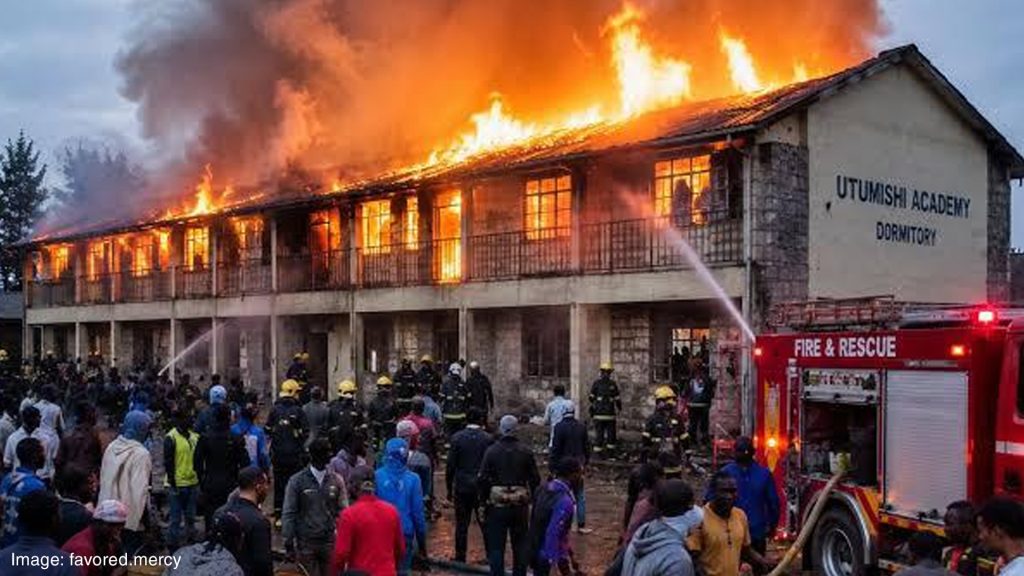
Utumishi Girls Academy is managed by the National Police Service and primarily serves children of police officers. The students who died and the students accused of setting the fire were all children of the same institution.
Locked Exit, Crowded Dormitory, One Way Out
Even if classmates lit the fire, the system helped turn it into a death trap.
The dormitory housed approximately 220 students. Reuters reported that Kenya’s education minister cited safety failures including overcrowding and a locked emergency exit. AP reported that the emergency door remained shut, forcing students toward a single exit. The 16 bodies were found on the upper floor, near the emergency exit they had desperately tried to reach.

Rosie, 15, was one of the survivors. She woke up to flames and smoke and tried to break through the locked door with her hands. When she could not, she jumped from the first floor, injuring her leg. “I was very scared,” she said. “It was so terrifying. But even as I was jumping I was remembering that there were some girls left behind.”
At the June 12 memorial, Rosie spoke about her best friend Abigail, who died in the fire. “She was a dancer. We would always chat together.”
Following the fire, the Ministry of Education dissolved the school’s Board of Management for failing to comply with the School Safety Manual and Basic Education Regulations. Three teachers were placed under disciplinary action. A locked exit, an overcrowded dormitory, and no working emergency system: these were not surprises. They were failures that had been documented and ignored.
Kenya’s School Fires Are Not Isolated
This is not the first time Kenya has mourned children killed inside a school.
Kenya has recorded 47 school fires in 2026 alone. The Kenya Red Cross responded to 37 fire incidents across the country between January and early June. Since Utumishi, at least four more major boarding schools have been severely hit or completely burned. The deadliest school fire in Kenya’s history was in 2001, in Machakos County, when 67 students died after a dormitory was deliberately set alight. Then Moi Girls Nairobi in 2017, where 10 girls died. Then Hillside Endarasha in 2024. Then Utumishi in 2026.
Each was followed by public mourning, investigations and promises of reform. A 2017 report by Kenya’s National Crime Research Centre had already documented the pattern: exam stress, long school terms, poor teacher-student relations and students coordinating copycat incidents via smuggled phones. That report sat on a shelf. A 2024 Ministry of Education assessment found widespread safety failures across boarding schools, including barred windows, single exits, inward-opening doors and overcrowding. The ministry ordered 348 schools closed. Utumishi was not among them.
Kenya Buried Another Warning
On June 12, families gathered at Gilgil Stadium to mourn. Small white coffins adorned with orange, white and pink flowers arrived in a procession. At least three parents fainted. One father had to be restrained.
Liz Munyaga, 46, whose 17-year-old niece Gertrude died in the fire, stood outside the stadium and said: “A school is supposed to be the safest place for children. Why turn on a fellow school mate? That is the question we are all asking.”
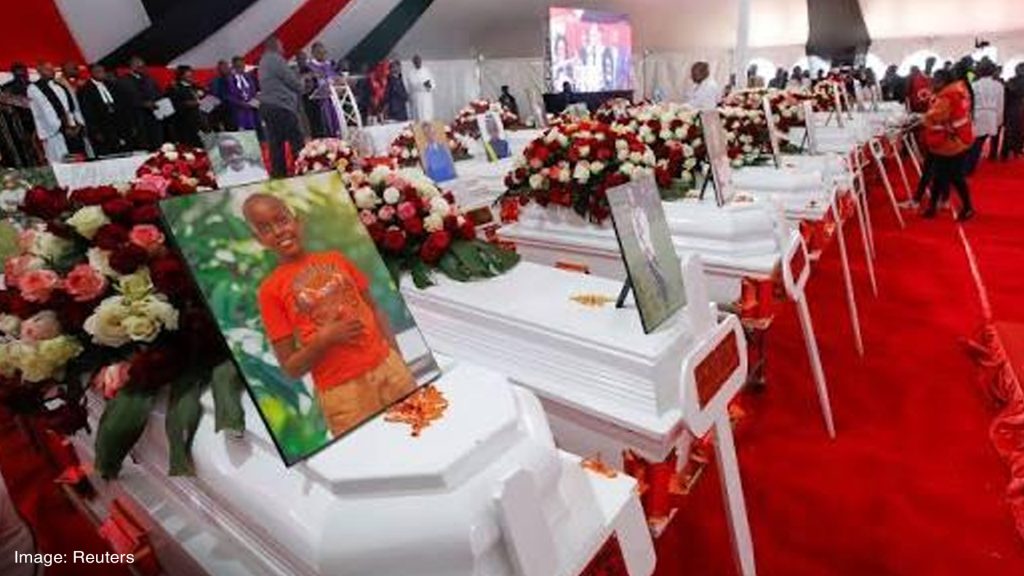
Sixteen girls died. Nine students are in custody. A school board was dissolved. And Kenya is left with a question it has had to ask too many times before.
Why do its schools keep burning?
By Verity Quill | verumnetwork.com
SOURCES
Reuters | AP | Al Jazeera | Daily Nation | Citizen Digital | People Daily Kenya | Arab News