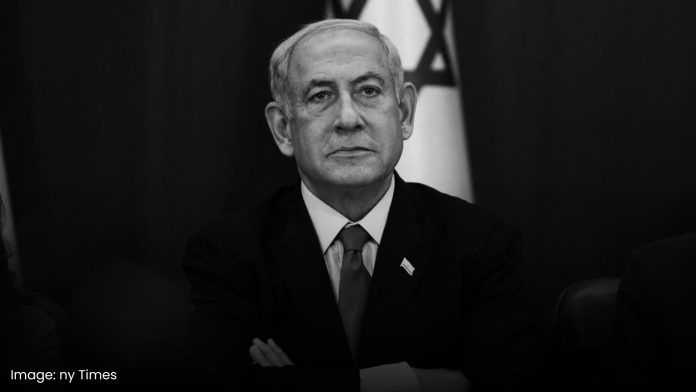

Two Viral World Cup Controversies Sparked Very Different Consequences
The 2026 World Cup has produced two separate gesture scandals, and the difference in how they ended is now becoming part of the story.
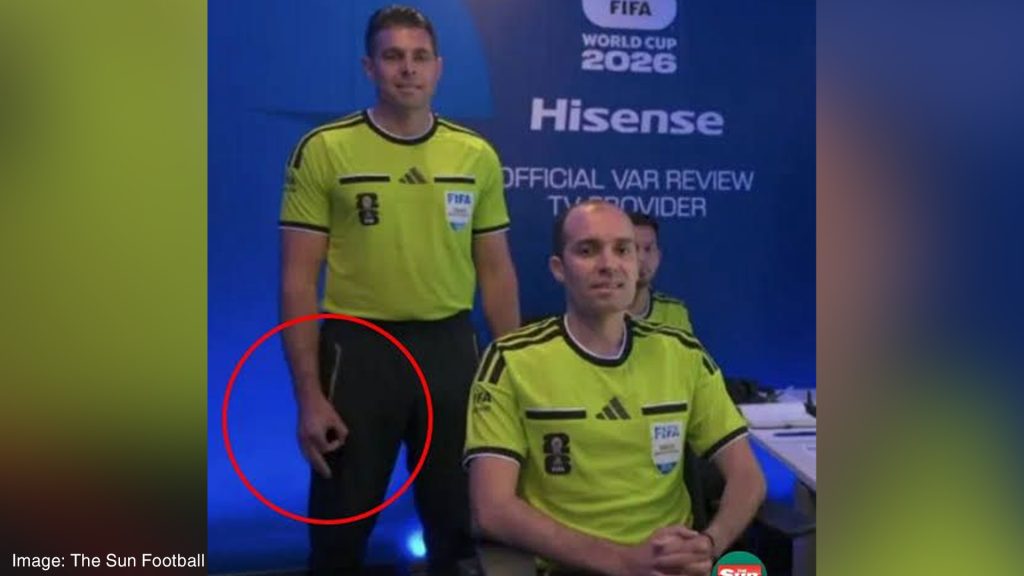
In one case, a Mexican trade leader was removed from his post after being filmed making a racist slant-eye gesture toward South Korean influencer Yoon Su-jin during a World Cup match. In the other, Australian VAR official Shaun Evans was cleared by FIFA after a live-TV hand gesture sparked allegations that he had flashed an inverted OK sign associated by some with white supremacy.
The incidents were not identical. The gestures were different, the contexts were different, and the institutional responses came from different bodies. But for many viewers, the contrast was still hard to ignore: one man was removed quickly, while the other was investigated and cleared.
That is why the debate has moved beyond the incidents themselves and toward a larger question about accountability.
The Mexican Official Who Was Removed
According to the New York Post, the man identified as Ulises Bernal was filmed making a slant-eye gesture behind South Korean influencer Yoon Su-jin, who is also known online as Incocat_t and has nearly nine million followers across TikTok and YouTube.
The incident occurred on June 13 at Estadio Akron in Guadalajara during South Korea’s 2-1 win over Czechia. Yoon posted the footage to her social media with the caption: “I came all the way to Mexico for the World Cup, but … am I being too sensitive?” The clip spread immediately across platforms, drawing condemnation from viewers in Mexico and internationally.
That gave the story a clear outcome: a racist gesture was filmed, the clip went viral, and the man involved lost his position within days.
The VAR Official FIFA Cleared
The second controversy unfolded very differently.
The gesture triggered backlash because the Anti-Defamation League formally designated the inverted OK sign as a hate symbol in 2019, while also noting it is still often used innocently in everyday communication.
Evans denied any racist intent. He said the movement was an involuntary, subconscious twitch, and noted that images taken later during the same match showed him repeating the same movement multiple times while holding a pen between his fingers. FIFA’s disciplinary committee later cleared him, stating it found no evidence he had breached its code.
That outcome sharply contrasted with the Mexican case.
Why People Are Comparing The Two
The comparison is not really about saying both incidents were identical. It is about the visible difference in consequence.
In the Mexican case, the gesture was widely read as openly racist and resulted in immediate removal by the organization involved. In the Evans case, FIFA accepted the official’s explanation and closed the matter without sanction.
For critics, that has raised an uncomfortable question: when public outrage explodes around race and symbolism, who gets punished quickly, and who gets given the benefit of the doubt?
That question is why this story has kept spreading.
The World Cup is supposed to be a stage for global unity, not a running case study in how racism and offensive symbolism are judged differently depending on context, institution, and interpretation.
The Bigger Question About Accountability
What makes this story resonate is not only the gestures themselves, but the contrast in how institutions responded.
One response was fast and punitive. The other was procedural and exonerating.
Supporters of FIFA’s decision argue that intent and context matter, and that clearing Evans after investigation was the right call if there was no proof of racist intent. Critics argue that the difference in treatment still exposes a wider double-standard problem, especially when one scandal ended in removal and the other ended in a clean institutional defence.
That is why the outrage has not faded.
The real story is no longer just what happened in each clip. It is what those two outcomes have revealed about how accountability works when race, visibility, and global scrutiny collide on football’s biggest stage.
By Verity Quill | verumnetwork.com
Sources
New York Post | Ulises Bernal removed after racist gesture | June 2026 | South China Morning Post | Bernal gesture, Yoon Su-jin reaction | June 2026 | Al Jazeera | FIFA clears Shaun Evans | June 2026 | Newsweek | Shaun Evans gesture context and ADL background | June 2026