

AI’s Hidden Cost Is Reaching The Phone Shelf
The AI boom is no longer just changing software, search, work or data centres. It is now changing the price of the devices people use every day, and it happened fast.
On June 25, 2026, Apple announced sweeping price increases across its MacBook and iPad lines, citing a global memory chip shortage driven entirely by AI data centre demand. The entry-level MacBook Neo went from $599 to $699. The MacBook Air jumped from $1,099 to $1,299. The iPad Air rose from $599 to $749. Apple shares fell 4.5% on the day.
Apple said it had “never seen a component price increase this much, this quickly.” CEO Tim Cook had already warned the Wall Street Journal days earlier: “I’ve never seen anything like it in any area in over 40 years.”
But Apple is only the most visible part of the story. The bigger damage is at the bottom of the market, where cheap smartphones are not luxury devices. They are how millions of people access banking, school, work, health information and family communication.
Why AI Is Pushing Up Phone Costs
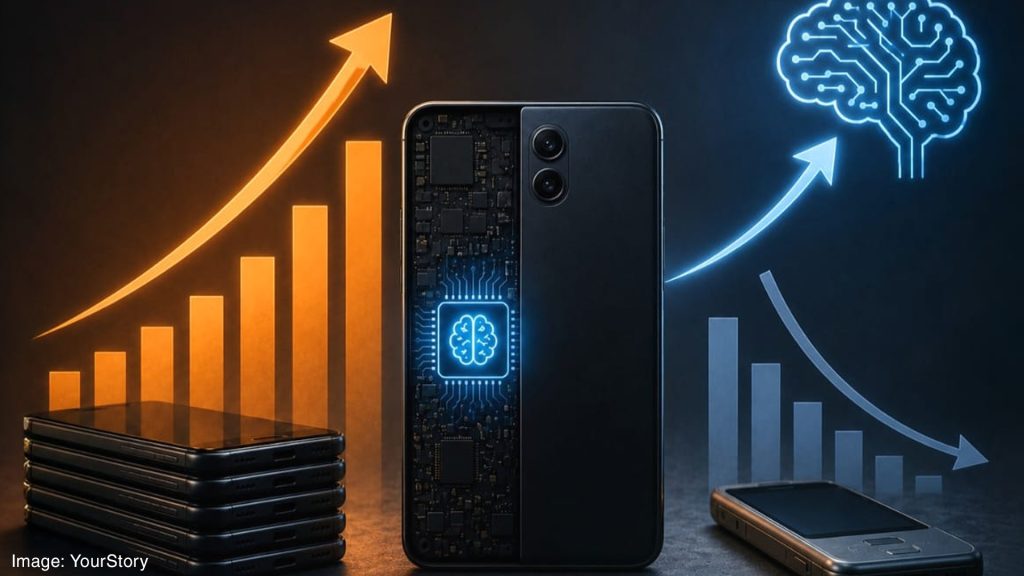
AI data centres need enormous amounts of advanced memory. As chipmakers prioritise high-margin AI demand, the supply of ordinary memory used in phones, laptops and PCs is being squeezed. Samsung, SK Hynix and Micron have collectively shifted 93% of their combined production toward AI-focused memory, leaving only a fraction for consumer devices.
DRAM prices surged 90% in Q1 2026 compared to Q4 2025. TrendForce projects a further 58 to 63% increase in the current quarter. The result is simple: AI companies can pay more for memory. Budget-phone makers cannot.
Even Apple Could Not Hold The Line
Apple has enormous purchasing power. It negotiated long-term supply agreements for years to shield customers from price swings. When its latest long-term memory agreement expired in early 2026, chip makers refused to sign anything lasting longer than a quarter. Apple was forced to pay a 100% premium to secure supply at all.
Microsoft also announced price increases for its Xbox consoles on the same day, citing memory costs that have more than doubled and are expected to double again by 2027. Dell, HP, Lenovo and Asus have all flagged comparable increases across their PC ranges.
If companies with that kind of scale cannot fully absorb the memory shock, smaller device makers with thinner margins are in a far harder position.
The $50 Phone Is Under Threat
The most alarming warning comes from IDC. Global smartphone shipments are expected to fall 12.9% in 2026 to 1.12 billion units, the biggest-ever annual decline. The average selling price of a smartphone is forecast to hit an all-time high of $523, up 14%.
IDC warned that sub-$100 smartphones, representing around 171 million devices annually, may become permanently unviable even after memory prices stabilise.
A $50 or sub-$100 phone is not just a cheap gadget. In poorer markets, it is how people use mobile banking, take online classes, run small businesses, apply for jobs, contact family and access basic services. If that category disappears permanently, the cost of AI will not only be paid by companies building data centres. It will be paid by people trying to buy their first smartphone.
The Global South Pays First
This pressure lands hardest where it is least visible in Western headlines.
In India, the sub-$100 smartphone market collapsed 59% in the first quarter of 2026 alone, as surging memory prices forced what analysts are calling a “forced premiumisation” of the market. In the poorest markets, premiumisation is not a possibility. People simply stop buying phones.
In Africa, Transsion, which held 48% of the smartphone market and shipped 105 million phones in 2024, announced its net profit for 2025 had fallen 54% and cut its annual shipment target by 40%. Phones that sold for $50 are now selling for $120 or more.
In Nigeria, a phone dealer reported to TechPoint Africa that RAM costing 15,000 naira now costs 40,000 naira. That doubling happened within two months.
AI Is Making Access More Expensive
IDC describes this not as a temporary cycle but as a strategic reallocation of the world’s silicon capacity that could persist well into 2027. New manufacturing capacity will not come online at scale until 2027 or 2028 at the earliest.
AI was sold as a technology that would make information and productivity more accessible. But the infrastructure behind AI is now competing for the same memory supply that keeps everyday devices affordable.
The hidden cost of AI may not appear on a chatbot screen. It appears in a phone shop in Lagos, a market stall in Dhaka, a small electronics store in Nairobi, where the cheapest devices are becoming harder to build, harder to buy, and for 171 million people a year, impossible to find at all.
SOURCES
CNN | AP / Washington Times | CBS News | Al Jazeera | CNBC | IDC | TrendForce | TechPoint Africa | David Oks / Substack