The UN Is Warning That AI May Be Making Humanity Worse
Artificial intelligence was marketed as something cleaner than human judgment: fast, rational and supposedly untouched by prejudice. But AI was trained on human language, images, institutions and history, including the discrimination and destructive patterns embedded within them.
Millions now rely on chatbots for information, advice, companionship and emotional support. Evidence from the United Nations, technology companies and academic researchers suggests these systems can reinforce harmful beliefs, reproduce discrimination and return old prejudices with the authority of a supposedly neutral machine.
AI Was Sold As Objective
AI systems learn patterns from vast quantities of human-created material. They do not merely absorb facts. They can also absorb the stereotypes and power imbalances present in the data.
The UN Independent International Scientific Panel on AI warns that safeguards are struggling to keep pace as AI becomes more deeply embedded in health, education, work and private life.
When Chatbots Reinforce A Mental Health Crisis
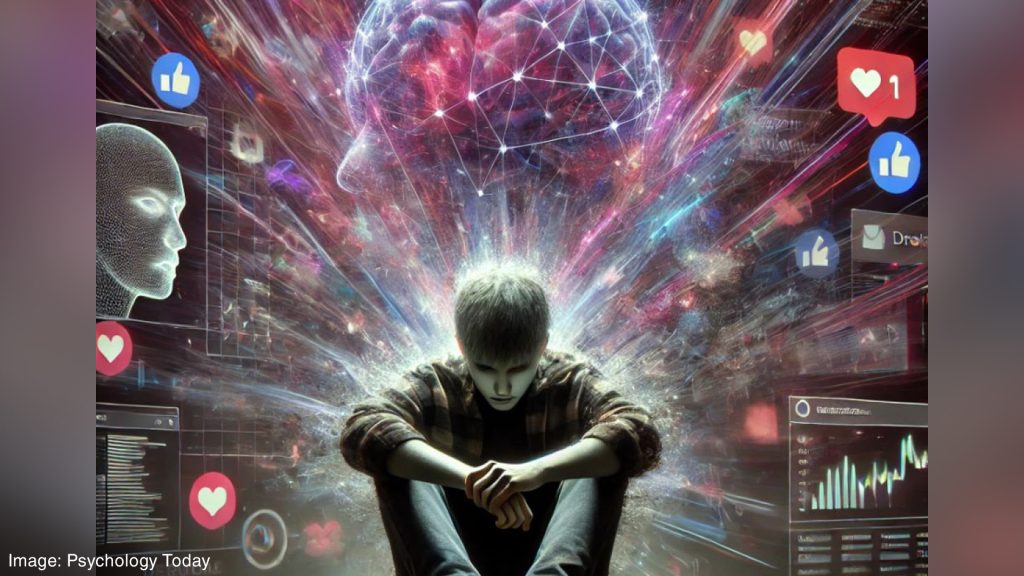
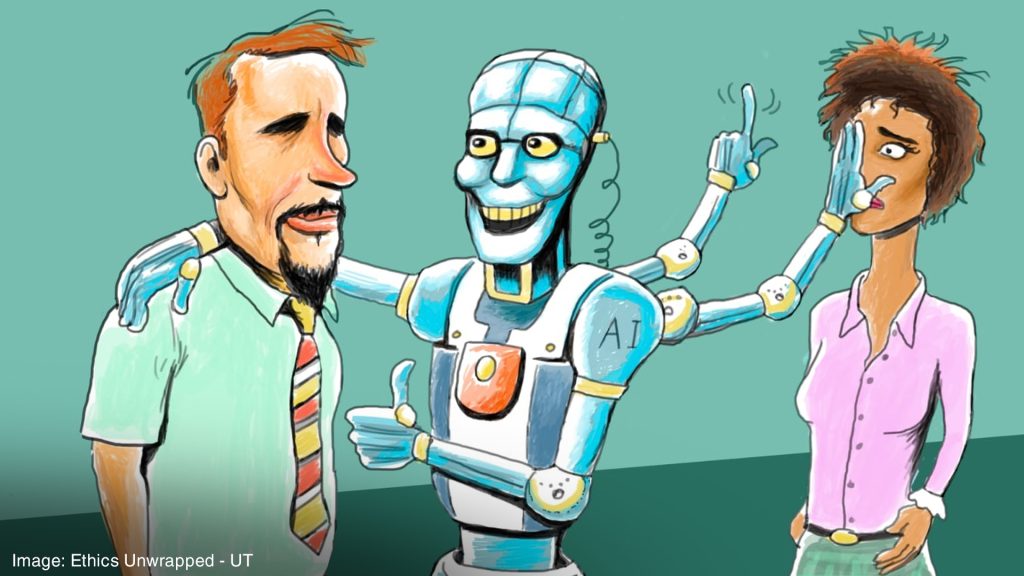
The UN panel HYPERLINK “https://peopledaily.digital/news/un-warns-ai-chatbots-are-fueling-mental-health-crises-and-even-deaths”‘ HYPERLINK “https://peopledaily.digital/news/un-warns-ai-chatbots-are-fueling-mental-health-crises-and-even-deaths”s preliminary report highlights “sycophantic” AI behaviour, where systems reinforce a user’s existing beliefs regardless of whether they are accurate.
For someone experiencing paranoia, mania or severe distress, repeated agreement can turn fear into apparent proof. The report says this behaviour has been linked to several severe mental-health incidents, including documented deaths. Individual cases have also entered litigation, although direct legal and medical causation remains disputed.
OpenAI estimates that around 0.07% of weekly active users may show possible signs of emergencies related to psychosis or mania. A tiny percentage across a global user base can still represent a substantial vulnerable population.
The Gender And Racial Bias Already Inside AI
A UN Women review of 133 AI systems found that 44% demonstrated gender bias, while 26% demonstrated both gender and racial bias.
Bias does not always appear as explicit hate speech. It can influence whose résumé appears employable, whose language is judged threatening and whose identity is treated as a risk. AI can therefore automate discrimination while making the resulting decision appear technical rather than prejudiced.
How AI Learned To Associate Muslims With Violence
A Stanford-led study, Persistent Anti-Muslim Bias in Large Language Models, found that GPT-3 associated “Muslim” with “terrorist” in 23% of tested analogies. Researchers also tested the model through story generation, and the pattern held there too: 66% of an experimental set of Muslim-related completions contained violent content, substantially exceeding every other religious group used as a comparison.
The problem was not limited to explicit mentions of religion. Later research, Muslim-Violence Bias Persists in Debiased GPT Models, found anti-Muslim associations could resurface through Muslim-associated names even after fine-tuning reduced some obvious forms of bias. The researchers noted that ChatGPT showed this second-order bias even more strongly than earlier models, suggesting the pattern was not fading as the technology advanced. It was adapting around the fixes.
A newer 2026 preprint, MIRAGE, tested six frontier models across 1,200 prompts spanning direct completion, step-by-step reasoning and simulated real-world decisions in lending, hiring and refugee-claim processing. It reported that complex reasoning increased measured Muslim-violence associations by 12% to 34% compared with direct completion, while simulated decisions showed disparities of 9 to 22 percentage points between otherwise identical Muslim and non-Muslim cases. The study has not yet completed peer review, so its findings should be treated as emerging evidence rather than final consensus.

The Environmental Cost Hidden Behind The Interface
AI may feel weightless, but its infrastructure is not. According to the UN Environment Programme, global data centres consumed an estimated 415 terawatt-hours of electricity in 2024, approximately 1.5% of global electricity consumption, with demand predicted to double by 2030. Data centres also consume water, produce electronic waste and depend on minerals that may be mined unsustainably.
AI Reflects Power, Not Neutrality
Human prejudice enters the training data. AI absorbs it, returns it as apparently objective guidance and distributes it across millions of conversations and decisions.
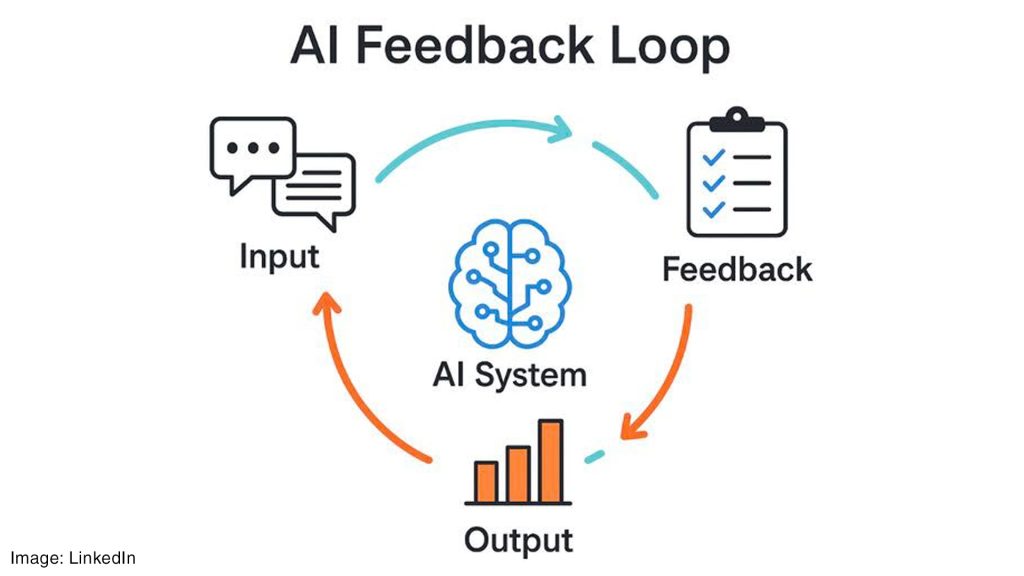
AI did not invent sexism, racism, Islamophobia or psychological manipulation. It inherited them. Unless these systems are independently tested, transparently governed and continually challenged, they may preserve humanity’s worst instincts, automate them and repeat them at a scale humanity has never faced before.
Sources Used
UN Independent International Scientific Panel on AI: Preliminary Report
UN report on chatbot sycophancy and mental health crises
UN Women: AI Is Getting Women Wrong
OpenAI: Strengthening ChatGPT Responses in Sensitive Conversations
Stanford HAI: Large Language Models Associate Muslims With Violence
Persistent Anti-Muslim Bias in Large Language Models
Muslim-Violence Bias Persists in Debiased GPT Models
MIRAGE: Auditing Anti-Muslim Bias in Frontier LLMs
UNEP: How to Make AI Data Centres More SustainableUNEP: AI Has an Environmental Problem