What the investigation uncovered
A new Amnesty International investigation has traced 2,596 military-linked shipments from India to Israel between October 7, 2023 and November 30, 2025.
The report, Made in India: The Supply of Weapons and Ammunition to Israel, was built using shipment-level customs and trade data, export records, shipping manifests and corporate filings. Amnesty says it deliberately excluded shipments that were likely intended for civilian use or anti-missile defence systems.
That means the figures presented in the investigation are intended to be a conservative minimum, not an estimate of every military-related transfer between the two countries.
What India reportedly supplied
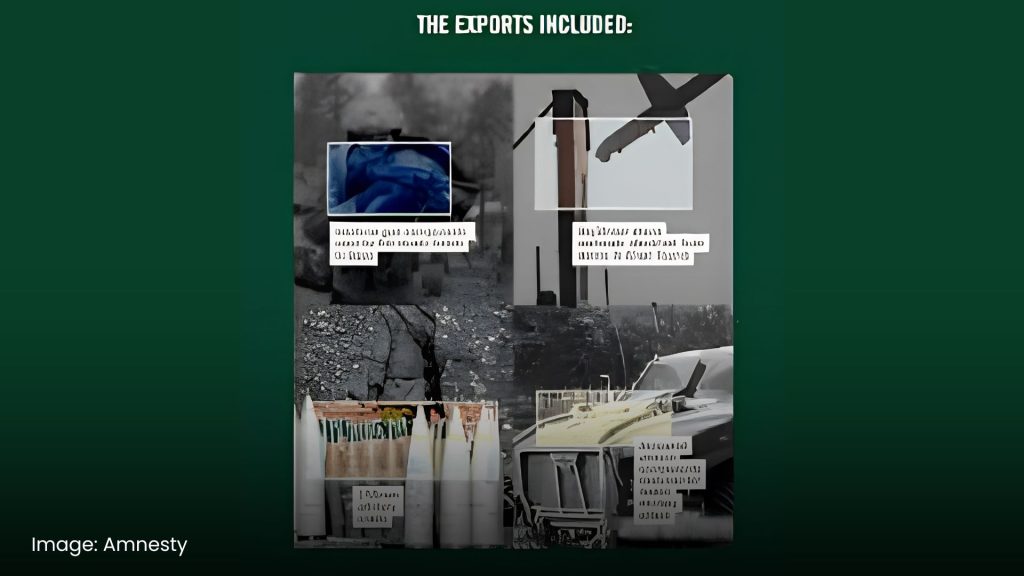
According to Amnesty’s count, the shipments included at least:
- 390,516 parts for military-grade small arms
- 564,970 explosive-ordnance components
- 298 armoured-vehicle components
The explosive-ordnance category reportedly included components connected to artillery ammunition and drone warheads.
Amnesty identified major Israeli defence companies among the recipients, including Elbit Systems, Rafael Advanced Defense Systems and IMI Systems.
India has long been known as one of the world’s largest buyers of Israeli military technology, a relationship that has deepened commercially over the past decade under the current leadership of both countries. The investigation highlights a less widely reported side of that relationship: weapons and military components moving from India into Israel’s defence supply chain during the Gaza war.
Why state ownership changes the story
Three exporters identified in the investigation are wholly owned by the Indian state:
- Munitions India Limited
- India Optel Limited
- Advanced Weapons and Equipment India Limited
That distinction is central to Amnesty’s argument.
When private companies export military components, governments may still face questions about licensing, regulation and oversight. But when the exporters are owned by the state, the connection between the transfers and the government becomes more direct, since the state is no longer just a regulator of the trade but a direct participant in it.
State ownership does not automatically establish legal complicity. That would require a formal legal assessment of the evidence, applicable law, knowledge and intent.
However, Amnesty argues that the involvement of state-owned companies raises a more serious question than ordinary private trade.
The ICJ warning India could not ignore
In January 2024, the International Court of Justice issued provisional measures in the genocide case brought by South Africa against Israel.
The Court did not rule that genocide had been proven. It found that some of the rights claimed under the Genocide Convention were plausible, including the right of Palestinians in Gaza to be protected from acts prohibited under the Convention.
The ICJ later issued further provisional measures as conditions in Gaza deteriorated.
Amnesty’s argument is that India continued permitting military transfers after the risk of genocide had been placed clearly on the international record.
Complicity is not the same as direct participation
India is not accused in Amnesty’s report of directly carrying out the violence in Gaza.
The allegation is that continued military exports may have helped sustain conduct already facing genocide scrutiny.
The legal and political question is whether a state can continue supplying military goods when it knows there is a substantial risk that those goods could contribute to genocide, crimes against humanity or war crimes.
Amnesty has called on India to immediately halt military transfers that could facilitate serious violations of international law.
India has yet to answer
Amnesty says it contacted the Indian government and nine companies during June and July 2026.
None had responded by the time the investigation was published.
That lack of response does not prove the allegations or settle the legal question. But it leaves Amnesty’s figures, methodology and findings concerning state-owned exporters publicly unanswered.
The deeper issue now extends beyond one shipment database or one bilateral defence relationship.
When a government’s own companies help sustain a military campaign under genocide scrutiny, where does business end and state responsibility begin?
By Shizza Umer
Hyperlinked Sources