
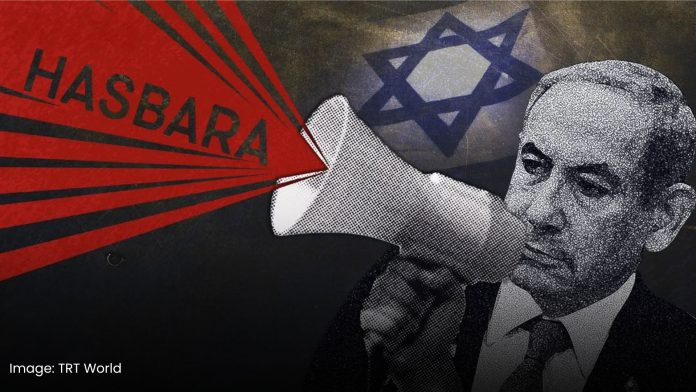
How Isr*el Built a $730 Million Global Influence Machine

In March 2026, the Knesset approved a national budget allocating approximately $730 million to public diplomacy, commonly known as hasbara, nearly five times the previous year’s allocation and many times higher than spending before October 2023.

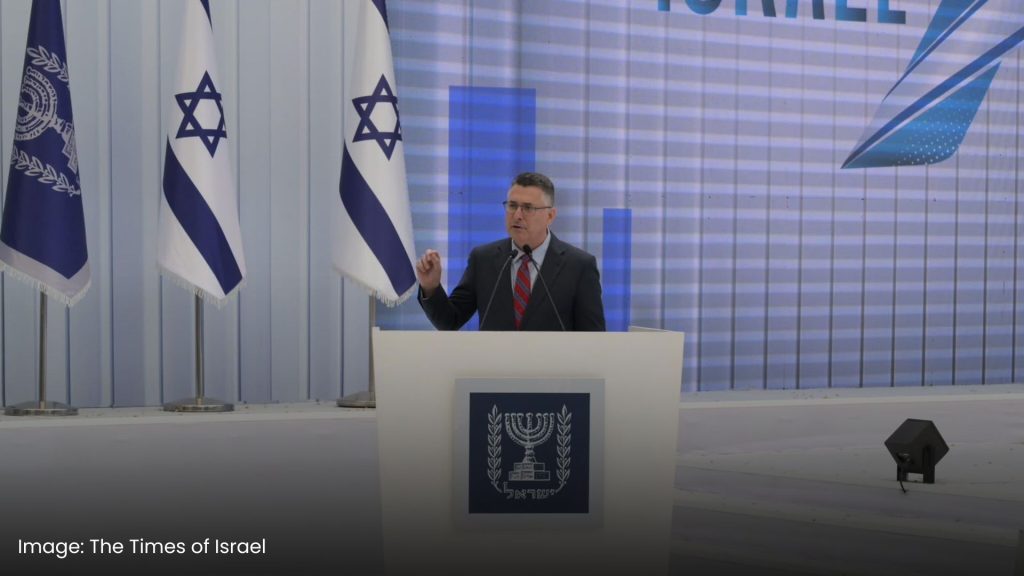
Foreign Minister Gideon Sa’ar has described the battle for global opinion as an “existential” front, arguing that public diplomacy should be funded the same way Isr*el funds “jets, b*mbs and miss*le interceptors.” The comparison reflects a major shift in thinking. Reputation management is no longer being treated as traditional diplomacy, but as part of national security.
The expanded programme finances a permanent public-diplomacy unit inside the Foreign Ministry, international advertising campaigns, media monitoring, digital outreach, and organised engagement with foreign audiences.

A Global Campaign Across Media, Influencers and Technology

The programme includes millions of dollars in international advertising across platforms such as Google, YouTube, X and Outbrain, alongside funding to host hundreds of foreign delegations including lawmakers, pastors, university leaders, journalists and social-media influencers. The ministry has also operated a media “w*r room” monitoring around 250 news outlets and approximately 10,000 Isr*el-related stories each day.

One financial disclosure described a $900,000 campaign involving 14 to 18 influencers over several months, with some media reports calculating that individual posts could cost up to $7,000, though that figure is disputed and should not be interpreted as a confirmed standard payment. Campaign budgets typically include agency fees, production, strategy, compliance and advertising costs in addition to creator compensation.

A separate, more direct insight into the machine’s scale came when a former Israeli military intelligence captain told a New York conference she had coordinated 60,000 influencers worldwide since October 2023, generating nearly 3 billion views across social platforms. She claimed to have coined the slogan “Hamas is ISIS,” later used by global leaders including former US President Joe Biden.

The AI and Search Engine B*ttlefield

Another emerging front involves artificial intelligence and search engines. A contract with Brad Parscale’s firm, Clock Tower X, has been linked to projects designed to improve how Isr*el is represented across search engines and AI-powered information systems, including producing websites, articles and digital content intended to influence how information is surfaced online. There is no evidence AI companies themselves were directly reprogrammed; the reported strategy instead targets the information ecosystem those tools retrieve from.

Contractors have also funded AI-powered personalised text messaging campaigns capable of adapting messages based on recipients’ responses, reflecting a move away from one-size-fits-all messaging toward individually tailored persuasion.

The Spending Is Rising While Public Opinion Keeps Falling

The expansion comes despite increasingly negative public opinion. 60% of Americans now hold an unfavourable view of Isr*el, compared with 37% favourable, including 57% of Republicans under 50 and 84% of Democrats under 50, with support also collapsing among the religiously unaffiliated, Black Protestants and Catholics. A separate international survey found negative views of Isr*el across most of the 36 countries polled, suggesting the reputational challenge extends well beyond the United States.
The political shift is increasingly visible in Washington too. 40 of 47 Senate Democrats voted to block a $295 million sale of Caterpillar bulldozers to Isr*el, and 36 voted to block a sale of 1,000-pound b*mbs. It was the strongest congressional challenge to m*litary support for Isr*el on record, even though both resolutions ultimately failed.

Can Messaging Solve a Policy Problem?

Supporters argue Isr*el faces an unprecedented international misinformation campaign and requires equally sophisticated tools to respond. Critics argue the opposite: no amount of advertising, influencer partnerships or AI optimisation can permanently reverse public opinion if people object to the underlying policies being defended.

As one Western diplomat who has tracked the spending put it: “You only spend at this level when you’ve already lost the argument.”

That contradiction sits at the centre of the story. The world is witnessing one of the largest public-diplomacy expansions in Isr*eli history, yet polling across the United States and dozens of other countries keeps moving the opposite direction.

By Shizza Umer

Hyperlinked Sources
Jewish Telegraphic Agency

Times of Isr*el

Jerusalem Post

Middle East Eye

Middle East Monitor

Responsible Statecraft

Truthout

In March 2026, the Knesset approved a national budget allocating approximately $730 million to public diplomacy, commonly known as hasbara, nearly five times the previous year’s allocation and many times higher than spending before October 2023.

Foreign Minister Gideon Sa’ar has described the battle for global opinion as an “existential” front, arguing that public diplomacy should be funded the same way Isr*el funds “jets, b*mbs and miss*le interceptors.” The comparison reflects a major shift in thinking. Reputation management is no longer being treated as traditional diplomacy, but as part of national security.

The expanded programme finances a permanent public-diplomacy unit inside the Foreign Ministry, international advertising campaigns, media monitoring, digital outreach, and organised engagement with foreign audiences.

A Global Campaign Across Media, Influencers and Technology

The programme includes millions of dollars in international advertising across platforms such as Google, YouTube, X and Outbrain, alongside funding to host hundreds of foreign delegations including lawmakers, pastors, university leaders, journalists and social-media influencers. The ministry has also operated a media “w*r room” monitoring around 250 news outlets and approximately 10,000 Isr*el-related stories each day.

One financial disclosure described a $900,000 campaign involving 14 to 18 influencers over several months, with some media reports calculating that individual posts could cost up to $7,000, though that figure is disputed and should not be interpreted as a confirmed standard payment. Campaign budgets typically include agency fees, production, strategy, compliance and advertising costs in addition to creator compensation.

A separate, more direct insight into the machine’s scale came when a former Israeli military intelligence captain told a New York conference she had coordinated 60,000 influencers worldwide since October 2023, generating nearly 3 billion views across social platforms. She claimed to have coined the slogan “Hamas is ISIS,” later used by global leaders including former US President Joe Biden.

The AI and Search Engine B*ttlefield

Another emerging front involves artificial intelligence and search engines. A contract with Brad Parscale’s firm, Clock Tower X, has been linked to projects designed to improve how Isr*el is represented across search engines and AI-powered information systems, including producing websites, articles and digital content intended to influence how information is surfaced online. There is no evidence AI companies themselves were directly reprogrammed; the reported strategy instead targets the information ecosystem those tools retrieve from.

Contractors have also funded AI-powered personalised text messaging campaigns capable of adapting messages based on recipients’ responses, reflecting a move away from one-size-fits-all messaging toward individually tailored persuasion.

The Spending Is Rising While Public Opinion Keeps Falling

The expansion comes despite increasingly negative public opinion. 60% of Americans now hold an unfavourable view of Isr*el, compared with 37% favourable, including 57% of Republicans under 50 and 84% of Democrats under 50, with support also collapsing among the religiously unaffiliated, Black Protestants and Catholics. A separate international survey found negative views of Isr*el across most of the 36 countries polled, suggesting the reputational challenge extends well beyond the United States.

The political shift is increasingly visible in Washington too. 40 of 47 Senate Democrats voted to block a $295 million sale of Caterpillar bulldozers to Isr*el, and 36 voted to block a sale of 1,000-pound b*mbs. It was the strongest congressional challenge to m*litary support for Isr*el on record, even though both resolutions ultimately failed.

Can Messaging Solve a Policy Problem?

Supporters argue Isr*el faces an unprecedented international misinformation campaign and requires equally sophisticated tools to respond. Critics argue the opposite: no amount of advertising, influencer partnerships or AI optimisation can permanently reverse public opinion if people object to the underlying policies being defended.

As one Western diplomat who has tracked the spending put it: “You only spend at this level when you’ve already lost the argument.”

That contradiction sits at the centre of the story. The world is witnessing one of the largest public-diplomacy expansions in Isr*eli history, yet polling across the United States and dozens of other countries keeps moving the opposite direction.

By Shizza Umer

Hyperlinked Sources

Jewish Telegraphic Agency

Times of Isr*el

Jerusalem Post

Middle East Eye

Middle East Monitor

Responsible Statecraft

Truthout

spot_img

Explore more

spot_img
Global Affairs

What If the Uyghur Story Is Both a Human Rights Crisis...

Project Panama: Is AI Colonising the World’s Books?

The COVID narrative is unraveling. Who lied, who profited, and why...

Man Charged With “Death to Islam” Threats Against Muslim Sheriff, and...

THE FIRST PHASE OF VOTING IS OVER. THE POLITICAL CRISIS IN...

WHAT KIND OF WORLD TURNS RACIST ABUSE OF A BLACK AUTISTIC...

Commanders Allegedly Told US Troops Trump Was Anointed By Jesus For...

Five Historic Mosques Were Demolished To Widen A Road To Modi’s...