
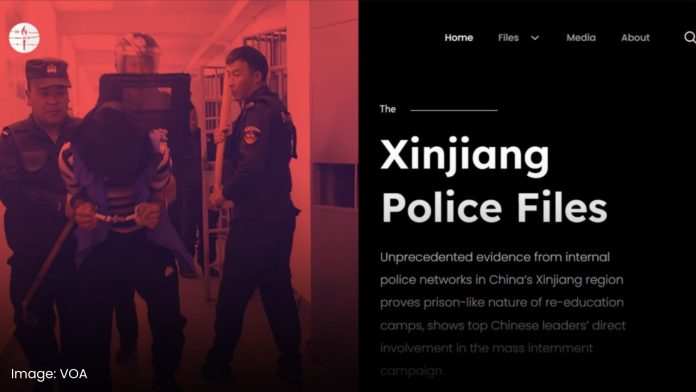
What is established about Xinjiang?
The treatment of Uyghurs and other predominantly Muslim communities in China’s Xinjiang region has become one of the defining human-rights controversies of this century.
Evidence gathered through survivor testimony, leaked Chinese government records, satellite imagery, official policies and independent research has documented mass detention, intense surveillance, restrictions on religious and cultural practices, coercive birth-control measures and allegations of forced labour.
In its 2022 assessment, the United Nations Human Rights Office concluded that serious human-rights violations had occurred. It said the scale of arbitrary and discriminatory detention might constitute international crimes, particularly crimes against humanity.
China rejects accusations of systematic abuse, disputes the reliability of several prominent reports and says its policies were designed to counter extremism, create employment and improve regional stability.
Why the legal definition remains disputed
The disagreement is not limited to whether abuses occurred. Governments and legal experts also differ over whether the evidence meets the legal threshold for genocide.
The Genocide Convention requires proof of an intention to destroy, in whole or in part, a protected national, ethnic, racial or religious group. The United States and several national legislatures have used the genocide designation, while the UN assessment did not make that finding.
That distinction matters. Crimes against humanity and genocide are both exceptionally serious, but they are separate legal categories with different requirements.
Reducing the discussion to a choice between total denial and unquestioning acceptance of every allegation prevents a more precise examination of the evidence.
Why Xinjiang matters strategically
Xinjiang is not only a human-rights issue. It is also central to China’s economic and geopolitical ambitions.
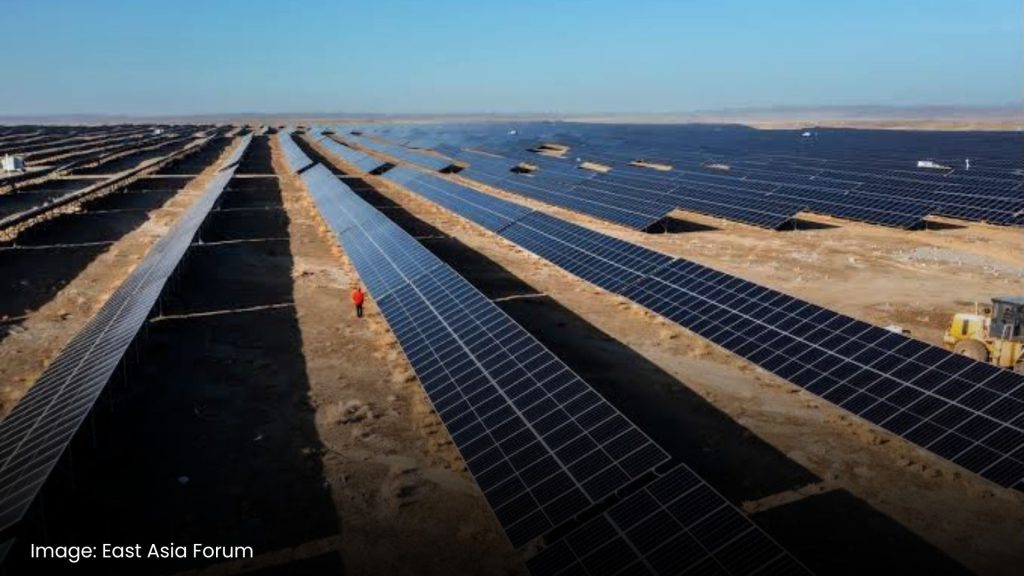
The region connects China with Central Asia and forms an important part of the Belt and Road Initiative. It contains significant energy resources, produces much of China’s cotton and plays a major role in solar supply chains through the production of polysilicon.
Measures aimed at Xinjiang can therefore affect far more than diplomatic reputation. Sanctions, import restrictions and forced-labour rules can reshape trade, renewable-energy costs, manufacturing networks and Western dependence on Chinese suppliers.
This does not make human-rights concerns false. It means that governments can pursue accountability and strategic advantage at the same time.
Is the criticism itself compromised?
China’s government has a standard answer to Xinjiang accusations: point at the accusers’ own record.
Britain’s own history invites exactly that response. British territory at Diego Garcia was used as a refuelling stop for CIA rendition flights in the early 2000s, and MI6 was directly involved in the 2004 rendition of Libyan dissident Abdel Hakim Belhaj and his pregnant wife to Tripoli, where both were tortured. Successive UK governments spent years denying, then admitting, then denying again, their role in the program before parliamentary inquiries confirmed it.
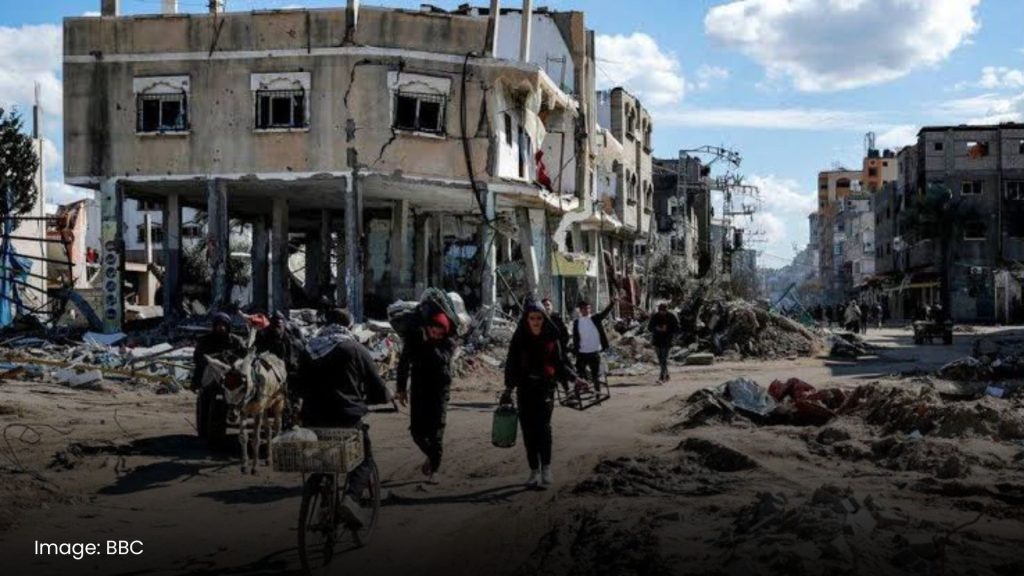
The pattern continues today. The UK has continued licensing arms exports to Israel through the Gaza war, suspending only a fraction of licenses while explicitly excluding F-35 fighter jet components, even as UN bodies and human rights groups warned Israeli conduct in Gaza risked meeting the legal threshold for genocide.
Meanwhile in the United States, ICE has carried out over 356,000 deportations in fiscal year 2026, with arrests reaching roughly 1,500 to 1,600 a day in July. June set a record with more than 43,000 arrests in a single month. Immigration agents have fatally shot US citizens during traffic stops, and the Supreme Court has allowed agents to consider “apparent race or ethnicity” when deciding who to stop.
None of this is in serious dispute. All of it is documented by courts, government data, or the agencies’ own records.
But the U.S. State Department has separately identified China’s habit of raising Western hypocrisy in response to Xinjiang evidence as a deliberate messaging tactic, designed to shift the conversation away from the underlying documentation rather than engage with it.
Both things can be tracked honestly at once. Western governments’ own human-rights records are real, serious, and worth scrutiny in their own right. That scrutiny is a different question from whether the Xinjiang evidence holds up. Treating one as proof against the other is the tactic, not an argument.
Why Britain is confronting the issue again
A July 2026 report by The Telegraph said campaigners were pressing newly appointed Foreign Secretary Ed Miliband to adopt a more decisive position on China’s treatment of Uyghurs, days after he took over the role in Prime Minister Andy Burnham’s new cabinet.
The pressure intersects with an existing British debate over solar panels and other clean-energy products potentially connected to forced labour. In 2025, while serving as Energy Secretary, Miliband announced that Great British Energy would exclude solar panels linked to slavery or human trafficking from its supply chain.

Britain is simultaneously seeking economic engagement with China, access to affordable clean-energy technology and stronger safeguards against exploitation. Those goals are not easily separated.
Can suffering become geopolitical leverage?
Human-rights reporting does not occur in a political vacuum.
Western attention to Xinjiang has often intensified during wider disputes involving tariffs, technology restrictions, supply-chain security and China’s growing global influence. That pattern does not prove the evidence was fabricated or that every renewed campaign is coordinated.
It does justify asking why some crises receive sustained political attention while others disappear from view.
A genuine human-rights crisis can be documented honestly and still be used selectively by governments pursuing unrelated strategic goals. Recognising that possibility is not denial. It is an argument for consistency.
The real test is whether governments defend human rights when doing so is politically inconvenient, not only when accountability aligns neatly with trade, security or foreign-policy objectives.
By Shizza Umer
Sources
- The Telegraph: Miliband under pressure to accuse China of genocide
- United Nations Human Rights Office: Assessment of human-rights concerns in Xinjiang
- Full UN assessment of Xinjiang
- Reuters: UK urged to outlaw imports made with Xinjiang forced labour
- The Guardian: Great British Energy to exclude solar panels linked to Chinese forced labour
- Unredacted UK: Britain’s role in CIA rendition and torture, including the Belhaj case
- Al Jazeera: What the UK’s partial arms export suspension to Israel really means
- Government Executive: ICE arrest and deportation data, fiscal year 2026
- The Globe and Mail: US deportation roundups and Supreme Court racial-profiling ruling
- US State Department: PRC efforts to manipulate global public opinion on Xinjiang