A rare legal victory for anti-Zi*onist belief
A British appeal tribunal has upheld the central finding that Professor David Miller’s anti-Zionist beliefs are protected under the Equality Act 2010, preserving a significant victory for political expression and workplace rights.
Miller was dismissed by the University of Bristol in October 2021 following public comments about Zionism and pro-Isr*el organisations, after what he said was an organised campaign against him dating back to March 2019. He challenged the dismissal, arguing that the university had discriminated against him because of his philosophical beliefs.
In February 2024, an employment tribunal agreed. It found that Miller genuinely believed political Zionism was racist, imperialist and colonial and should therefore be opposed, and that this belief qualified for protection under British equality law. It also found that his dismissal was discriminatory, unfair and wrongful.

The University of Bristol appealed. On 4 August 2026, the Employment Appeal Tribunal upheld the central findings in Miller’s favour.
What the ruling actually protects
The judgment does not declare that every anti-Zionist statement or action is automatically protected.
It protects Miller’s philosophical belief and recognises that political opinions do not lose legal protection simply because they are unpopular, offensive or strongly disputed.
The tribunal distinguished between holding a protected belief and every possible way that belief might be expressed. It accepted that the university could have considered a lesser disciplinary response rather than dismissal.
The tribunal also upheld the earlier finding that Miller’s basic and compensatory awards for unfair dismissal should be reduced by 50 percent because his own conduct toward Jewish students and student societies contributed to his dismissal.
Miller did not win every legal issue. His cross-appeal was dismissed, while the university succeeded on one limited ground, over how the original tribunal calculated a 30 percent chance that Miller would have been lawfully dismissed anyway by 2023.
Those qualifications do not erase the central outcome: the university failed to overturn the findings that Miller’s anti-Zionist belief was protected and that his dismissal was unlawful.
Miller’s political claims were not court findings
After the ruling, Miller described the result as a victory against “Zionist lawfare” and alleged that supporters of the Isr*eli state had pressured the university into dismissing him.
These are Miller’s claims. The tribunal did not find that the Isr*eli government, a Zionist organisation or any foreign actor directed the university’s decisions.
The judgment names the university’s lawyers as Christopher Milsom and Danielle Worden, instructed by Burges Salmon LLP. It does not identify them as representatives of the Isr*eli government or any organisation described as “Lawyers for Isr*el.”
The distinction is essential. The legal victory can be reported without presenting Miller’s broader political allegations as proven facts.
A very different approach in America
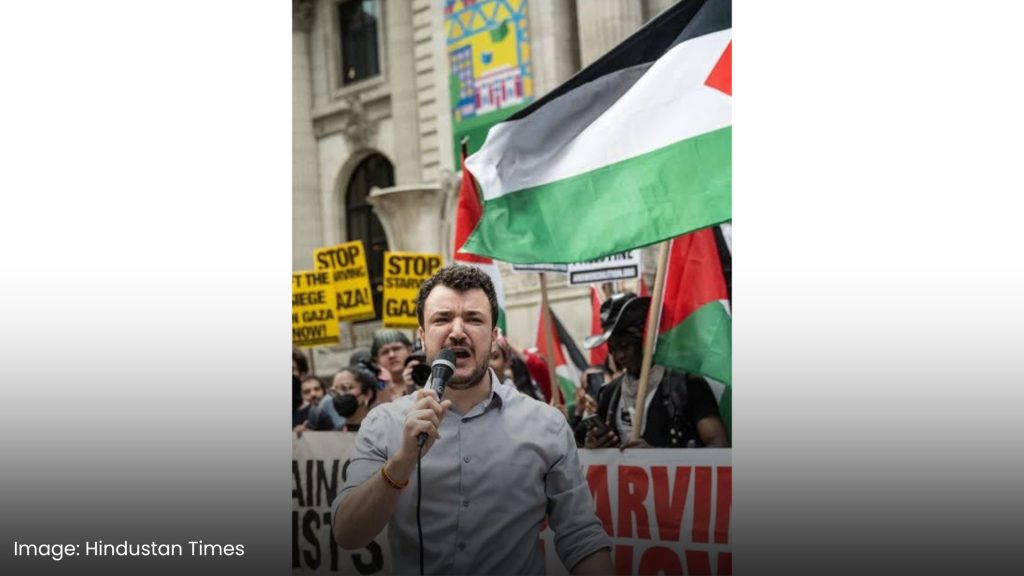
The ruling comes after the United States used immigration powers against foreign students and residents connected to Palestine activism.
Mahmoud Khalil, a Palestinian activist and Columbia University graduate, was detained by immigration agents at his student apartment building in New York on March 8, 2025, as the government sought to deport him.
A memorandum signed by Secretary of State Marco Rubio acknowledged that the conduct being used to justify Khalil’s removal was otherwise lawful, but argued that his continued presence could harm US foreign-policy interests.
Rubio also said the government may have revoked more than 300 student and visitor visas during a wider campaign that included foreign students associated with pro-Palestine protests.
The administration said it was acting against antisemitism, disruption and support for movements contrary to US foreign policy. Civil-liberties advocates argued that lawful political expression was being punished through immigration enforcement.
What the contrast reveals
Miller’s employment case and Khalil’s immigration case arise under different legal systems. They are not direct legal equivalents.
The contrast is still difficult to ignore.
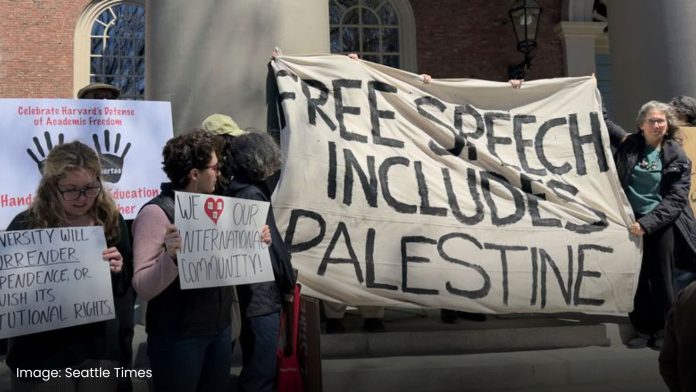
A British tribunal ruled that a controversial anti-Zionist belief could remain protected from workplace discrimination. The US government argued that otherwise lawful Palestine activism could justify detention and deportation when officials considered it harmful to foreign policy.
Free speech is easiest to praise when it protects safe and popular opinions. Its real test comes when political beliefs challenge governments, universities and powerful institutions.
Are we watching that happen now?
By Shizza Umer
Sources
UK Employment Appeal Tribunal · EAT Judgment PDF · Original 2024 Tribunal Judgment · AP News · Reuters · ABC News · Times Higher Education