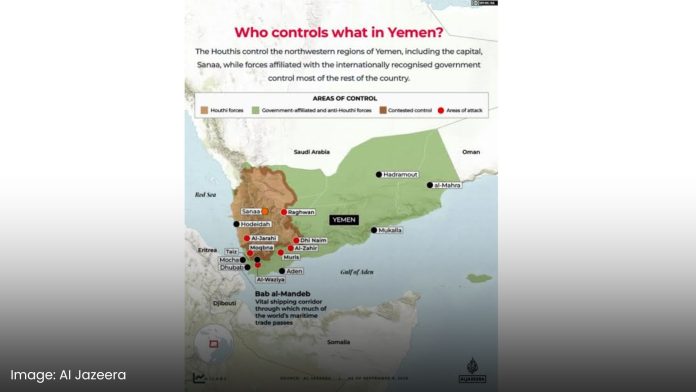
For years, the Houthis were primarily understood through the lens of Yemen’s civil w*r. That is changing. Their recent military advances along Yemen’s Red Sea coast, combined with miss*le and drone attacks on Saudi Arabia, have transformed the movement from a predominantly Yemeni security challenge into a factor in the wider security architecture of the Gulf and Red Sea.
The central question, however, is not whether the Houthis possess the conventional military power to defeat a Gulf state. They do not. The more important question is whether a non-state armed group can impose strategic costs on states with vastly greater military and economic resources. Recent developments suggest that it can.
Geography as Strategic Power
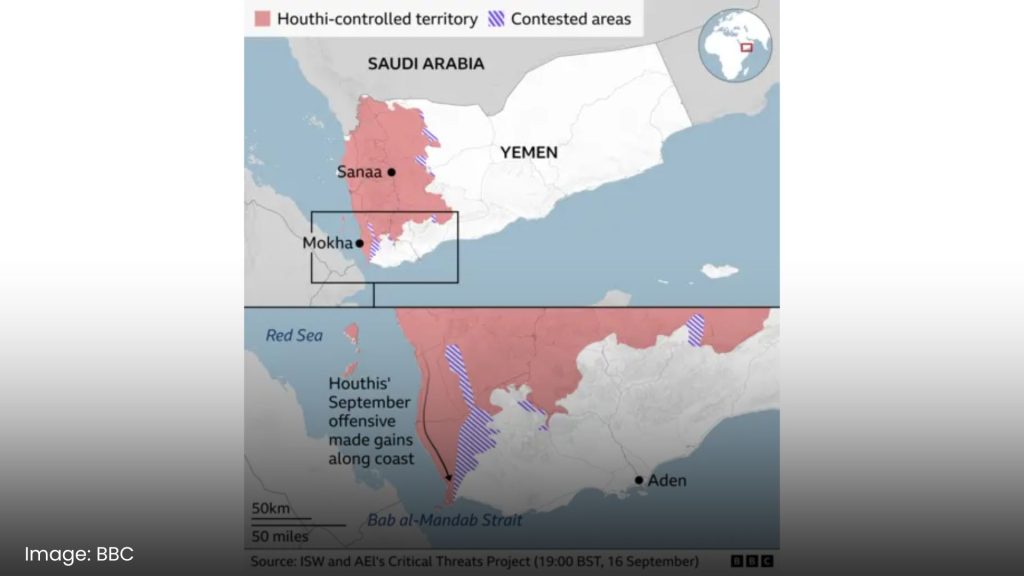
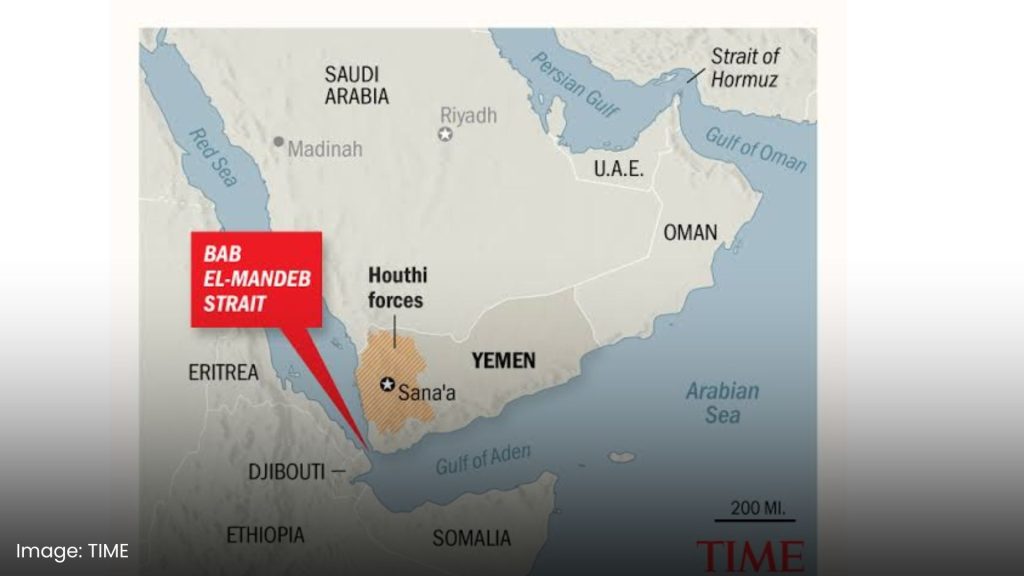
Much of the Houthi thre*t derives from geography. Their expansion along Yemen’s western coastline has brought them closer to the Bab el-Mandeb Strait, one of the world’s most important maritime chokepoints. The strait connects the Red Sea to the Gulf of Aden and provides a major route between the Indian Ocean and the Mediterranean through the Suez Canal.
In September, Houthi forces captured the coastal city of Mocha and advanced towards the Hanish islands, increasing their proximity to the maritime corridor. Reuters reported that these advances strengthened the group’s ability to disrupt shipping and increased concerns over Bab el-Mandeb security.
This does not necessarily mean that the Houthis can completely close the strait. Their strategic leverage comes from something more indirect: the ability to make commercial shipping riskier and more expensive. Even the perception that a major maritime route is vulnerable can affect insurance costs, shipping decisions and supply chains.
From Maritime Pressure to Saudi Territory
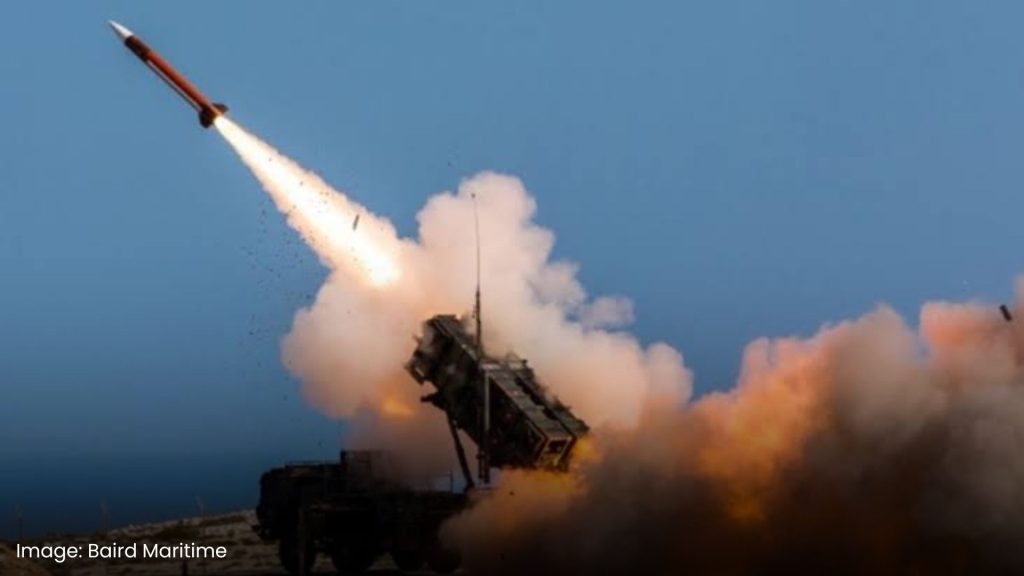
The threat has also moved closer to Saudi Arabia itself. On September 24, Saudi authorities said they had intercepted six ballistic missiles launched towards Taif and the Yanbu area. The Houthis subsequently claimed miss*le and drone att*cks against a target in Riyadh and Saudi Aramco facilities in Yanbu.
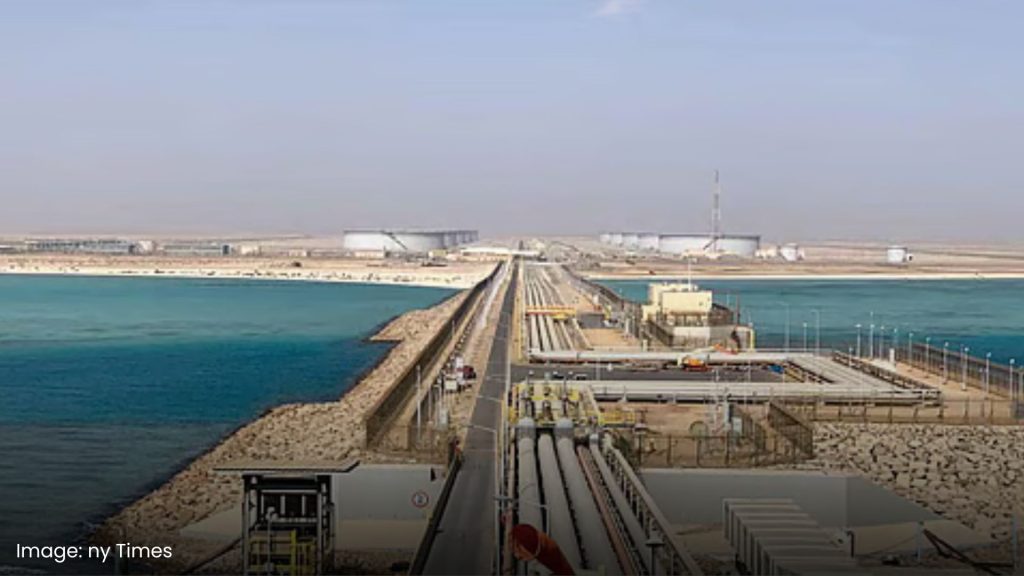
The significance of these attacks lies partly in their targets. Yanbu is not simply another Saudi city. It is a major Red Sea energy hub and an important component of Saudi Arabia’s strategy for moving oil outside the Persian Gulf. The East-West pipeline connects Saudi oil-producing regions to Yanbu, allowing exports to reach the Red Sea without passing through the Strait of Hormuz.
That makes Yanbu strategically important in a region where maritime chokepoints are already under pressure. Reuters reported that Saudi Arabia had recently restarted the East-West pipeline after an earlier drone attack, although operations remained below full capacity.
The broader economic effect can also emerge without physical destruction of major facilities. When attacks create uncertainty around energy infrastructure and shipping routes, markets can react before any sustained supply interruption occurs. Following the September 24 Houthi attacks, oil prices initially rose sharply amid renewed fears over supply disruption.
The Logic of Asymmetric W*rfare
This is where the Houthi challenge becomes strategically significant.
Saudi Arabia possesses advanced air-defence systems, substantial financial resources and conventional military capabilities that far exceed those of the Houthis. Yet conventional superiority does not automatically eliminate asymmetric vulnerability.
For the Houthis, relatively inexpensive missiles and drones can force Saudi Arabia to deploy sophisticated and considerably more expensive air-defence systems. They can also compel governments to protect energy facilities, alter shipping arrangements and dedicate military resources to areas far beyond Yemen.
The objective of such a strategy is therefore not necessarily to defeat Saudi Arabia militarily. It is to raise the economic, political and security costs of maintaining normal operations.
This dynamic extends beyond Saudi Arabia. European governments have also expressed concern about the growing threat to Red Sea shipping. The EU’s Aspides maritime mission, established to protect commercial vessels from Houthi attacks, has been seeking additional naval resources as the security environment deteriorates.
A Regional Security Problem
The response from Saudi Arabia and its partners demonstrates how the issue is expanding beyond Yemen.
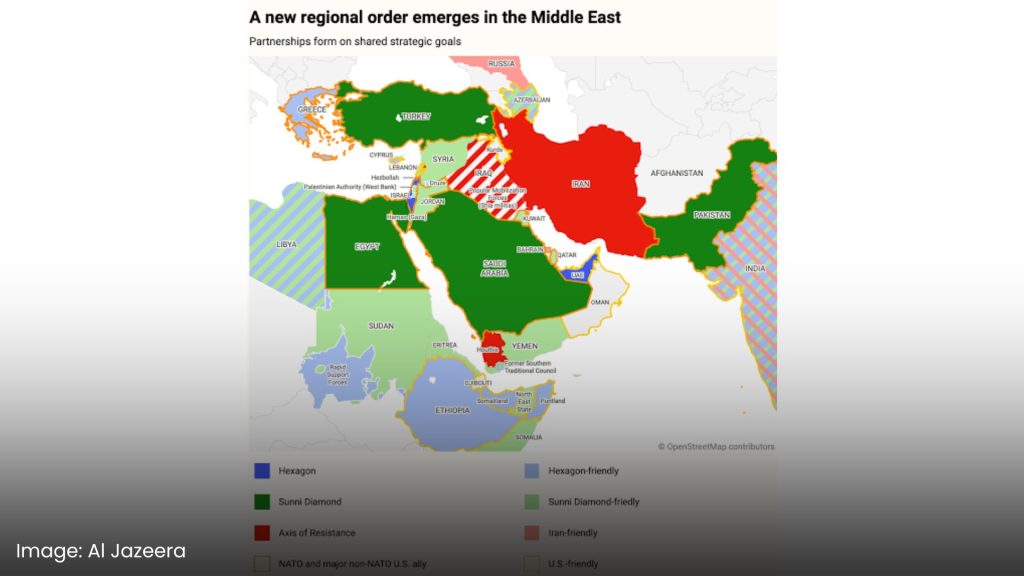
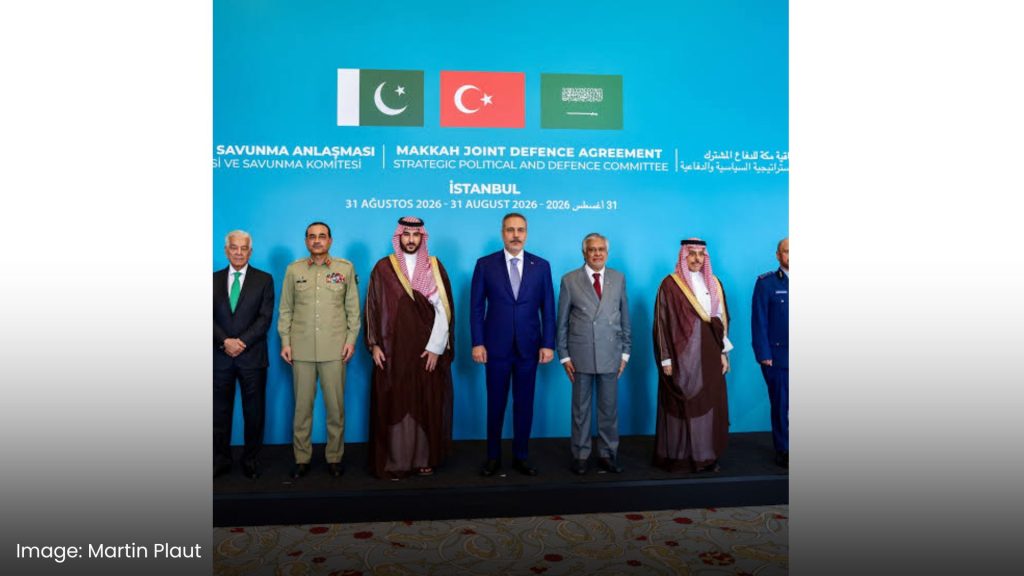
Saudi Arabia, Türkiye and Pakistan are preparing high-level military discussions under their recently established Makkah Joint Defence Agreement. The agreement treats an attack on one member as an attack on all three, although the precise nature of any future military involvement remains to be determined.
Türkiye has separately expressed readiness to provide military and technical support to Saudi Arabia, while Pakistan has emphasised its commitment under the defence agreement.
This is significant because it shows how an armed group’s actions can generate wider alliance dynamics. What began as a conflict centred on Yemen is increasingly connected to Saudi security, Red Sea navigation, energy markets and regional defence cooperation.
But How Much Power Do the Houthis Actually Have?
The answer requires some caution.
The Houthis should not be understood as a conventional military power capable of dominating the Gulf. Saudi Arabia and other regional states retain vastly greater military capabilities. Saudi Arabia has also demonstrated the ability to intercept incoming missiles, including the six reported on September 24.
The Houthi advantage instead lies in strategic disruption. Their geographical position, missile and drone capabilities and ability to threaten maritime routes allow them to influence actors far more powerful than themselves.
Their relationship with Iran also requires nuance. The Houthis are widely described as Iran-aligned or Iran-backed, and Iranian support has been an important factor in their military development. At the same time, Iranian officials have recently sought to distance Tehran from direct responsibility for Houthi operations. The precise degree of Iranian operational control therefore remains contested.
Ultimately, the Houthi challenge illustrates a broader transformation in regional security: power is not determined solely by the size of an army or the sophistication of a state’s weapons. Control over strategic geography, the ability to disrupt infrastructure and the capacity to impose costs on global economic networks can also generate considerable leverage.
The Houthis may not be capable of controlling the Gulf in a conventional sense. But they do not need to. By threatening the routes, infrastructure and systems that keep the Gulf connected to the global economy, they can make their presence felt far beyond Yemen.
References