
451,000 EXTRA DE.THS. BEFORE FEBRUARY.

A new climate warning says this year’s super El Niño could cause as many as 451,000 additional heat-related deaths worldwide between June 2026 and the end of February 2027. That is not a confirmed death toll. It is a modelled projection. But the scale is extraordinary, and the researchers behind it can name the countries.

451,000 Is The Warning, Not The Count

The projection comes from a report titled “451,000 at Risk: Where Action Can Save Lives During the Super El Niño”. Researchers examined the relationship between temperature and excess mortality across 24,378 regions worldwide, then combined that with seasonal temperature forecasts, measured against the 1996 to 2025 average.

The result is 451,000 excess deaths across nine months, including roughly 239,000 give or take 11,000 in the next six months alone. For scale, the team notes the figure is about 65 times the 6,800 people dead or missing in the recent Nepal flash flood.

The lead author warned against letting the number go abstract. He said it is made up of parents and children, grandparents and neighbours, people going to work and caring for families.

The Global South Carries Almost All Of It

Nigeria carries the highest single-country estimate at 31,400, followed by Indonesia at 19,300, Sudan at around 17,500, India at 15,800, Brazil at 13,300, Niger at 10,000 and Chad at 8,000. Across the Sahel, researchers project 66,800 additional deaths. The Philippines, Vietnam, Thailand and Cambodia account for another 19,400 combined.

The reason is structural. One climate policy director explained that coping with El Niño is harder for countries with weaker institutions, while wealthier countries have fire departments, health systems and emergency services built for exactly this. The heat is global. The ability to survive it is not.

Pakistan May Never Count Its Own Toll

Pakistan enters this with its own vulnerabilities. Monsoon rainfall came in 19% below normal in June, 11% below in July and 23% below in August.

Climate scientist Dr Fahad Saeed has said most heat deaths in Pakistan are never counted, pointing to the El Niño years of 2015, 2016 and 2024. More than 1,000 deaths were reported during the 2015 heatwave, and even that is believed to understate it.

Researchers warn that Pakistan and India become especially vulnerable during their 2027 summer if this El Niño persists.
The Heat Has Not Peaked

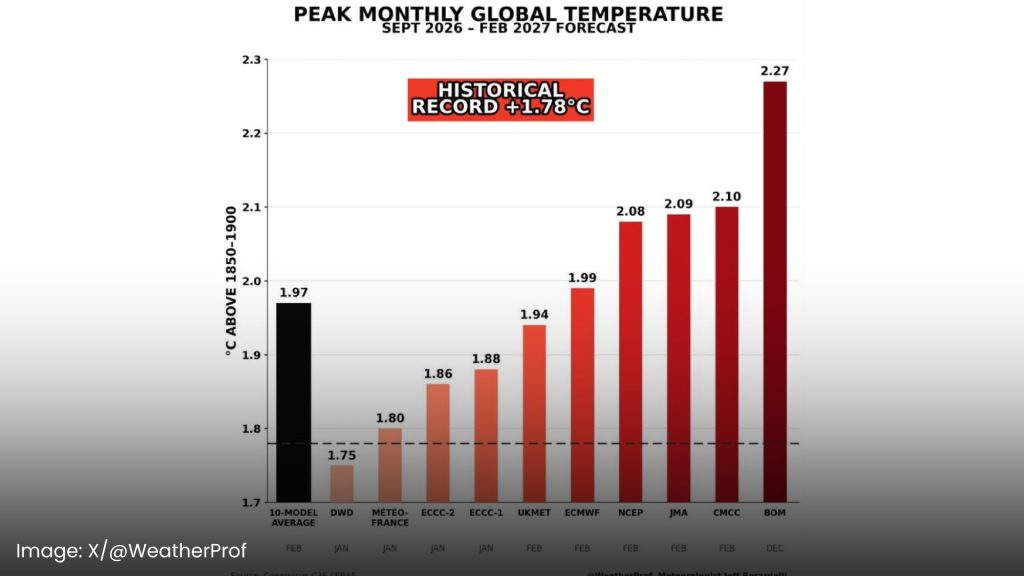
An El Niño is classed as super when sea surface temperatures in the central and eastern equatorial Pacific run at least 2°C above average. This one reached 2.7°C last month, with some forecasts suggesting a peak near 4°C between November and December.

The planet has already warmed 1.4°C since the pre-industrial era, and this event could add another 0.3°C, which is why 2027 is now expected to become the hottest year ever recorded. Alongside that, the report projects 44% more extremely hot days than a normal year.

451,000 Only Counts The Heat

One independent expert argued the figure is conservative, because it models heat alone. El Niño also shifts rainfall, deepens drought, drives flooding and wildfires and damages crops and water supplies. He argued those effects, compounded by the war in Iran, will drive food price inflation and a harder-to-record rise in deaths.

It Is Still A Projection

The report has not completed peer review. One outside scientist called the estimate plausible as a modelling exercise but not a definitive prediction. Another questioned the regional breakdowns, noting India’s projected figure falls outside its deadly heatwave season.

Why They Published Early Anyway

The team said it released the findings before peer review because there was still time for policymakers to act. The measures it names are ordinary: heat warnings, extra staff at medical facilities during the hottest periods, cooling centres and protections for outdoor workers.

So the most important number may not be 451,000. It may be how many of those deaths never happen.

By Shizza Umer

Sources

Climate Impact Lab: 451,000 at Risk

Climate Impact Lab: Report release

Al Jazeera: Scientists warn super El Nino could cause 450,000 deaths

CNN: Super-sized El Niño could cause more than 450,000 heat deaths by February

CBS News: Map shows areas at risk

Dawn: Pakistan in uncharted waters as super El Nino multiplies threats

Express Tribune: Pakistan among countries vulnerable to super El Niño
A new climate warning says this year’s super El Niño could cause as many as 451,000 additional heat-related deaths worldwide between June 2026 and the end of February 2027. That is not a confirmed death toll. It is a modelled projection. But the scale is extraordinary, and the researchers behind it can name the countries.

451,000 Is The Warning, Not The Count

The projection comes from a report titled “451,000 at Risk: Where Action Can Save Lives During the Super El Niño”. Researchers examined the relationship between temperature and excess mortality across 24,378 regions worldwide, then combined that with seasonal temperature forecasts, measured against the 1996 to 2025 average.

The result is 451,000 excess deaths across nine months, including roughly 239,000 give or take 11,000 in the next six months alone. For scale, the team notes the figure is about 65 times the 6,800 people dead or missing in the recent Nepal flash flood.

The lead author warned against letting the number go abstract. He said it is made up of parents and children, grandparents and neighbours, people going to work and caring for families.

The Global South Carries Almost All Of It

Nigeria carries the highest single-country estimate at 31,400, followed by Indonesia at 19,300, Sudan at around 17,500, India at 15,800, Brazil at 13,300, Niger at 10,000 and Chad at 8,000. Across the Sahel, researchers project 66,800 additional deaths. The Philippines, Vietnam, Thailand and Cambodia account for another 19,400 combined.

The reason is structural. One climate policy director explained that coping with El Niño is harder for countries with weaker institutions, while wealthier countries have fire departments, health systems and emergency services built for exactly this. The heat is global. The ability to survive it is not.

Pakistan May Never Count Its Own Toll

Pakistan enters this with its own vulnerabilities. Monsoon rainfall came in 19% below normal in June, 11% below in July and 23% below in August.

Climate scientist Dr Fahad Saeed has said most heat deaths in Pakistan are never counted, pointing to the El Niño years of 2015, 2016 and 2024. More than 1,000 deaths were reported during the 2015 heatwave, and even that is believed to understate it.

Researchers warn that Pakistan and India become especially vulnerable during their 2027 summer if this El Niño persists.

The Heat Has Not Peaked

An El Niño is classed as super when sea surface temperatures in the central and eastern equatorial Pacific run at least 2°C above average. This one reached 2.7°C last month, with some forecasts suggesting a peak near 4°C between November and December.

The planet has already warmed 1.4°C since the pre-industrial era, and this event could add another 0.3°C, which is why 2027 is now expected to become the hottest year ever recorded. Alongside that, the report projects 44% more extremely hot days than a normal year.

451,000 Only Counts The Heat

One independent expert argued the figure is conservative, because it models heat alone. El Niño also shifts rainfall, deepens drought, drives flooding and wildfires and damages crops and water supplies. He argued those effects, compounded by the war in Iran, will drive food price inflation and a harder-to-record rise in deaths.

It Is Still A Projection

The report has not completed peer review. One outside scientist called the estimate plausible as a modelling exercise but not a definitive prediction. Another questioned the regional breakdowns, noting India’s projected figure falls outside its deadly heatwave season.

Why They Published Early Anyway

The team said it released the findings before peer review because there was still time for policymakers to act. The measures it names are ordinary: heat warnings, extra staff at medical facilities during the hottest periods, cooling centres and protections for outdoor workers.

So the most important number may not be 451,000. It may be how many of those deaths never happen.

By Shizza Umer

Sources

Climate Impact Lab: 451,000 at Risk

Climate Impact Lab: Report release

Al Jazeera: Scientists warn super El Nino could cause 450,000 deaths

CNN: Super-sized El Niño could cause more than 450,000 heat deaths by February

CBS News: Map shows areas at risk

Dawn: Pakistan in uncharted waters as super El Nino multiplies threats

Express Tribune: Pakistan among countries vulnerable to super El Niño

spot_img

Explore more

spot_img
Global Affairs

Sudanese Refugees In Chad Are Now Crossing At 400 A Day

Is The Way Being Cleared For Netanyahu To Win Israel’s Election?

They Offered To Show Their Faces. Police Used F.rce Instead.

Stoned For Riding A Bike. Now She Has Asian Games Silver.

Iran To America: Back Off And Hormuz Reopens In 7 Days.

The UAE Files: Gold. W.rs. Spies. And One Disturbing Pattern.

Yemen Just Became Everyone’s Problem

Isr.el’s W.r on G.za’s Children: K.lled, Starved, Orphaned and Scarred