Two Children. A Parked Car. 39 Degrees.
In the southeastern French town of Carpentras, a mother found her two-year-old and four-year-old unconscious in the family car. Temperatures outside had exceeded 39 degrees Celsius. First responders were unable to resuscitate either child. The local prosecutor confirmed heat was the leading line of inquiry.
Those two deaths were not counted in any national record. They were not the largest number in any statistic. But they were the clearest possible statement of what extreme heat does when systems fail to protect the people most exposed to it.
Europe’s Heatwave Was Deadly Before It Became Symbolic
France reported around 1,000 excess deaths linked to the heat, with 85 percent of those fatalities occurring among people aged 65 and older, and deaths at home rising by 40 percent. The WHO put the wider European toll above 1,300, with both figures described as preliminary and expected to rise as more information emerges from homes and residential care facilities.
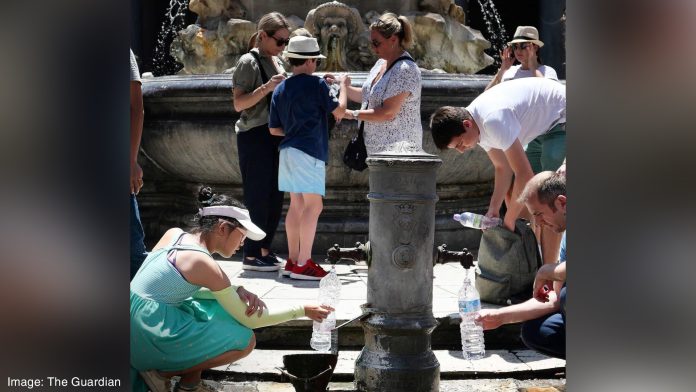
At least 40 people drowned in France alone while swimming in unsupervised areas to escape the heat. France’s Prime Minister described the fatalities, mainly young people, as a ‘tragic scourge.’ All-time national temperature records fell in at least eight countries, including Germany, Denmark, the Czech Republic, Switzerland, Spain, France and the UK. Scientists said the heatwave would have been virtually impossible without human-caused climate change, which has made this week’s night-time temperatures 100 times more likely than they would have been even two decades ago.
The EU Headquarters Became A Climate Inequality Metaphor
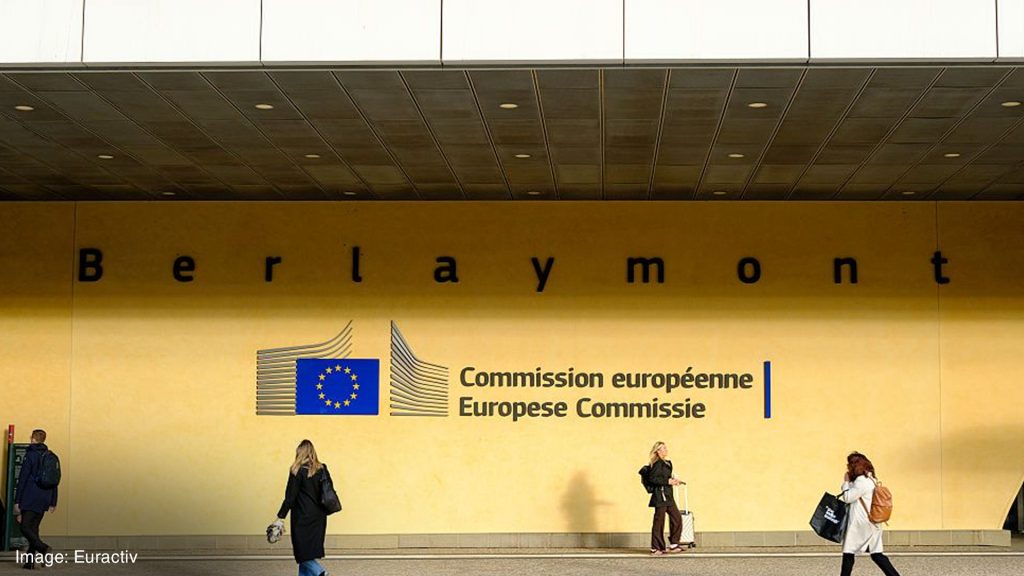
Inside the European Commission’s Berlaymont headquarters in Brussels, the heat produced a moment that compressed the continent’s crisis into a single floor plan.
Staff received an urgent midday text message reading: ‘BERL — URGENT — Due to extreme weather conditions, forced shut down of air cooling system from floor 1 to 7 for the rest of the day.’ The 13-storey building houses Commission President Ursula von der Leyen, her 26 commissioners and around 3,000 staff. Von der Leyen’s office sits on the 13th floor. Most commissioners are housed on floors eight and above. None of them lost cooling.
The reaction among lower-floor staff was immediate. ‘It’s like feudalism,’ one Commission official told Politico. A second called it a ‘disgrace.’ A third staffer working on the 8th floor, where air conditioning was still running, noted the temperature inside was still 25.7 degrees.
That is why this story travelled beyond Brussels. It was not only about air conditioning. It was about how institutions manage crisis, who is expected to absorb discomfort, and who remains insulated from the consequences.
Only 20 Percent Of European Homes Have Air Conditioning
The Berlaymont story is a metaphor, but the numbers behind it are structural. Only about 20 percent of European homes have air conditioning. In France the figure is roughly 25 percent. In hotter Spain it reaches about 50 percent. In many northern countries, buildings were historically designed to retain heat rather than dissipate it.
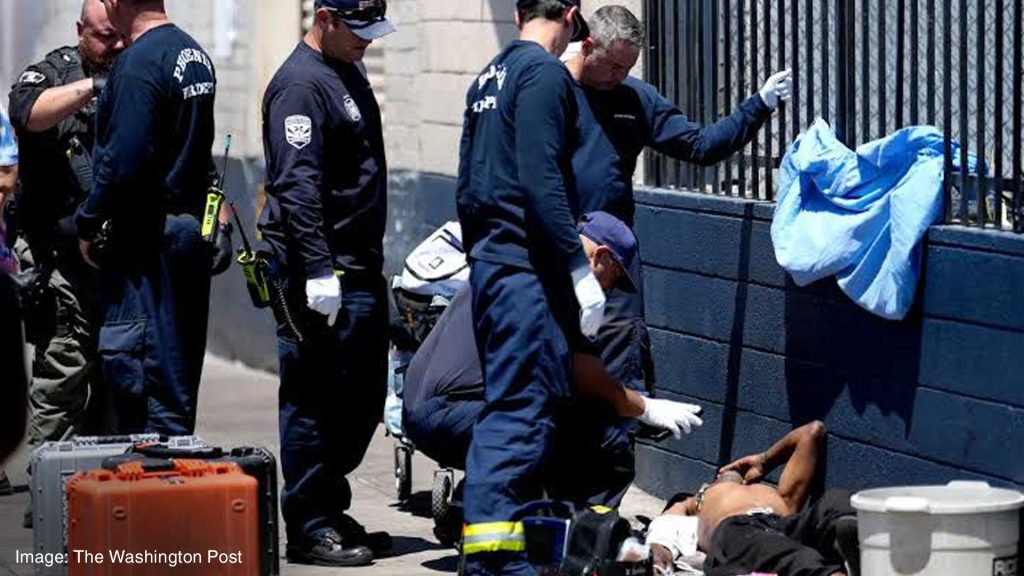
People over the age of 65 account for around 90 percent of mortality from heat stress in Europe. Lower-income communities face greater exposure due to poorly insulated housing and physical outdoor occupations. The people most likely to die in a heatwave are the people least likely to have access to cooling. That is not an accident of the weather. It is the architecture of inequality.
The Crisis Reaches The Top First, But The Pain Starts Below
The heatwave also exposed infrastructure the continent had not prepared for. The European Parliament experienced power blackouts from the surge in energy demand caused by its own cooling systems running at full capacity. France’s nuclear power plants, which supply most of the country’s electricity, cut output by around 7 percent of total demand as high river temperatures limited access to cooling water. In Belgium, one-fifth of trains operate without air conditioning, forcing the national rail operator to cancel peak-hour services. A freight train in Sweden derailed after heat warped the tracks.
These are not fringe consequences. They are what happens when a continent built for a cooler climate meets a heatwave that scientists say would have been virtually impossible a generation ago.
Who Gets To Stay Cool?
Europe’s heatwave exposed the blunt truth of climate adaptation: survival is becoming stratified.
People over 65 account for 90 percent of heat deaths. The elderly living alone, in poorly insulated homes, with no air conditioning, are the most likely to die. The children of Carpentras did not have the option to move to a cooler floor. The workers on Berlaymont’s lower levels could not choose their floor plan.
Some people will experience extreme heat as inconvenience. Others will experience it as danger. The climate crisis does not erase hierarchy. It maps it onto every building, every home and every body that was already least protected before the temperature began to rise.
Sources
Al Jazeera — France 1,000 excess deaths
France 24 — WHO 1,300 excess deaths
Anadolu Agency — EU Commission AC shutdown
Al Jazeera — Deaths and disruptions
Al Jazeera — 40 drown in France
Al Jazeera — Germany record temperatures
World Weather Attribution — Climate science