By Shizza Umer
A Prison Cell in the Middle of Tehran
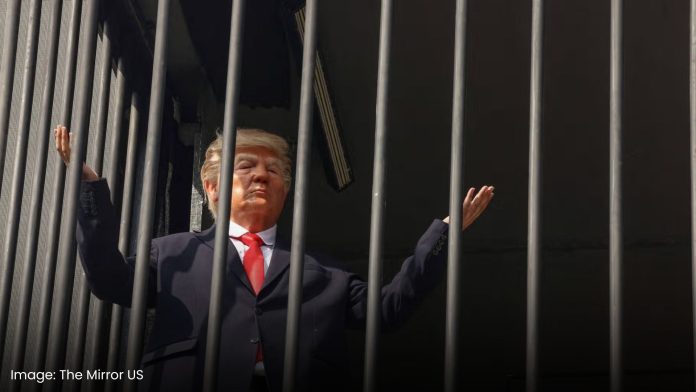
This week, people passing through Tehran’s busy Tajrish Square encountered an unusual spectacle: an actor dressed as US President Donald Trump, in a realistic mask, dark suit and red tie, sitting behind bars. The mock prison cell formed part of a billboard installation carrying the slogan, “It is a crime not to see this scene.” Passersby stopped to take pictures, but it was more than a political parody.
The display also included statements recalling two deadly incidents during the US-Israeli war on Iran: a school strike in Minab and a wedding struck in Sirik. Both raised serious questions about American military responsibility.
The Minab School Strike That Killed More Than 150
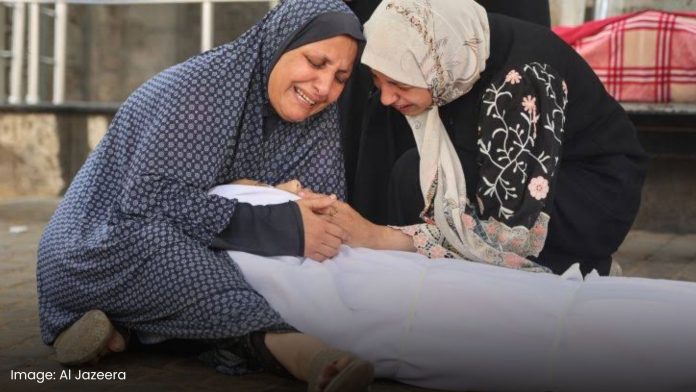
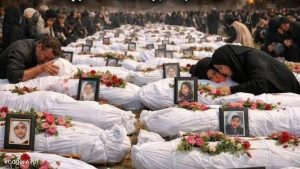
On February 28, the first day of the war, missiles struck Shajareh Tayyebeh primary school in Minab, southern Iran. At least 157 people were killed, including 123 children aged 13 or younger.
Remnants photographed at the site were identified as a US Tomahawk cruise missile, and US investigators reportedly believed American forces were likely responsible. Officers at US Central Command reportedly created the target coordinates using outdated Defense Intelligence Agency data. Satellite imagery shows the school had been separated from a neighbouring military base years earlier.
The Pentagon has not publicly released its final investigation.

September 1: The Date on Tehran’s Display
Another detail on the installation points to Tuesday, September 1, 2026, which is 10 Shahrivar 1405 in the Iranian calendar.
That evening, an explosion struck a family home hosting a wedding celebration in Kuhestak, Sirik County. Four people were killed, including four-year-old Amir Mohammad Karimi, and at least 68 others were injured.
Weapons experts who examined verified video and images considered the damage consistent with a direct hit, and three of the four assessed that an American weapon was the likely cause. Two US officials said American forces had struck a telecommunications tower about 135 metres from the wedding.
Washington has not accepted responsibility for the wedding casualties. Vice President JD Vance said the incident was being investigated. The date, then, is a reference to civilian suffering, not a decorative detail.
Trump’s Changing Explanations
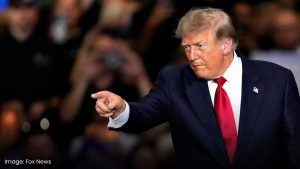
Trump’s public responses to the Minab strike have shifted. In March, he said “It was done by Iran.” In June, asked about the strike, he said “Mistakes are made” and “War is nasty.” In July, he suggested images of the destruction might be “AI-generated.”
Those statements sit uneasily beside the evidence pointing towards US missiles and failures in the targeting process. The Pentagon’s final public findings remain unavailable.
November 3: Another Unanswered Question
On October 15, senior Pentagon officials were reported to intend to delay the Minab investigation until after the November 3 US midterm elections. Separately, US and Israeli forces are reportedly preparing plans for renewed strikes on Iran after the elections.
There is no verified evidence connecting those two developments. But their timing raises an important question.
The families of children killed in Minab are still awaiting a complete public accounting of what happened. Tehran’s installation demands punishment through political imagery. Establishing responsibility, however, requires independently examined evidence, transparent investigations and meaningful accountability.
Should Washington publish the Minab investigation before considering another military campaign against Iran?
By Shizza Umer
Sources
https://theprint.in/feature/trump-in-a-tehran-prison-art-installation/3078654/
https://www.diken.com.tr/trump-iranda-sembolik-olarak-hapse-atildi/
https://airwars.org/incidents/usir260228a-february-28-2026