
The Badr Pact Explained: Why Pakistan, Türkiye, Qatar and Indonesia Are Deepening Defence Ties

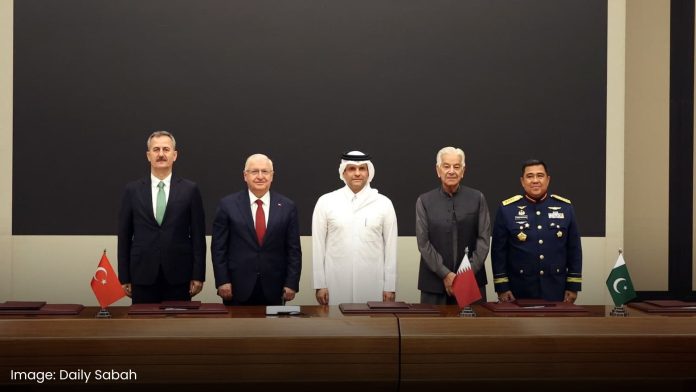
On October 21, 2026, Pakistan, Türkiye, Qatar and Indonesia signed the Badr Memorandum of Understanding in Doha, Qatar, establishing a framework for closer cooperation in defence manufacturing, military training, research and development. The agreement, announced by Türkiye’s Defence Ministry, reflects an effort to deepen strategic partnerships and strengthen the defence industries of all four countries.

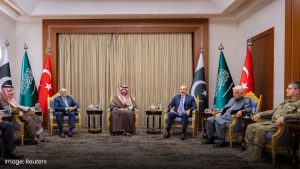
Pakistan was represented by Defence Minister Khawaja Asif. Türkiye’s Defence Minister Yaşar Güler, Qatar’s Deputy Prime Minister and Minister of State for Defence Affairs Sheikh Saud bin Abdulrahman, and Indonesian Deputy Defence Minister Yusuf Jauhari also signed the agreement. Officials from Türkiye’s defence-industry agency attended the ceremony.

What does the agreement cover?

According to the Turkish and Qatari defence authorities, the Badr memorandum aims to combine the participating countries’ capabilities to strengthen defence production and develop technologies suited to modern military requirements. Its stated areas of cooperation include defence manufacturing, technical military training, and research and development.

The agreement could help the countries move beyond separate arms purchases towards deeper industrial collaboration. This might involve joint production, technical knowledge-sharing and more closely integrated supply chains. However, the publicly available announcements do not identify specific weapons programmes, financial commitments or an implementation timetable. The signing therefore establishes a framework for cooperation. Its concrete outcomes will depend on follow-up arrangements.

What can each country contribute?

The four participants bring different capabilities and interests to the partnership.

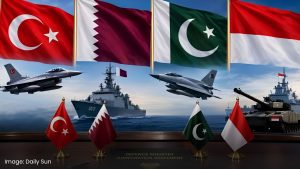
Türkiye has an established defence industry and existing military-industrial relationships with all three partners. Its defence sector has experience in areas including aerospace, naval platforms and unmanned systems.

Qatar has invested significantly in its defence capabilities and maintains close military and industrial ties with Türkiye. Those relationships could provide a foundation for further cooperation and investment.

Pakistan has experience in defence production and longstanding military ties with Türkiye. A prominent example is their naval shipbuilding cooperation, under which four MILGEM-class corvettes were contracted for the Pakistan Navy, with construction divided between Türkiye and Pakistan.

Indonesia has also been expanding its defence-industrial cooperation with Türkiye, including a joint tank-development project. Broader collaboration could offer opportunities to build domestic industrial capacity and diversify partnerships.

These examples illustrate why the countries might benefit from closer coordination. They do not, however, establish that each participant has been assigned a particular role under Badr.
Is this a mutual-defence alliance?

One important distinction is the difference between defence-industrial cooperation and a collective-defence commitment.

The Badr memorandum, as described in the public announcements, focuses on production, capabilities, training and research. The reported terms do not establish an obligation for the four countries to enter a war if one of them is attacked.

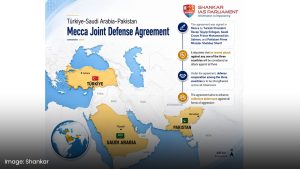
This distinguishes Badr from the Makkah Joint Defence Agreement signed by Pakistan, Türkiye and Saudi Arabia in August 2026, which includes a mutual-defence commitment. The two initiatives may complement each other, but they have different stated purposes: Makkah concerns collective defence, while Badr is centred on industrial and technological cooperation.
The wider strategic significance

The agreement comes at a time when countries are seeking to strengthen defence capacity, diversify suppliers and reduce vulnerabilities associated with technology restrictions and disrupted supply chains. Analysts cited by Al Jazeera view the initiative as part of a wider network of security and defence-industrial relationships linking the Gulf with South and Southeast Asia.

It should not automatically be interpreted as a break with Western security partnerships. Türkiye remains a NATO member, and Qatar maintains a longstanding strategic relationship with the United States. Diversifying defence cooperation can give countries additional options without necessarily replacing their existing alliances.
What happens next?

The long-term importance of Badr will depend on implementation. Follow-up agreements will need to clarify which projects will be pursued, how they will be financed, what technologies can be shared and where production will take place. The countries will also need to resolve practical issues such as industrial standards, intellectual property and export arrangements.

For now, the agreement represents a significant statement of intent to deepen defence-industrial ties among four countries. Whether it becomes a durable network of joint projects or remains a broad memorandum will become clearer as concrete commitments emerge.
REFERENCE
https://moderndiplomacy.eu/2026/10/21/turkey-qatar-pakistan-and-indonesia-sign-defence-pact-to-deepen-military-cooperation/

https://www.reuters.com/world/asia-pacific/turkey-qatar-pakistan-indonesia-sign-defence-cooperation-accord-ankara-says-2026-10-21/

https://www.dawn.com/news/2038774

https://www.aljazeera.com/amp/news/2026/10/21/how-qatar-turkiye-pakistan-and-indonesia-are-deepening-defence-ties

On October 21, 2026, Pakistan, Türkiye, Qatar and Indonesia signed the Badr Memorandum of Understanding in Doha, Qatar, establishing a framework for closer cooperation in defence manufacturing, military training, research and development. The agreement, announced by Türkiye’s Defence Ministry, reflects an effort to deepen strategic partnerships and strengthen the defence industries of all four countries.

Pakistan was represented by Defence Minister Khawaja Asif. Türkiye’s Defence Minister Yaşar Güler, Qatar’s Deputy Prime Minister and Minister of State for Defence Affairs Sheikh Saud bin Abdulrahman, and Indonesian Deputy Defence Minister Yusuf Jauhari also signed the agreement. Officials from Türkiye’s defence-industry agency attended the ceremony.

What does the agreement cover?

According to the Turkish and Qatari defence authorities, the Badr memorandum aims to combine the participating countries’ capabilities to strengthen defence production and develop technologies suited to modern military requirements. Its stated areas of cooperation include defence manufacturing, technical military training, and research and development.

The agreement could help the countries move beyond separate arms purchases towards deeper industrial collaboration. This might involve joint production, technical knowledge-sharing and more closely integrated supply chains. However, the publicly available announcements do not identify specific weapons programmes, financial commitments or an implementation timetable. The signing therefore establishes a framework for cooperation. Its concrete outcomes will depend on follow-up arrangements.

What can each country contribute?

The four participants bring different capabilities and interests to the partnership.

Türkiye has an established defence industry and existing military-industrial relationships with all three partners. Its defence sector has experience in areas including aerospace, naval platforms and unmanned systems.

Qatar has invested significantly in its defence capabilities and maintains close military and industrial ties with Türkiye. Those relationships could provide a foundation for further cooperation and investment.

Pakistan has experience in defence production and longstanding military ties with Türkiye. A prominent example is their naval shipbuilding cooperation, under which four MILGEM-class corvettes were contracted for the Pakistan Navy, with construction divided between Türkiye and Pakistan.

Indonesia has also been expanding its defence-industrial cooperation with Türkiye, including a joint tank-development project. Broader collaboration could offer opportunities to build domestic industrial capacity and diversify partnerships.

These examples illustrate why the countries might benefit from closer coordination. They do not, however, establish that each participant has been assigned a particular role under Badr.

Is this a mutual-defence alliance?

One important distinction is the difference between defence-industrial cooperation and a collective-defence commitment.

The Badr memorandum, as described in the public announcements, focuses on production, capabilities, training and research. The reported terms do not establish an obligation for the four countries to enter a war if one of them is attacked.

This distinguishes Badr from the Makkah Joint Defence Agreement signed by Pakistan, Türkiye and Saudi Arabia in August 2026, which includes a mutual-defence commitment. The two initiatives may complement each other, but they have different stated purposes: Makkah concerns collective defence, while Badr is centred on industrial and technological cooperation.

The wider strategic significance

The agreement comes at a time when countries are seeking to strengthen defence capacity, diversify suppliers and reduce vulnerabilities associated with technology restrictions and disrupted supply chains. Analysts cited by Al Jazeera view the initiative as part of a wider network of security and defence-industrial relationships linking the Gulf with South and Southeast Asia.

It should not automatically be interpreted as a break with Western security partnerships. Türkiye remains a NATO member, and Qatar maintains a longstanding strategic relationship with the United States. Diversifying defence cooperation can give countries additional options without necessarily replacing their existing alliances.

What happens next?

The long-term importance of Badr will depend on implementation. Follow-up agreements will need to clarify which projects will be pursued, how they will be financed, what technologies can be shared and where production will take place. The countries will also need to resolve practical issues such as industrial standards, intellectual property and export arrangements.

For now, the agreement represents a significant statement of intent to deepen defence-industrial ties among four countries. Whether it becomes a durable network of joint projects or remains a broad memorandum will become clearer as concrete commitments emerge.

REFERENCE
https://moderndiplomacy.eu/2026/10/21/turkey-qatar-pakistan-and-indonesia-sign-defence-pact-to-deepen-military-cooperation/

https://www.reuters.com/world/asia-pacific/turkey-qatar-pakistan-indonesia-sign-defence-cooperation-accord-ankara-says-2026-10-21/

https://www.dawn.com/news/2038774

https://www.aljazeera.com/amp/news/2026/10/21/how-qatar-turkiye-pakistan-and-indonesia-are-deepening-defence-ties

spot_img

Explore more

spot_img
Global Affairs

They Risked Their Lives to Save Her: The Courage of Palestinians...

Netanyahu Could Lose the Election. But Will Palestinians See Any Real...

Mali’s Ménaka Region Faces Another Deadly Attack as Civilians Remain Trapped...

Gaza Is Losing Food Aid. 500,000 Palestinians Are Being Left Behind.

Another Religious Festival, Another Deadly Stampede. Who Is Responsible?

A Mosque Set on Fire in the West Bank: Who Is...