HORMUZ WAS SUPPOSED TO BE THE PROOF THAT THE CEASEFIRE WAS REAL
The US-Iran ceasefire was supposed to lower the temperature in one of the world’s most dangerous military and energy corridors. Instead, the Strait of Hormuz has become the first major test of whether the deal can survive contact with reality.
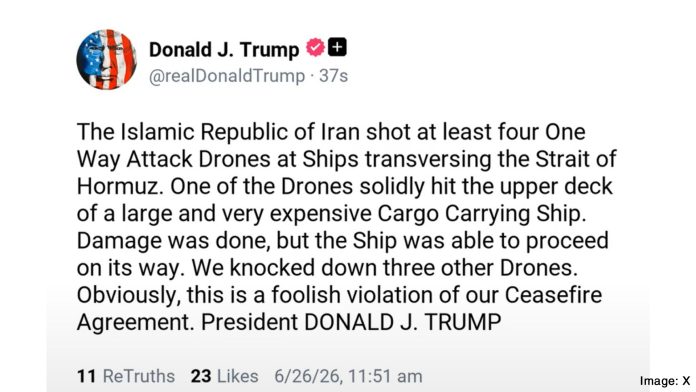
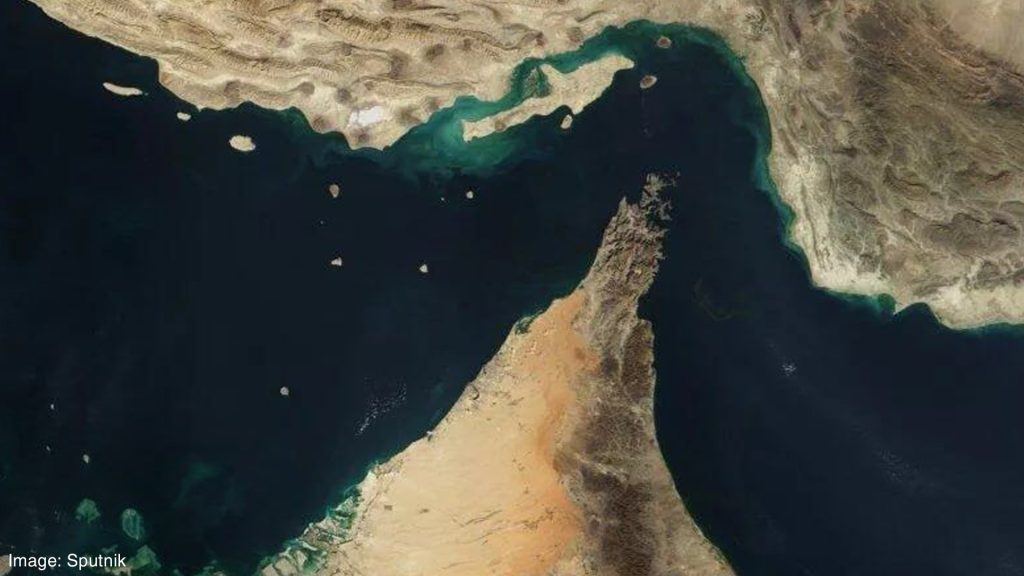
Iran is accused of hitting the Singapore-flagged M/V Ever Lovely with a drone near Hormuz. The US responded by striking Iranian missile, drone, and coastal radar sites. Then the IRGC struck back, targeting US military positions in the region and issuing a direct warning: “If the aggression is repeated, our response will be broader than this.” Iran simultaneously called the US strikes a “blatant violation” of the Islamabad Memorandum. Both sides now accuse the other of breaking the ceasefire while the world’s most sensitive oil route, which carried 25% of global seaborne oil trade before the war, sits at the centre of a potential escalation spiral. (Reuters | CENTCOM | Reuters IRGC | Times of Israel)
NOBODY WAS WATCHING WHEN IT HAPPENED
While the drone struck the Ever Lovely on June 25, the cameras in Washington were pointed somewhere else entirely. Secretary of State Marco Rubio was hosting Israeli and Lebanese officials to sign a framework peace agreement. The Lebanon deal got the headlines. The Hormuz attack almost didn’t. (Reuters | Reuters Lebanon)
That simultaneity is not an accident. It is what makes this moment so dangerous. Ceasefires are not just tested on the battlefield. They are tested in the attention economy. And the moment the world’s eyes moved to a diplomatic photo opportunity, the conflict at sea quietly escalated.
THIS IS NOT JUST ABOUT ONE CARGO SHIP
The Strait of Hormuz is not an ordinary sea lane. Before the Iran war began in February 2026, it carried 25% of the world’s seaborne oil and 20% of its liquefied natural gas. When ships are threatened there, the impact does not stay in the Gulf. It moves into shipping insurance, oil prices, fuel costs, inflation fears, and military calculations far beyond the region. (AP News | Al Jazeera)
The International Maritime Organization paused its evacuation operation after the attack, halting plans to move 11,000 sailors stranded in the Strait. That pause shows the crisis has already moved beyond military messaging. It is now affecting real people, real workers, and real supply chains. (IMO | Al Jazeera)
A CEASEFIRE WITHOUT TRUST CAN TURN INTO A RETALIATION LOOP
The dangerous part is the pattern. Iran says it is defending its rights around the strait and that the US fired first by striking its coast. The US says it was enforcing free navigation and responding to Iran’s attack on a civilian vessel. Each side presents itself as reactive. Each side says the other crossed the line first. (Reuters | Fox News)
That is how ceasefires break down. Not always through one formal announcement, but through repeated responses that quietly become a new phase of war. One side fires. The other says it had no choice. Then the first side calls the retaliation proof of bad faith. The conflict keeps moving while everyone insists they are still defending peace.
THE CAMERAS MOVED ON, BUT THE WAR LOGIC STAYED
The most dangerous illusion in this crisis is that a ceasefire automatically means peace. It does not. Peace requires trust, enforcement, restraint, and a shared interest in keeping the deal alive. Right now, Hormuz is showing the opposite: a fragile agreement surrounded by suspicion, armed forces, strategic shipping lanes, and leaders on both sides ready to frame every escalation as self-defense.
The cameras may have moved on after the ceasefire announcement. But in Hormuz, the conflict never really left. It only waited for the next spark.
*By Verity Quill | verumnetwork.com*
SOURCES
Reuters | AP News | Al Jazeera | Times of Israel | Palestine Chronicle | CENTCOM | International Maritime Organization | Fox News | NBC News