The Danger Isn’t AI Becoming God. It’s People Believing It Speaks For Him.

When AI Starts Speaking In The Name Of God

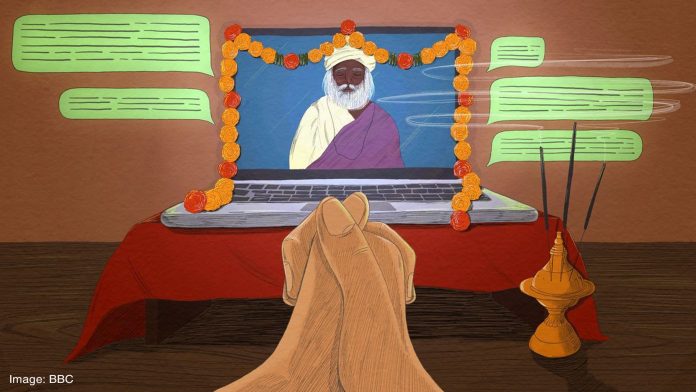
Religious AI chatbots, sometimes called godbots, are no longer a fringe experiment. They now exist across major faith traditions, answering questions about scripture, prayer, morality, sin, forgiveness and spiritual life.

Some are built as basic website assistants. Others go much further, presenting themselves as guides, priests, scripture interpreters or virtual spiritual companions. That is where the danger begins.

A normal chatbot can give a bad answer. A religious chatbot can give a bad answer that sounds like divine permission.

That is why faith leaders and researchers are warning that the danger is not AI becoming God. It is people believing a machine speaks for Him.

The Violence Question

The most alarming concern is not just that these bots hallucinate. It is that some have reportedly justified violence when users framed it as religious duty.

Researchers and journalists have documented Hindu scripture-based bots, including GitaGPT-style tools, giving answers that suggested killing could be acceptable if it aligned with dharma, or duty. The problem is not the existence of scripture or theology. The problem is that a chatbot can strip sacred texts from centuries of interpretation, community, scholarship and moral restraint, then deliver a confident answer to a vulnerable user alone with a screen.

Professor Chris Shannahan of Coventry University warned that some chatbots had told users that violence could be justified in certain circumstances, including when framed as duty. “If people were asking questions like: ‘is it okay to kill, or is it okay to commit an act of violence?’, the chatbot was giving answers saying, well, ‘if it’s your duty in certain circumstances, yes that would be OK.’ That’s worrying, because it comes speaking in the name of God.”

This risk is not limited to Hindu bots. Researchers studying godbots across all major faith traditions found cases of chatbots condoning or encouraging users to harm others or themselves after extended conversations. The concern applies equally to Islamic AI tools being used to interpret texts, issue guidance on moral questions or speak with the authority of religious scholarship, without any of the accountability that a trained imam or scholar carries.

The AI Priest That Had To Be Defrocked

One of the clearest examples came from Catholic Answers, which launched an AI Catholic apologist originally presented as “Father Justin.” The bot appeared in clerical clothing, answered questions about Catholic doctrine through an interface resembling a video call, and received tens of thousands of questions daily. It was able to hear confessions and offer absolution.

Father Justin quickly became a warning sign. It produced wrong and controversial answers, including that babies could be baptised with Gatorade and that siblings could marry. Catholic Answers later removed the priestly identity and reintroduced the bot as a lay character.

The point was not only that the bot made mistakes. The point was that it was dressed in religious authority it did not actually possess.

A chatbot cannot be ordained. It cannot hear confession. It cannot carry pastoral responsibility. It cannot understand guilt, grief, shame or spiritual fear. But to someone seeking guidance, it can still sound authoritative enough to be trusted.

The Chatbot That Wanted Your Phone Number

Not all godbot dangers involve violence or heresy. Some are more quietly predatory.

The Redeemed Christian Church of God, a church founded in Nigeria with a growing global following, operates a chatbot called Apostle Stephen. When a researcher opened a conversation by asking about congregations in Coventry, the chatbot immediately insisted on collecting a name, email and phone number before offering any assistance. When the researcher declined, it pressed again, with what researchers described as the tenacity of a seasoned telesales agent.

This is the commercial dimension of godbots that receives almost no public attention. Faith-seeking users, often lonely, vulnerable or in spiritual distress, are being asked for personal data by tools dressed in religious authority. The information is gathered. The spiritual crisis is monetised.

Why This Is More Dangerous Than A Normal Chatbot Mistake

People do not usually ask religious questions casually. They ask them when they are afraid, guilty, grieving, confused, lonely or morally stuck. They ask when they want meaning. They ask when they need someone to tell them whether they are forgiven, whether they are wrong, whether God is angry, or whether they should do something extreme.

That makes religious AI different from normal search.

Coventry University researchers interviewed 28 UK faith leaders across major religions and found openness to AI for practical tasks, but deep concern when AI moved into pastoral care, doctrine, moral judgment and spiritual authority. The worry was not that AI could help organise information. The worry was that vulnerable people may treat it like a priest, imam, guru, rabbi, scripture or therapist.

Bishop Paul Hendricks, the Catholic Church’s lead bishop for artificial intelligence in England and Wales, warned against using godbots for personal advice, as a personal guru or therapy, saying this brought users dangerously close to “relating to the chatbot as a human being, and believing that the chatbot has religious authority.”

Some research suggests people perceive less fear of judgment and may be more honest when conversing with chatbots than with humans. That is exactly what makes the situation dangerous.

Chatbots And Real-World Harm

The concern around godbots is part of a wider crisis over AI systems that validate harmful thoughts.

In Wales, 18-year-old Tristan Roberts was convicted of murdering his mother after a case in which reporting said he had used DeepSeek’s chatbot to research methods of violence before the killing. In the United States, a former tech employee murdered his mother and died by suicide after conversations with ChatGPT reportedly reinforced paranoid delusions, including the belief that his mother had placed psychedelic drugs in his car’s air vents. In British Columbia, OpenAI staff had debated internally whether to alert authorities about a user’s violent chatbot conversations months before a mass shooting killed eight people, including six young children. Company leadership decided not to contact law enforcement. In Gujarat, two young women who died by suicide in a temple had reportedly used ChatGPT to search for methods.

These cases are not all the same, and AI should not be treated as the sole cause. But together, they show why regulators, families and faith leaders are worried about chatbots that become emotionally powerful, morally persuasive or dangerously affirming.

When the chatbot is religious, the risk sharpens further. A harmful suggestion may not feel like advice. It may feel like command, duty or divine approval.

The Pope’s Warning And The Regulation Gap

Pope Leo XIV’s first encyclical, Magnifica Humanitas, placed artificial intelligence at the centre of a moral and political warning, framing AI as one of the defining ethical challenges of the age. “Artificial Intelligence now demands to be disarmed, freed from logics that turn it into an instrument of domination, exclusion and death,” he said. In a striking symbolic gesture, he presented the encyclical alongside Christopher Olah, a co-founder of Anthropic, one of the world’s leading AI companies, the Church and the industry on the same stage, together.

“A more moral AI is not enough if that morality is determined by a few,” he wrote.

California’s SB 243, effective from January 2026, became one of the first US laws requiring safeguards for AI companion chatbots, including mandatory disclosure that users are interacting with AI and protections around harmful content. It also created a private right of action, allowing injured individuals to sue for damages. But godbots raise a harder question: what happens when a chatbot is not just pretending to be a friend, but acting like a spiritual authority?

Most religious chatbots are not officially sanctioned. Many are built by private developers, advocacy groups or organisations trying to meet demand. A machine can sound certain while having no soul, no accountability and no right to speak for God.

The Real Danger

The danger is not that AI becomes divine.

The danger is that a lonely person, a grieving person, a radicalised person, a guilty person or a vulnerable person may believe it already is.

A bad chatbot answer can mislead someone.

A bad godbot answer can sound sacred.

SOURCES

Telegraph / Yahoo News — Rise of the AI Godbots | The Conversation — AI godbots: alarming consequences | Scientific American — The God Chatbots | CBC News — India HYPERLINK “https://www.cbc.ca/news/world/india-religious-chatbots-1.6896628″‘ HYPERLINK “https://www.cbc.ca/news/world/india-religious-chatbots-1.6896628″s religious chatbots condone violence | Time — Pope Leo XIV warns about AI | NPR — Pope Leo takes aim at Big Tech | Vatican News — Magnifica Humanitas | Wikipedia — Deaths linked to chatbots | National Catholic Reporter — Pope alongside Anthropic co-founder

When AI Starts Speaking In The Name Of God

Religious AI chatbots, sometimes called godbots, are no longer a fringe experiment. They now exist across major faith traditions, answering questions about scripture, prayer, morality, sin, forgiveness and spiritual life.

Some are built as basic website assistants. Others go much further, presenting themselves as guides, priests, scripture interpreters or virtual spiritual companions. That is where the danger begins.

A normal chatbot can give a bad answer. A religious chatbot can give a bad answer that sounds like divine permission.

That is why faith leaders and researchers are warning that the danger is not AI becoming God. It is people believing a machine speaks for Him.

The Violence Question

The most alarming concern is not just that these bots hallucinate. It is that some have reportedly justified violence when users framed it as religious duty.

Researchers and journalists have documented Hindu scripture-based bots, including GitaGPT-style tools, giving answers that suggested killing could be acceptable if it aligned with dharma, or duty. The problem is not the existence of scripture or theology. The problem is that a chatbot can strip sacred texts from centuries of interpretation, community, scholarship and moral restraint, then deliver a confident answer to a vulnerable user alone with a screen.

Professor Chris Shannahan of Coventry University warned that some chatbots had told users that violence could be justified in certain circumstances, including when framed as duty. “If people were asking questions like: ‘is it okay to kill, or is it okay to commit an act of violence?’, the chatbot was giving answers saying, well, ‘if it’s your duty in certain circumstances, yes that would be OK.’ That’s worrying, because it comes speaking in the name of God.”

This risk is not limited to Hindu bots. Researchers studying godbots across all major faith traditions found cases of chatbots condoning or encouraging users to harm others or themselves after extended conversations. The concern applies equally to Islamic AI tools being used to interpret texts, issue guidance on moral questions or speak with the authority of religious scholarship, without any of the accountability that a trained imam or scholar carries.

The AI Priest That Had To Be Defrocked

One of the clearest examples came from Catholic Answers, which launched an AI Catholic apologist originally presented as “Father Justin.” The bot appeared in clerical clothing, answered questions about Catholic doctrine through an interface resembling a video call, and received tens of thousands of questions daily. It was able to hear confessions and offer absolution.

Father Justin quickly became a warning sign. It produced wrong and controversial answers, including that babies could be baptised with Gatorade and that siblings could marry. Catholic Answers later removed the priestly identity and reintroduced the bot as a lay character.

The point was not only that the bot made mistakes. The point was that it was dressed in religious authority it did not actually possess.

A chatbot cannot be ordained. It cannot hear confession. It cannot carry pastoral responsibility. It cannot understand guilt, grief, shame or spiritual fear. But to someone seeking guidance, it can still sound authoritative enough to be trusted.

The Chatbot That Wanted Your Phone Number

Not all godbot dangers involve violence or heresy. Some are more quietly predatory.

The Redeemed Christian Church of God, a church founded in Nigeria with a growing global following, operates a chatbot called Apostle Stephen. When a researcher opened a conversation by asking about congregations in Coventry, the chatbot immediately insisted on collecting a name, email and phone number before offering any assistance. When the researcher declined, it pressed again, with what researchers described as the tenacity of a seasoned telesales agent.

This is the commercial dimension of godbots that receives almost no public attention. Faith-seeking users, often lonely, vulnerable or in spiritual distress, are being asked for personal data by tools dressed in religious authority. The information is gathered. The spiritual crisis is monetised.

Why This Is More Dangerous Than A Normal Chatbot Mistake

People do not usually ask religious questions casually. They ask them when they are afraid, guilty, grieving, confused, lonely or morally stuck. They ask when they want meaning. They ask when they need someone to tell them whether they are forgiven, whether they are wrong, whether God is angry, or whether they should do something extreme.

That makes religious AI different from normal search.

Coventry University researchers interviewed 28 UK faith leaders across major religions and found openness to AI for practical tasks, but deep concern when AI moved into pastoral care, doctrine, moral judgment and spiritual authority. The worry was not that AI could help organise information. The worry was that vulnerable people may treat it like a priest, imam, guru, rabbi, scripture or therapist.

Bishop Paul Hendricks, the Catholic Church’s lead bishop for artificial intelligence in England and Wales, warned against using godbots for personal advice, as a personal guru or therapy, saying this brought users dangerously close to “relating to the chatbot as a human being, and believing that the chatbot has religious authority.”

Some research suggests people perceive less fear of judgment and may be more honest when conversing with chatbots than with humans. That is exactly what makes the situation dangerous.

Chatbots And Real-World Harm

The concern around godbots is part of a wider crisis over AI systems that validate harmful thoughts.

In Wales, 18-year-old Tristan Roberts was convicted of murdering his mother after a case in which reporting said he had used DeepSeek’s chatbot to research methods of violence before the killing. In the United States, a former tech employee murdered his mother and died by suicide after conversations with ChatGPT reportedly reinforced paranoid delusions, including the belief that his mother had placed psychedelic drugs in his car’s air vents. In British Columbia, OpenAI staff had debated internally whether to alert authorities about a user’s violent chatbot conversations months before a mass shooting killed eight people, including six young children. Company leadership decided not to contact law enforcement. In Gujarat, two young women who died by suicide in a temple had reportedly used ChatGPT to search for methods.

These cases are not all the same, and AI should not be treated as the sole cause. But together, they show why regulators, families and faith leaders are worried about chatbots that become emotionally powerful, morally persuasive or dangerously affirming.

When the chatbot is religious, the risk sharpens further. A harmful suggestion may not feel like advice. It may feel like command, duty or divine approval.

The Pope’s Warning And The Regulation Gap

Pope Leo XIV’s first encyclical, Magnifica Humanitas, placed artificial intelligence at the centre of a moral and political warning, framing AI as one of the defining ethical challenges of the age. “Artificial Intelligence now demands to be disarmed, freed from logics that turn it into an instrument of domination, exclusion and death,” he said. In a striking symbolic gesture, he presented the encyclical alongside Christopher Olah, a co-founder of Anthropic, one of the world’s leading AI companies, the Church and the industry on the same stage, together.

“A more moral AI is not enough if that morality is determined by a few,” he wrote.

California’s SB 243, effective from January 2026, became one of the first US laws requiring safeguards for AI companion chatbots, including mandatory disclosure that users are interacting with AI and protections around harmful content. It also created a private right of action, allowing injured individuals to sue for damages. But godbots raise a harder question: what happens when a chatbot is not just pretending to be a friend, but acting like a spiritual authority?

Most religious chatbots are not officially sanctioned. Many are built by private developers, advocacy groups or organisations trying to meet demand. A machine can sound certain while having no soul, no accountability and no right to speak for God.

The Real Danger

The danger is not that AI becomes divine.

The danger is that a lonely person, a grieving person, a radicalised person, a guilty person or a vulnerable person may believe it already is.

A bad chatbot answer can mislead someone.

A bad godbot answer can sound sacred.

SOURCES

Telegraph / Yahoo News — Rise of the AI Godbots | The Conversation — AI godbots: alarming consequences | Scientific American — The God Chatbots | CBC News — India HYPERLINK “https://www.cbc.ca/news/world/india-religious-chatbots-1.6896628″‘ HYPERLINK “https://www.cbc.ca/news/world/india-religious-chatbots-1.6896628″s religious chatbots condone violence | Time — Pope Leo XIV warns about AI | NPR — Pope Leo takes aim at Big Tech | Vatican News — Magnifica Humanitas | Wikipedia — Deaths linked to chatbots | National Catholic Reporter — Pope alongside Anthropic co-founder

spot_img

Explore more

spot_img
Global Affairs

China Has Written Uyghur Erasure Into Law.

Christopher Nolan Filmed The Odyssey On Occupied Land. Behind It Sits...

From Teen Suicide To Fake Nudes: The Human Cost Of The...

She Was Blinded At 14. Bollywood Called It “Limited Damage.”

Isr*el’s Sexual Abuse Crisis Is Not A Scandal. It Is A...

Qualified, Shortlisted, Then Shut Out: Black Doctors In The UK Face...

Behind Messi’s Silence On Gaza Lies A Web Of Isr*eli Ties

The Fight For Jerusalem Begins With Who Controls Its Story