Trump Promised Criminal Deportations. ICE Started Taking Fathers Instead

The administration said it was targeting criminals. Two-thirds of deported men had no criminal convictions. That gap is now at the centre of a growing constitutional crisis.

One of the first cases to break through public consciousness involved a 4-year-old American boy with Stage 4 kidney cancer reportedly deported to Honduras without medication, according to the ACLU of Louisiana. His mother, who had lived in the United States for over a decade, was undocumented. The family was denied access to their lawyer despite active legal efforts to fight the case. Trump’s border czar Tom Homan defended the deportation: “Having a US citizen child does not make you immune from our laws.”

That case became the human face of a policy the data is now systematically dismantling.

The Numbers That Changed The Story

According to a Washington Post analysis, more than 360,000 people have been removed from the United States since the start of Trump’s second term. Nearly 300,000 of them were men.

But the most significant shift is not the scale. It is who is being deported.

Almost a quarter of deported men had lived in the United States for at least three years before removal. During the final year of the Biden administration, less than a tenth of deported men had been in the country that long. The rate of long-term residents being deported has effectively tripled.

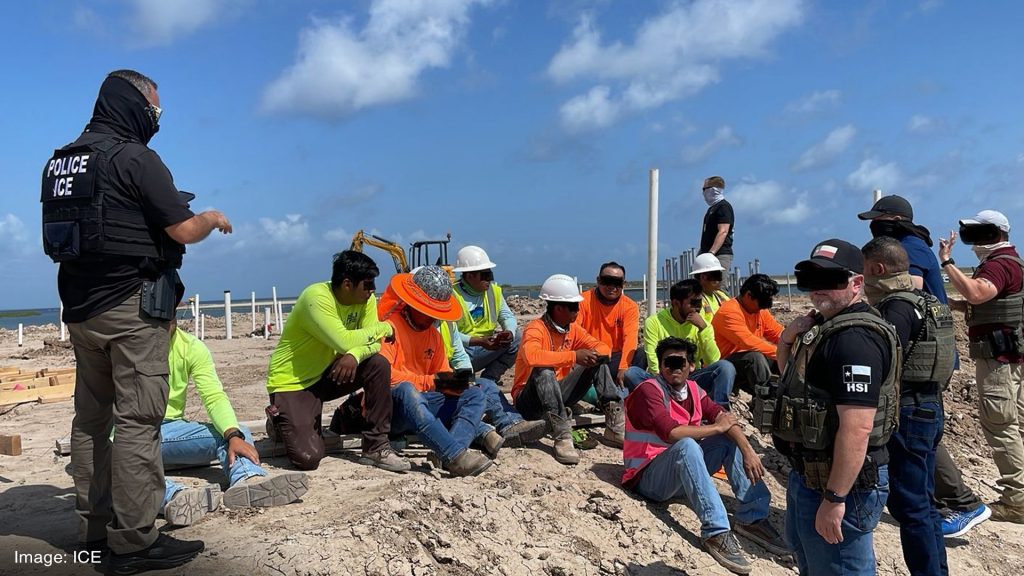
ICE targeted specific industries during raids, including construction sites, car washes and commercial truck drivers. Those sectors employ predominantly male workforces, which explains the gender skew in the removal data.

The Criminal Narrative Is Collapsing

The administration repeatedly framed the crackdown as a mission targeting dangerous criminals. The data tells a different story.

Nearly two-thirds of deported men had no criminal convictions. ICE arrests of people with no criminal record surged by 2,450 percent in Trump’s first year, driven by expanded workplace raids, roving patrols, courthouse arrests and detentions during routine ICE check-ins. People attending their own legal proceedings walked into what reporters described as deportation traps.

The administration says it is targeting criminals. The majority of deported men are not.
Families Are Losing Everything Overnight

Researchers from the Urban Institute and Migration Policy Institute found that family income drops by an average of 70 percent within six months after a parent is arrested or deported.

Fathers are often the primary earners in these households. Once they are removed, families face food insecurity, housing instability, debt and psychological trauma. Parents reportedly stop attending school meetings, parks and community spaces out of fear. The climate of fear spreads far beyond undocumented immigrants themselves.

Congress has authorised $45 billion in new detention funding. By November 2025, for every person released from ICE detention, more than fourteen were deported directly from custody. A year earlier, that ratio was approximately one to two.

The Breaking Point: People Are Surrendering Without A Fight

Beyond formal deportations, a quieter crisis is unfolding inside detention centres.

Immigrants are giving up their legal claims for humanitarian protection and choosing to leave voluntarily in exponentially higher numbers, mostly from the confines of federal detention where prolonged stays have become the norm. The system is not simply deporting people. It is breaking their will to fight until they leave themselves.

ICE And The Courts Are Now In Direct Conflict

The immigration system itself is fracturing under the pressure.

Chief Minnesota federal judge Patrick Schiltz documented 96 court orders ICE violated across 74 separate cases. Government attorneys separately identified 56 additional court order violations through mid-February 2026, including deportations carried out after judges had issued injunctions to stop them.

Legal experts warn this is no longer solely an immigration debate. It is a constitutional crisis over whether the executive branch is above the law.

Concerns are also growing over the new immigration judges appointed under Trump. Two-thirds have no immigration law experience listed in their biographies. Training periods were cut from nearly five weeks to three. New hires include a divorce lawyer who vowed to fight exclusively for the rights of men and a judge previously overturned by an appeals court for denying protection to a man because he did not look “overtly gay.”

Former judges fired by the administration described the replacements plainly. “They are trying to create a malleable workforce that will do what they want without question,” said Kerry Doyle, a former ICE official hired as an immigration judge under Biden and fired before she could hear a single case.

The Economic Backfire

The administration argued mass deportations would create opportunities for American workers. New labour market research suggests the opposite is happening.

Construction sites, car washes and logistics networks are experiencing disruption. Some studies suggest working-class American men in those same sectors are seeing reduced opportunities because labour networks and projects are being destabilised. The labour market is not a zero-sum competition.

In some cases, the US government paid more than one million dollars per person to deport individuals to third countries, several of which have documented records of corruption, human rights abuses and human trafficking, according to a Senate Foreign Relations Committee report.

Public Opinion Is Turning

A Washington Post-ABC News-Ipsos poll found 58 percent of Americans now believe Trump’s deportation efforts have gone too far. That figure represents an eight-point rise since last autumn. The trajectory matters as much as the number. Public opinion is not settled. It is moving.

What began as a politically popular promise to remove criminals is now a national reckoning over families, courts, labour markets and whether the rule of law still applies equally inside the United States.

SOURCES

Washington Post, ABC News-Ipsos, Urban Institute, Migration Policy Institute, ACLU Louisiana, Reuters, National Association of Immigration Judges, The Guardian, Senate Foreign Relations Committee


The administration said it was targeting criminals. Two-thirds of deported men had no criminal convictions. That gap is now at the centre of a growing constitutional crisis.

One of the first cases to break through public consciousness involved a 4-year-old American boy with Stage 4 kidney cancer reportedly deported to Honduras without medication, according to the ACLU of Louisiana. His mother, who had lived in the United States for over a decade, was undocumented. The family was denied access to their lawyer despite active legal efforts to fight the case. Trump’s border czar Tom Homan defended the deportation: “Having a US citizen child does not make you immune from our laws.”

That case became the human face of a policy the data is now systematically dismantling.

The Numbers That Changed The Story

According to a Washington Post analysis, more than 360,000 people have been removed from the United States since the start of Trump’s second term. Nearly 300,000 of them were men.

But the most significant shift is not the scale. It is who is being deported.

Almost a quarter of deported men had lived in the United States for at least three years before removal. During the final year of the Biden administration, less than a tenth of deported men had been in the country that long. The rate of long-term residents being deported has effectively tripled.

ICE targeted specific industries during raids, including construction sites, car washes and commercial truck drivers. Those sectors employ predominantly male workforces, which explains the gender skew in the removal data.

The Criminal Narrative Is Collapsing

The administration repeatedly framed the crackdown as a mission targeting dangerous criminals. The data tells a different story.

Nearly two-thirds of deported men had no criminal convictions. ICE arrests of people with no criminal record surged by 2,450 percent in Trump’s first year, driven by expanded workplace raids, roving patrols, courthouse arrests and detentions during routine ICE check-ins. People attending their own legal proceedings walked into what reporters described as deportation traps.

The administration says it is targeting criminals. The majority of deported men are not.

Families Are Losing Everything Overnight

Researchers from the Urban Institute and Migration Policy Institute found that family income drops by an average of 70 percent within six months after a parent is arrested or deported.

Fathers are often the primary earners in these households. Once they are removed, families face food insecurity, housing instability, debt and psychological trauma. Parents reportedly stop attending school meetings, parks and community spaces out of fear. The climate of fear spreads far beyond undocumented immigrants themselves.

Congress has authorised $45 billion in new detention funding. By November 2025, for every person released from ICE detention, more than fourteen were deported directly from custody. A year earlier, that ratio was approximately one to two.

The Breaking Point: People Are Surrendering Without A Fight

Beyond formal deportations, a quieter crisis is unfolding inside detention centres.

Immigrants are giving up their legal claims for humanitarian protection and choosing to leave voluntarily in exponentially higher numbers, mostly from the confines of federal detention where prolonged stays have become the norm. The system is not simply deporting people. It is breaking their will to fight until they leave themselves.

ICE And The Courts Are Now In Direct Conflict

The immigration system itself is fracturing under the pressure.

Chief Minnesota federal judge Patrick Schiltz documented 96 court orders ICE violated across 74 separate cases. Government attorneys separately identified 56 additional court order violations through mid-February 2026, including deportations carried out after judges had issued injunctions to stop them.

Legal experts warn this is no longer solely an immigration debate. It is a constitutional crisis over whether the executive branch is above the law.

Concerns are also growing over the new immigration judges appointed under Trump. Two-thirds have no immigration law experience listed in their biographies. Training periods were cut from nearly five weeks to three. New hires include a divorce lawyer who vowed to fight exclusively for the rights of men and a judge previously overturned by an appeals court for denying protection to a man because he did not look “overtly gay.”

Former judges fired by the administration described the replacements plainly. “They are trying to create a malleable workforce that will do what they want without question,” said Kerry Doyle, a former ICE official hired as an immigration judge under Biden and fired before she could hear a single case.

The Economic Backfire

The administration argued mass deportations would create opportunities for American workers. New labour market research suggests the opposite is happening.

Construction sites, car washes and logistics networks are experiencing disruption. Some studies suggest working-class American men in those same sectors are seeing reduced opportunities because labour networks and projects are being destabilised. The labour market is not a zero-sum competition.

In some cases, the US government paid more than one million dollars per person to deport individuals to third countries, several of which have documented records of corruption, human rights abuses and human trafficking, according to a Senate Foreign Relations Committee report.

Public Opinion Is Turning

A Washington Post-ABC News-Ipsos poll found 58 percent of Americans now believe Trump’s deportation efforts have gone too far. That figure represents an eight-point rise since last autumn. The trajectory matters as much as the number. Public opinion is not settled. It is moving.

What began as a politically popular promise to remove criminals is now a national reckoning over families, courts, labour markets and whether the rule of law still applies equally inside the United States.

SOURCES

Washington Post, ABC News-Ipsos, Urban Institute, Migration Policy Institute, ACLU Louisiana, Reuters, National Association of Immigration Judges, The Guardian, Senate Foreign Relations Committee

spot_img

Explore more

spot_img
Health

A Supplement Millions Trust Is Now Linked To Faster Alzheimer’s Decline.

Trump Tried To Cut China Off. China Built The Fastest Machine...

The UAE’s Great Betrayal: How Abu Dhabi Played the Muslim World

British Muslims Say They No Longer Feel Safe. The Attacks Are...

Britain Is Getting Its Seventh Prime Minister In A Decade.

Pakistan Helped Build A Peace Roadmap in Switzerland. Isr*el And Its...

The Lebanon Ceasefire Was Supposed To Stop The Strikes. It Barely...

The Plan To End Al-Aqsa Has Already Started.