When Childhood Changes Under Conflict in Gaza
Maryam Tariq
CHILDHOOD UNDER CONFLICT IN GAZA
The ongoing war in Gaza has reshaped everyday life for children. According to humanitarian organizations such as UNICEF and the International Rescue Committee, repeated waves of violence and destruction have created an environment where safety is rare and uncertainty is constant. Many children are no longer experiencing a stable childhood, as schools, homes, and public spaces have been heavily affected.
SCHOOLS DAMAGED AND PLAY SPACES LOST
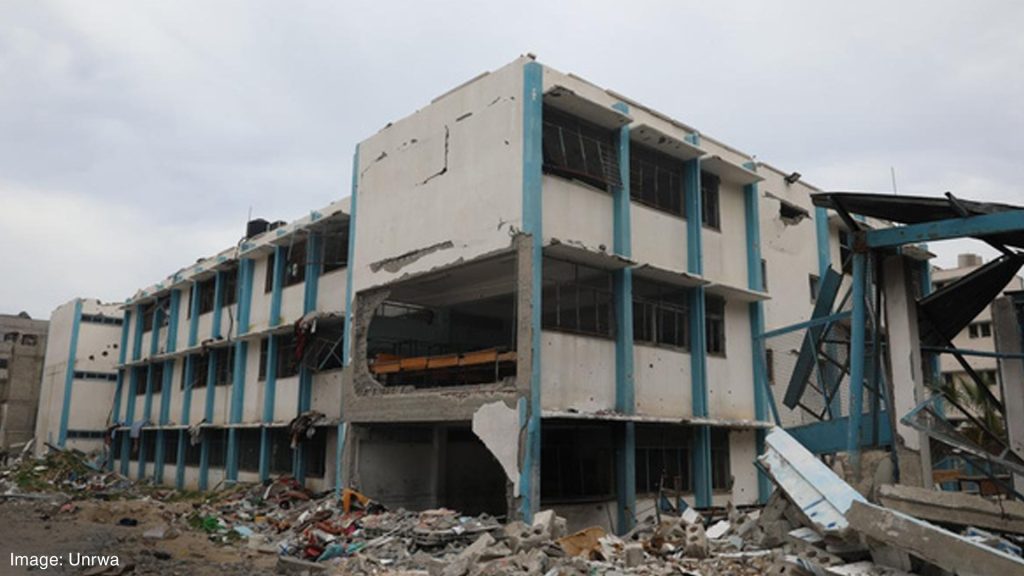
Reports indicate that around 88 percent of school buildings have been damaged or affected, leaving limited access to education and structured play. With playgrounds destroyed or unsafe, children are often left with no designated areas for recreation. This absence of safe spaces has changed how and where children spend their time.
PLAY SHIFTING INTO SURVIVAL EXPRESSION
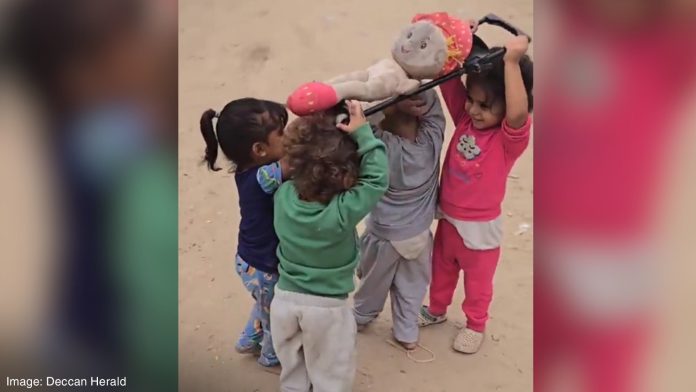
In place of traditional games, children are increasingly observed reenacting elements of their surroundings. Some imitate scenes they witness in daily life, including carrying pretend figures or acting out funerals. Humanitarian observers describe this as a reflection of how deeply conflict has entered childhood experience, where imagination is shaped by survival rather than normal play.
TOYS REPLACED BY RUBBLE AND SCARCITY
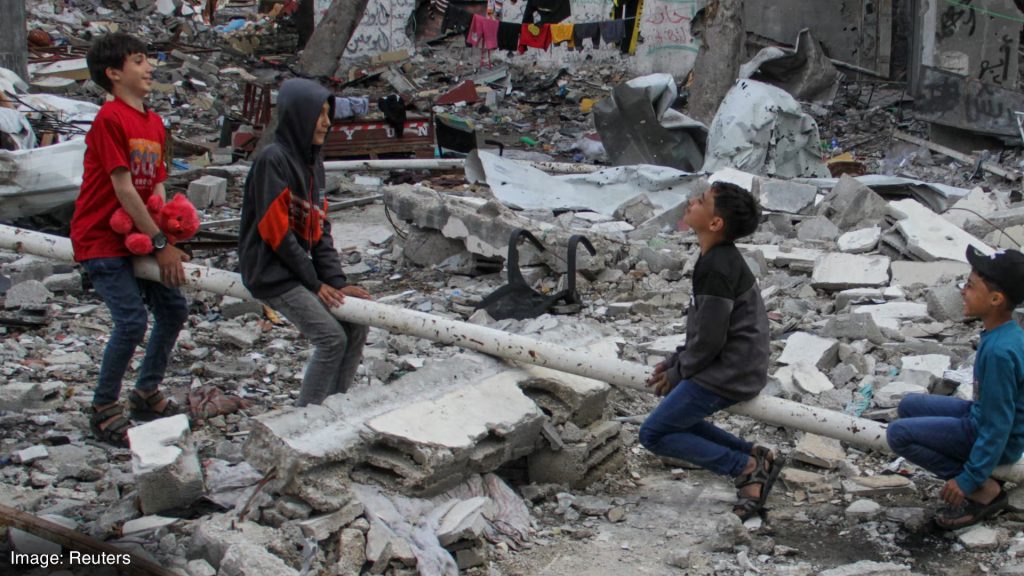
Due to shortages and restrictions, access to toys and recreational materials is extremely limited. Families often cannot afford basic items, and children sometimes turn to debris or discarded materials to create makeshift play objects. In some cases, humanitarian aid remnants such as parachutes have been repurposed into group activities, showing how children attempt to maintain social play despite hardship.
PSYCHOLOGICAL IMPACT ON CHILDREN
Mental health organizations report rising levels of distress among children, including fear, emotional withdrawal, and reduced interest in play. Constant exposure to instability, loss, and danger contributes to long term psychological strain. Many children also face additional responsibilities, including searching for resources and supporting their families, leaving even less space for normal childhood development.
CONCLUSION
The situation in Gaza reflects a generation growing up under extreme conditions where childhood itself is being reshaped. While children continue to find ways to play and express themselves, their reality is deeply influenced by conflict, loss, and survival pressures.
Sources: UNICEF