King Charles Speaks in Washington. Banksy Responds in London.

What’s Happening

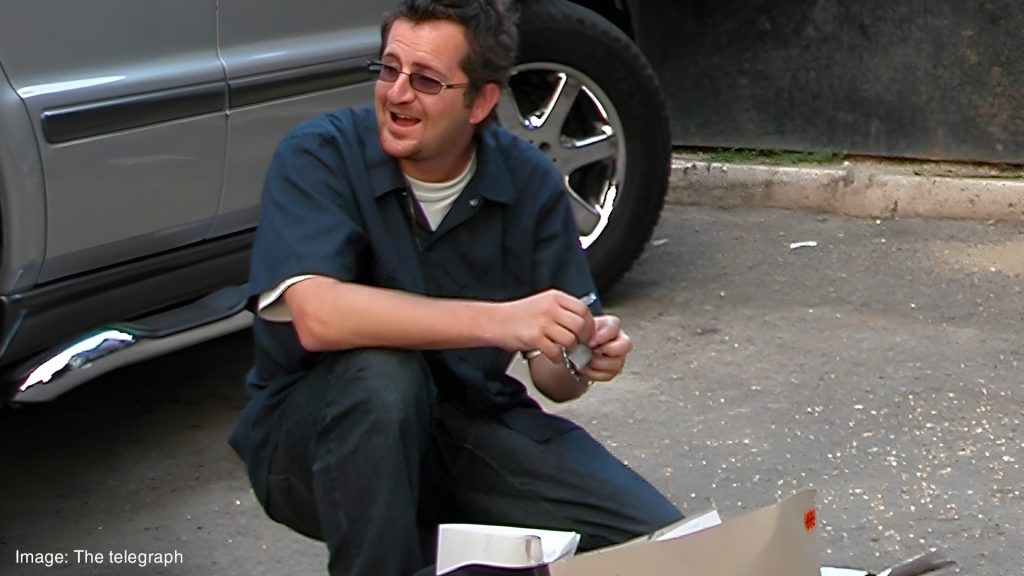
London woke up to a new intervention from Banksy. Or, as a Reuters investigation revealed just weeks ago, Robin Gunningham, a 51-year-old from Bristol who legally changed his name to David Jones to stay hidden. After decades of speculation, Reuters published what it called beyond-dispute evidence in March 2026, including court records from a 2000 New York arrest and photographs from former associates. His lawyers pushed back, neither confirming nor denying. But the mystery that once surrounded the artist is thinner than it used to be. And yet here he is again, making noise.

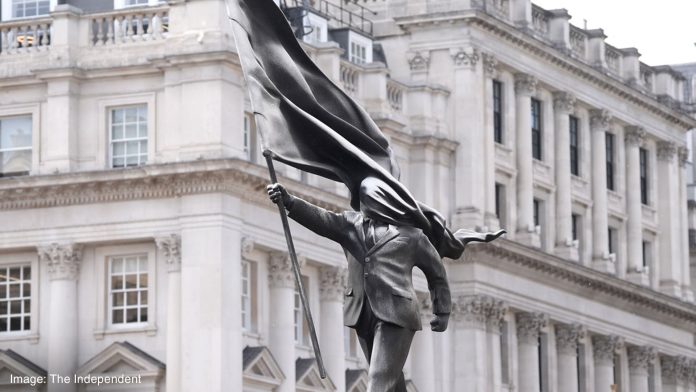
Overnight, a statue appeared in Waterloo Place, placed deliberately among historic figures tied to empire and monarchy. It shows a suited man holding a flag so large it blinds him, stepping forward off the edge of a tall pedestal. Within hours, crowds gathered, barriers went up, and officials began managing the site as if it had always belonged there, with early signals it may even be preserved. Banksy confirmed it with a single dry line. But the timing is doing most of the talking.

Why It Matters

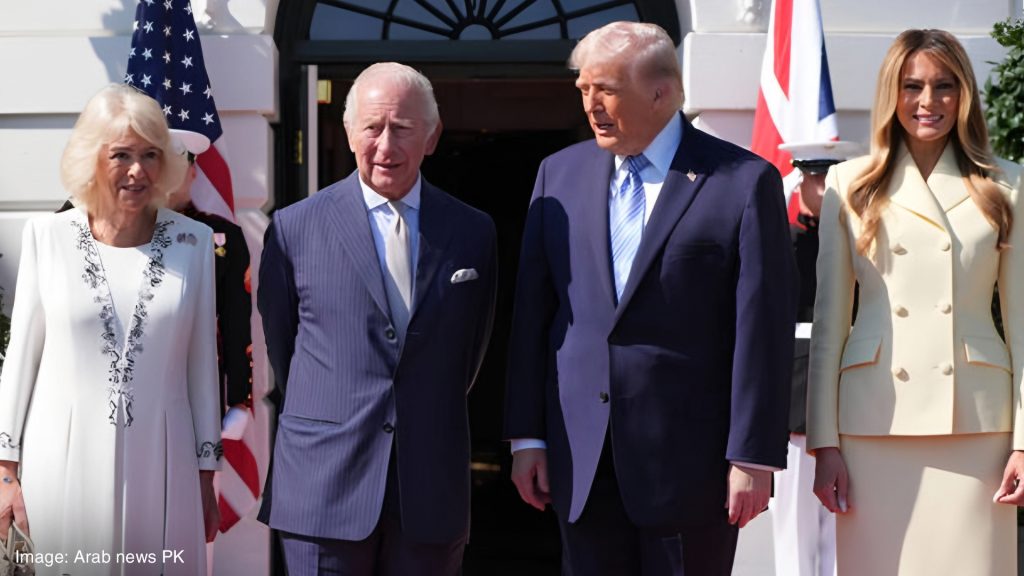
The statue appeared as King Charles III was on a high-profile visit to the United States, moving through Washington, New York, and Virginia. In Congress, he opened with a line that drew immediate laughter: “We have really everything in common, except, of course, language.” On the surface it plays as a light joke about British and American English, but in this moment it lands differently. Some observers read it as a subtle contrast in tone, possibly even a quiet dig at the kind of informal, unfiltered language that has come to define figures like Donald Trump. Not a direct criticism, but not entirely neutral either.

The speech quickly moved beyond the joke. Charles emphasized enduring alliances and a shared commitment to democratic values at a time when those ideas are under visible strain. There was no direct mention of Trump. There did not need to be. A call for steady alliances delivered at a time when those alliances have been openly questioned, in measured language at a political moment that often rewards the opposite. The contrast was already doing the work. And back in London, Banksy offered his own version of that contrast, not in words, but in an image of a man so consumed by his flag that he cannot see where he is going.
Bigger Picture

This is where the contrast sharpens.

In Washington, the message was unity, continuity, and shared direction. In London, the image was a warning wrapped in symbolism. Across the world, political narratives are leaning harder into identity and national symbols. Flags are becoming louder. Messaging is becoming simpler. But simplicity comes with a trade-off. When belief replaces awareness, direction becomes harder to question. The statue does not show collapse. It shows confidence. That is what makes it unsettling. Because systems rarely fail when they are weak. They fail when they are certain.

What Next

London now has to decide what to do with the piece. Remove it and risk backlash. Keep it and quietly validate it. But the decision almost feels secondary now because the real impact is already unfolding. The image is spreading far beyond London, and different countries are reading it in different ways. Some see a critique of Western power. Others see a warning about internal division.
In Washington, a monarch stood in a room full of power and chose his words carefully, measured, deliberate, and controlled. In London, an anonymous artist said everything without saying a word. One relied on language. The other exposed what happens when language no longer matters. And somewhere between the two, the message lands. Not every warning sounds like one.

Sources: Reuters, BBC, CNN, NPR, The Guardian
What’s Happening

London woke up to a new intervention from Banksy. Or, as a Reuters investigation revealed just weeks ago, Robin Gunningham, a 51-year-old from Bristol who legally changed his name to David Jones to stay hidden. After decades of speculation, Reuters published what it called beyond-dispute evidence in March 2026, including court records from a 2000 New York arrest and photographs from former associates. His lawyers pushed back, neither confirming nor denying. But the mystery that once surrounded the artist is thinner than it used to be. And yet here he is again, making noise.

Overnight, a statue appeared in Waterloo Place, placed deliberately among historic figures tied to empire and monarchy. It shows a suited man holding a flag so large it blinds him, stepping forward off the edge of a tall pedestal. Within hours, crowds gathered, barriers went up, and officials began managing the site as if it had always belonged there, with early signals it may even be preserved. Banksy confirmed it with a single dry line. But the timing is doing most of the talking.

Why It Matters

The statue appeared as King Charles III was on a high-profile visit to the United States, moving through Washington, New York, and Virginia. In Congress, he opened with a line that drew immediate laughter: “We have really everything in common, except, of course, language.” On the surface it plays as a light joke about British and American English, but in this moment it lands differently. Some observers read it as a subtle contrast in tone, possibly even a quiet dig at the kind of informal, unfiltered language that has come to define figures like Donald Trump. Not a direct criticism, but not entirely neutral either.

The speech quickly moved beyond the joke. Charles emphasized enduring alliances and a shared commitment to democratic values at a time when those ideas are under visible strain. There was no direct mention of Trump. There did not need to be. A call for steady alliances delivered at a time when those alliances have been openly questioned, in measured language at a political moment that often rewards the opposite. The contrast was already doing the work. And back in London, Banksy offered his own version of that contrast, not in words, but in an image of a man so consumed by his flag that he cannot see where he is going.

Bigger Picture

This is where the contrast sharpens.

In Washington, the message was unity, continuity, and shared direction. In London, the image was a warning wrapped in symbolism. Across the world, political narratives are leaning harder into identity and national symbols. Flags are becoming louder. Messaging is becoming simpler. But simplicity comes with a trade-off. When belief replaces awareness, direction becomes harder to question. The statue does not show collapse. It shows confidence. That is what makes it unsettling. Because systems rarely fail when they are weak. They fail when they are certain.

What Next

London now has to decide what to do with the piece. Remove it and risk backlash. Keep it and quietly validate it. But the decision almost feels secondary now because the real impact is already unfolding. The image is spreading far beyond London, and different countries are reading it in different ways. Some see a critique of Western power. Others see a warning about internal division.

In Washington, a monarch stood in a room full of power and chose his words carefully, measured, deliberate, and controlled. In London, an anonymous artist said everything without saying a word. One relied on language. The other exposed what happens when language no longer matters. And somewhere between the two, the message lands. Not every warning sounds like one.

Sources: Reuters, BBC, CNN, NPR, The Guardian
spot_img

Explore more

spot_img
Health

A Supplement Millions Trust Is Now Linked To Faster Alzheimer’s Decline.

Trump Tried To Cut China Off. China Built The Fastest Machine...

The UAE’s Great Betrayal: How Abu Dhabi Played the Muslim World

British Muslims Say They No Longer Feel Safe. The Attacks Are...

Britain Is Getting Its Seventh Prime Minister In A Decade.

Pakistan Helped Build A Peace Roadmap in Switzerland. Isr*el And Its...

The Lebanon Ceasefire Was Supposed To Stop The Strikes. It Barely...

The Plan To End Al-Aqsa Has Already Started.