Elon Musk’s “42 Engines” Mystery: SpaceX, Starship & the Answer to Everything

It begins not in a lab, but in a story. A story where the universe laughs before it explains itself.

In Douglas Adams’ The Hitchhiker’s Guide to the Galaxy, a supercomputer named Deep Thought spends 7.5 million years calculating the ultimate answer to existence. When it finally responds, it produces a number: 42. The catch is absurd but profound, no one knows the actual question. Earth itself was designed as part of the larger system meant to discover it, only to be destroyed just before completion. The result is a cosmic joke: the answer exists, but meaning remains missing.

That strange brilliance would go on to shape generations of readers, scientists, and technologists, including Elon Musk. Musk has often praised Douglas Adams and said the book helped him through an existential crisis in his youth. What stayed with him most was the idea that the hardest part of solving any problem is not finding the answer, but asking the right question.

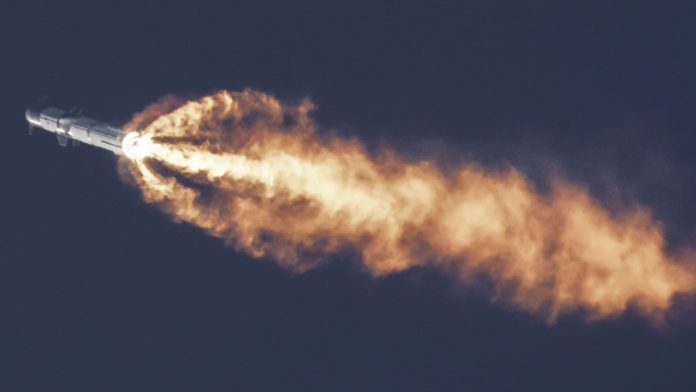
So when SpaceX revealed that Starship’s giant booster was designed to use 42 engines, many saw more than an engineering decision. Technically, the number made sense: Starship needed immense thrust, reliability, and enough redundancy to survive engine failures. But culturally, it looked like a deliberate nod to one of science fiction’s most famous numbers. A hidden joke in plain sight.

The connection becomes even stronger when looking at Musk’s history. In 2018, SpaceX launched a Tesla Roadster into space carrying a copy of The Hitchhiker’s Guide to the Galaxy in the glove compartment, while the dashboard displayed the words “Don’t Panic”, another legendary phrase from the book. For Musk, rockets have never been only machines. They are symbols, stories, and statements about the future.

Starship itself was imagined as humanity’s path to Mars: a fully reusable spacecraft capable of carrying large cargo and future settlers across planets. In that context, 42 becomes more than a joke. It becomes a message; that exploration is not powered by fuel alone, but by imagination.

So yes, Starship’s 42 engines are built for thrust. But they also carry something less measurable: the spirit of curiosity, humor, and humanity’s endless desire to understand its place in the universe. Sometimes the road to Mars begins with a punchline.

Sources: Space News, The times of India, BBC
It begins not in a lab, but in a story. A story where the universe laughs before it explains itself.

In Douglas Adams’ The Hitchhiker’s Guide to the Galaxy, a supercomputer named Deep Thought spends 7.5 million years calculating the ultimate answer to existence. When it finally responds, it produces a number: 42. The catch is absurd but profound, no one knows the actual question. Earth itself was designed as part of the larger system meant to discover it, only to be destroyed just before completion. The result is a cosmic joke: the answer exists, but meaning remains missing.

That strange brilliance would go on to shape generations of readers, scientists, and technologists, including Elon Musk. Musk has often praised Douglas Adams and said the book helped him through an existential crisis in his youth. What stayed with him most was the idea that the hardest part of solving any problem is not finding the answer, but asking the right question.

So when SpaceX revealed that Starship’s giant booster was designed to use 42 engines, many saw more than an engineering decision. Technically, the number made sense: Starship needed immense thrust, reliability, and enough redundancy to survive engine failures. But culturally, it looked like a deliberate nod to one of science fiction’s most famous numbers. A hidden joke in plain sight.

The connection becomes even stronger when looking at Musk’s history. In 2018, SpaceX launched a Tesla Roadster into space carrying a copy of The Hitchhiker’s Guide to the Galaxy in the glove compartment, while the dashboard displayed the words “Don’t Panic”, another legendary phrase from the book. For Musk, rockets have never been only machines. They are symbols, stories, and statements about the future.

Starship itself was imagined as humanity’s path to Mars: a fully reusable spacecraft capable of carrying large cargo and future settlers across planets. In that context, 42 becomes more than a joke. It becomes a message; that exploration is not powered by fuel alone, but by imagination.

So yes, Starship’s 42 engines are built for thrust. But they also carry something less measurable: the spirit of curiosity, humor, and humanity’s endless desire to understand its place in the universe. Sometimes the road to Mars begins with a punchline.

Sources: Space News, The times of India, BBC

spot_img

Explore more

spot_img
Global Affairs

Middle East Conflict

World Cup 2026

India’s Protest

Alien Conspiracy Theories

FIFA 2026 Controversy:

The Dangerous Rise of Islamophobia

Why Afghanistan and Pakistan Are Fighting

Faith & Politics: How Religion Shapes Conflicts