

The human brain is one of science’s greatest paradoxes. It is responsible for memory, emotion, movement, perception and consciousness, yet understanding precisely how its billions of interconnected nerve cells produce these functions has remained extraordinarily difficult.
The 2026 Nobel Prize in Physiology or Medicine has recognised three scientists whose work has given researchers a powerful new way to approach that mystery.
Karl Deisseroth, Peter Hegemann and Georg Nagel were awarded the prize for their discoveries concerning light-gated ion channels and optogenetics: a technique that allows scientists to control individual nerve cells using light. The Nobel Committee says the method has fundamentally changed how researchers investigate the living brain.
But the story of this breakthrough does not begin with a sophisticated brain laboratory. It begins with a microscopic organism.

From algae to neurons
In the early 1990s, German scientist Peter Hegemann was studying Chlamydomonas, a single-celled alga capable of swimming towards light. Hegemann wanted to understand how this tiny organism could detect light and respond so quickly.
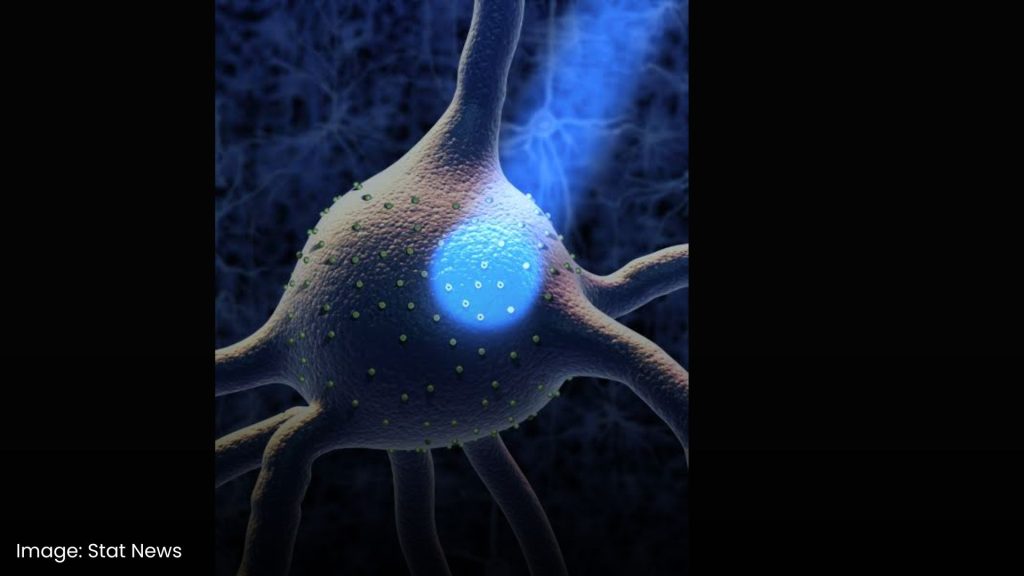
His research, together with Georg Nagel, eventually led to the discovery of channelrhodopsin, a light-sensitive protein found in the alga. Channelrhodopsin had an unusual property. When exposed to blue light, it opened a channel through the cell membrane, allowing charged ions to flow and generating an electrical signal.
The discovery became much more significant when Hegemann and Nagel found that the protein could make other cells responsive to light as well. What had begun as an investigation into the behaviour of algae had produced a potential biological “switch”.
Turning the switch toward the brain
Karl Deisseroth saw a possibility that would transform neuroscience. Could a light-sensitive protein be placed inside a nerve cell and then used to control that cell?
Deisseroth and his colleagues introduced the gene responsible for channelrhodopsin into nerve cells. In 2005, they demonstrated that shining blue light on these modified neurons could trigger electrical activity. Two years later, the technique was demonstrated in the brains of living mice.
This became known as optogenetics, a combination of genetics and optics.
Its power came from precision. The brain is not simply a collection of regions, each responsible for one function. Its functions emerge from enormous networks of individual neurons communicating with one another. If researchers stimulate thousands of cells at once, it can be difficult to determine which cells produced a particular effect.
Optogenetics offered a way around that problem. Scientists could identify specific populations of neurons, make them sensitive to light and then activate or inhibit them with carefully timed pulses.
For the first time, researchers had a tool that could help establish much clearer relationships between specific neural activity and specific behaviours.
From observing the brain to manipulating it
Earlier neuroscience could often tell researchers that a particular brain region was active during a certain behaviour. Optogenetics made it possible to go further: researchers could manipulate selected neural circuits and observe what changed.
The technique has consequently been used to study circuits associated with memory, feelings and behaviour, as well as processes relevant to neurological and psychiatric disorders.
The Nobel Committee describes this as the foundation of a new era in neuroscience because researchers can now investigate the living brain with a precision that earlier approaches could not offer. The implications extend beyond understanding the brain.
Could light restore lost functions?
Scientists are also exploring optogenetics as a potential medical technology.
One important area is vision. Researchers are investigating ways of introducing light-sensitive proteins into the retina to help restore visual function in people affected by conditions such as retinitis pigmentosa.
These possibilities should be viewed carefully. Optogenetics is not a universal treatment for neurological disease, and many applications remain experimental or under clinical investigation.
Its most important achievement so far may therefore be more fundamental: it has changed what scientists are capable of asking about the brain.


Hegemann was not initially searching for a way to control human neurons. Nagel was not simply looking for a medical treatment. Deisseroth was building on a discovery that originated in a completely different biological system. Yet together, their work produced one of modern neuroscience’s most powerful experimental tools.
The brain is still far from fully understood. Consciousness remains mysterious. Neurological and psychiatric disorders continue to challenge medicine. But scientists now have a new way to illuminate the machinery beneath those mysteries.
And perhaps that is the most striking lesson of this Nobel story:
Sometimes, understanding the most complicated thing in the world begins by asking how the smallest things respond to light.