Israel’s Weaponizing of Water in Gaza Is A War Crime. Where Is the Accountability?

Gaza’s Water Is Gone. The Law Says This Is a War Crime. So What Exactly Is International Law For?

Isla Montclair

The evidence of water weaponisation in Gaza is documented, satellite-verified and legally categorised. The courts are already engaged. And yet the water infrastructure remains destroyed and the people of Gaza are living on 2 to 6 litres a day in 40 degree heat. This is a piece about what that gap between law and reality actually means.

The Numbers First Because They Need to Be Stated Plainly
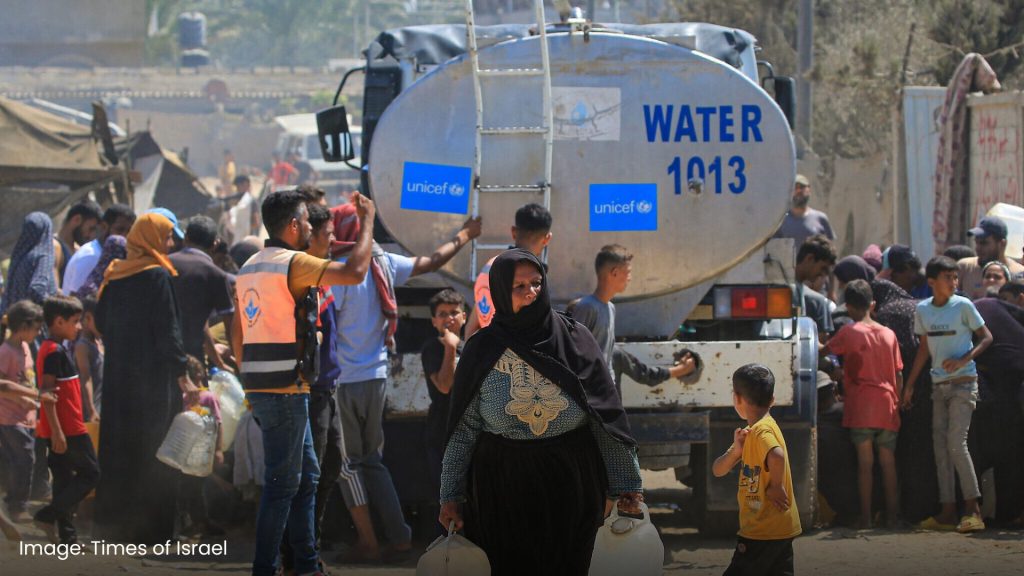
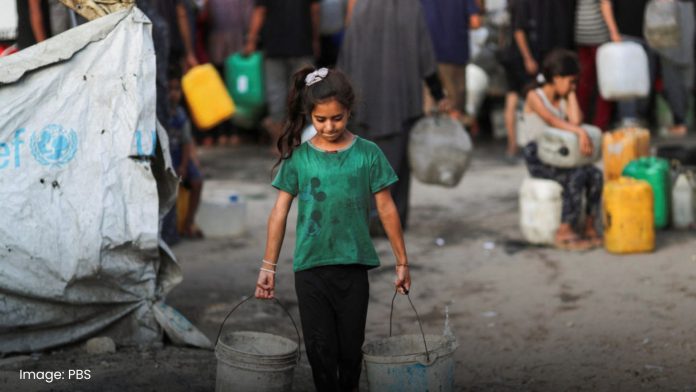
Before October 7, 2023, the average person in Gaza had access to approximately 80 litres of water per day. By June 2026 that figure had fallen to between 2 and 6 litres per day across most of the territory. In some areas it does not exceed 2 litres. The World Health Organisation sets the absolute minimum threshold for emergency survival at 15 litres per person per day. Gaza is not meeting that minimum. It is not close to meeting it. In many places it is providing less than one seventh of it.

Oxfam has documented that Israeli military attacks have damaged or destroyed five water and sanitation infrastructure sites every three days since the start of the war. Water production dropped by 84% in Gaza. External supply from Israel’s national water company Mekorot fell by 78%. Israel has destroyed 70% of all sewage pumps and 100% of all wastewater treatment plants.

The Gaza Rights Center reports that over 80% of water and sanitation networks have been gravely damaged, with 1,675 kilometres of water and sewage networks either destroyed or damaged while most desalination plants, pumping stations and treatment facilities have been brought to a standstill. The majority of groundwater has become undrinkable because of high salinity and contamination. Nearly one million Palestinians are living in tents in summer heat exceeding 40 degrees Celsius with no functioning water system within reach.
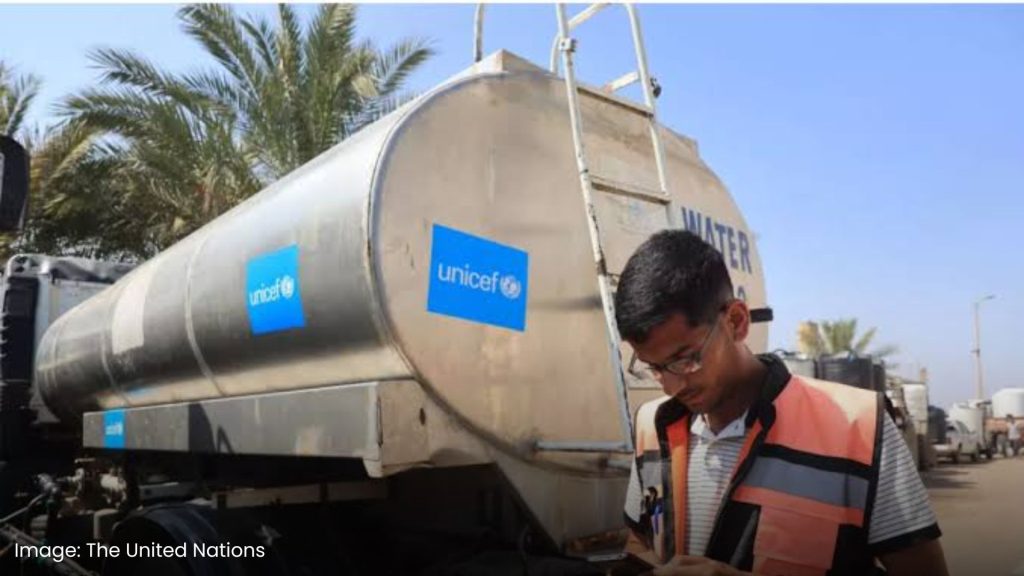
These are not contested figures. They come from Oxfam, Human Rights Watch, the Gaza Rights Center and multiple UN agencies. The documentation is extensive, consistent and cross-verified.

What the Law Actually Says

International humanitarian law on this question is not ambiguous. It is among the clearest and most consistently codified areas of the entire legal framework governing armed conflict.

The Geneva Conventions prohibit attacks on water installations and other objects that are critical for people to survive. Using deprivation of water as a method of warfare is outlawed. Any intentional deprivation of water or obstruction of aid may constitute a war crime.

More specifically, Article 85(3)(b) of the Additional Protocol I of the Geneva Conventions makes the illegal act of cutting water, food and electricity to people in Gaza clear evidence of war crimes. Following Article 2(c) of the Genocide Convention, the blockade also forms clear evidence of genocide, as it has already been raised by South Africa at the International Court of Justice.

International humanitarian law prohibits warring parties from attacking, destroying, removing, or rendering useless objects indispensable to the survival of the civilian population, including water and sanitation infrastructure. When done deliberately, destruction of such objects may amount to a war crime. In several instances, Israeli forces deliberately targeted water and sanitation infrastructure in Gaza, including in areas under their control.

The Geneva List of Principles on the Protection of Water Infrastructure, developed by the Geneva Water Hub and the Platform for International Water Law at the University of Geneva, consolidates obligations across international humanitarian law, human rights law, environmental law and water law into a single authoritative framework. It exists precisely to cover situations like this one.

The Evidence of Deliberateness

The legal threshold between incidental damage and a war crime is intent. Incidental damage to water infrastructure during urban combat, while tragic, does not automatically constitute a war crime. Deliberate targeting does.

The Geneva Academy’s Spot Report documents the destruction of at least one-third of water infrastructure in the Gaza Strip, including the bombing and bulldozing of water wells, reservoirs, and desalination plants, as well as the disabling of all six major wastewater treatment plants. Satellite imagery and open-source videos further show Israeli forces laying explosives inside water reservoirs and bulldozing solar panels that power water facilities.

Laying explosives inside water reservoirs is not collateral damage. It is targeted destruction of civilian water infrastructure. Bulldozing solar panels that power pumping stations is not a byproduct of combat. It is the removal of the energy source that keeps water moving to civilian populations. The pattern documented across satellite imagery, ground reports and open-source video is not consistent with accidental damage. It is consistent with systematic dismantling.

The Gaza Rights Center has additionally noted that the persistent blocking of fuel needed to operate water plants, coupled with continuous power blackouts, reflects what it describes as the use of water deprivation as a means of exerting pressure on civilians, consistent with what humanitarian organisations and UN experts have documented regarding the weaponisation of water as a tool in what they have characterised as genocidal conduct.

The Institutions That Exist to Stop This

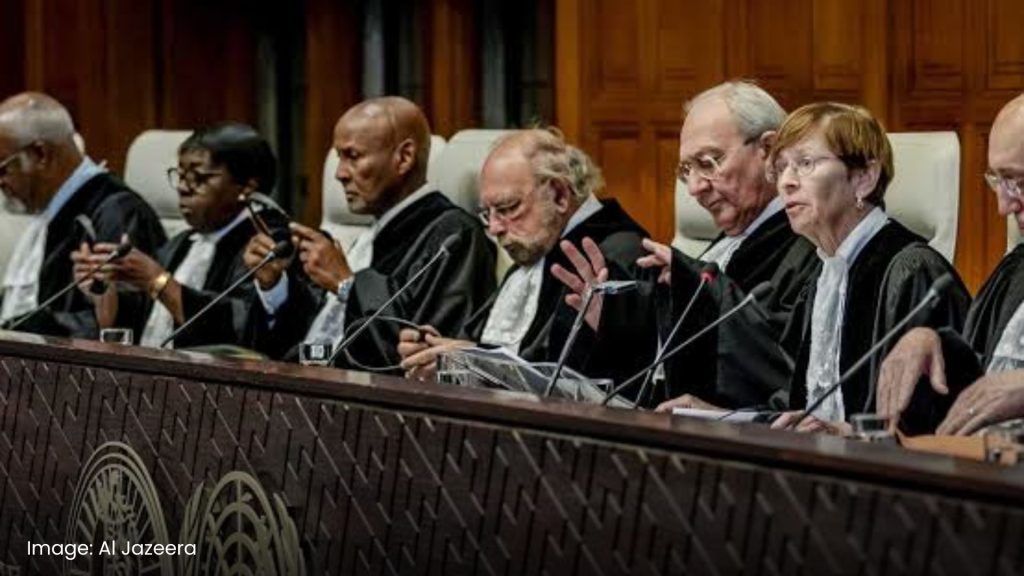
The International Court of Justice is hearing South Africa’s genocide case against Israel. The court issued provisional measures in January 2024 ordering Israel to take all measures within its power to prevent acts of genocide and to ensure unimpeded access to humanitarian assistance. The International Criminal Court has issued arrest warrants for Israeli Prime Minister Benjamin Netanyahu and former Defence Minister Yoav Gallant.

Al-Haq has called on the Prosecutor of the ICC to include additional charges against Netanyahu and Gallant and to submit further requests for arrest warrants related to those Israeli officials and military commanders most responsible for weaponising water in Gaza and facilitating famine. Notwithstanding, nothing has been done to protect the Palestinian people from irreparable harm arising from Israel’s genocidal conduct in Gaza.

That last sentence is the one that deserves the most attention. Nothing has been done. The court has spoken. The warrants have been issued. The provisional measures have been ordered. And the water infrastructure in Gaza remains destroyed. The fuel blockade that prevents repair remains in place. The people of Gaza remain on 2 to 6 litres per day in 40 degree heat.

What This Tells Us About International Law

Professor Low of the Geneva Water Hub observes that “the appalling demolition of the basic structures of human life in Gaza since 2023 has made images of attacks on civilians and civilian infrastructure painfully mundane.” The ICRC in its 2024 report on International Humanitarian Law and Contemporary Armed Conflicts reached a similar conclusion: the Pacific Institute’s Water Conflict Chronology documents a clear and rising trend in water weaponisation, and compliance with IHL prohibitions is failing across multiple conflicts.

That is the honest conclusion that the evidence leads to. International humanitarian law on water is clear. The documentation of its violation in Gaza is overwhelming. The institutions mandated to enforce it are engaged. And the violations continue without interruption.

This is not a failure of law. The law is written correctly. It covers exactly this. It is a failure of enforcement, which raises a question that the legal community, the international community and the governments that fund and arm the parties to this conflict have not yet answered honestly: if the law exists, the evidence exists, the courts are sitting, and nothing changes, what is international law actually for?

Sources:

·  Gaza Rights Center warns of near collapse of water system, Qatar News Agency: https://www.qna.org.qa/en/News-Area/News/2026-06/27/0053

·  Israel using water as weapon of war as Gaza supply plummets by 94%, Oxfam International: https://www.oxfam.org/en/press-releases/israel-using-water-weapon-war-gaza-supply-plummets-94-creating-deadly-health

·  Extermination and Acts of Genocide: Israel Deliberately Depriving Palestinians in Gaza of Water, Human Rights Watch: https://www.hrw.org/report/2024/12/19/extermination-and-acts-genocide/israel-deliberately-depriving-palestinians-gaza

·  Hands Off Water in War: Weaponization of Water in the Occupied Palestinian Territory, Opinio Juris: https://opiniojuris.org/2025/07/24/hands-off-water-in-war-weaponization-of-water-in-the-occupied-palestinian-territory/

·  The weaponisation of water in Gaza, Dutch Scholars for Palestine: https://www.dutchscholarsforpalestine.nl/the-weaponisation-of-water-in-gaza

·  Water as a military asset: when infrastructure becomes a target, Smart Water Magazine: https://smartwatermagazine.com/news/smart-water-magazine/water-a-military-asset-when-infrastructure-becomes-a-target

·  Water Crimes and International Law, Global Challenges Geneva Graduate Institute: https://globalchallenges.ch/issue/18/water-crimes-and-international-law-the-need-for-accountability/

·  Israeli forces using Gaza playbook in Lebanon, decimating water infrastructure, Oxfam International: https://www.oxfam.org/en/press-releases/israeli-forces-using-gaza-playbook-lebanon-decimating-water-infrastructure
Gaza’s Water Is Gone. The Law Says This Is a War Crime. So What Exactly Is International Law For?

Isla Montclair

The evidence of water weaponisation in Gaza is documented, satellite-verified and legally categorised. The courts are already engaged. And yet the water infrastructure remains destroyed and the people of Gaza are living on 2 to 6 litres a day in 40 degree heat. This is a piece about what that gap between law and reality actually means.

The Numbers First Because They Need to Be Stated Plainly

Before October 7, 2023, the average person in Gaza had access to approximately 80 litres of water per day. By June 2026 that figure had fallen to between 2 and 6 litres per day across most of the territory. In some areas it does not exceed 2 litres. The World Health Organisation sets the absolute minimum threshold for emergency survival at 15 litres per person per day. Gaza is not meeting that minimum. It is not close to meeting it. In many places it is providing less than one seventh of it.

Oxfam has documented that Israeli military attacks have damaged or destroyed five water and sanitation infrastructure sites every three days since the start of the war. Water production dropped by 84% in Gaza. External supply from Israel’s national water company Mekorot fell by 78%. Israel has destroyed 70% of all sewage pumps and 100% of all wastewater treatment plants.

The Gaza Rights Center reports that over 80% of water and sanitation networks have been gravely damaged, with 1,675 kilometres of water and sewage networks either destroyed or damaged while most desalination plants, pumping stations and treatment facilities have been brought to a standstill. The majority of groundwater has become undrinkable because of high salinity and contamination. Nearly one million Palestinians are living in tents in summer heat exceeding 40 degrees Celsius with no functioning water system within reach.

These are not contested figures. They come from Oxfam, Human Rights Watch, the Gaza Rights Center and multiple UN agencies. The documentation is extensive, consistent and cross-verified.

What the Law Actually Says

International humanitarian law on this question is not ambiguous. It is among the clearest and most consistently codified areas of the entire legal framework governing armed conflict.

The Geneva Conventions prohibit attacks on water installations and other objects that are critical for people to survive. Using deprivation of water as a method of warfare is outlawed. Any intentional deprivation of water or obstruction of aid may constitute a war crime.

More specifically, Article 85(3)(b) of the Additional Protocol I of the Geneva Conventions makes the illegal act of cutting water, food and electricity to people in Gaza clear evidence of war crimes. Following Article 2(c) of the Genocide Convention, the blockade also forms clear evidence of genocide, as it has already been raised by South Africa at the International Court of Justice.

International humanitarian law prohibits warring parties from attacking, destroying, removing, or rendering useless objects indispensable to the survival of the civilian population, including water and sanitation infrastructure. When done deliberately, destruction of such objects may amount to a war crime. In several instances, Israeli forces deliberately targeted water and sanitation infrastructure in Gaza, including in areas under their control.

The Geneva List of Principles on the Protection of Water Infrastructure, developed by the Geneva Water Hub and the Platform for International Water Law at the University of Geneva, consolidates obligations across international humanitarian law, human rights law, environmental law and water law into a single authoritative framework. It exists precisely to cover situations like this one.

The Evidence of Deliberateness

The legal threshold between incidental damage and a war crime is intent. Incidental damage to water infrastructure during urban combat, while tragic, does not automatically constitute a war crime. Deliberate targeting does.

The Geneva Academy’s Spot Report documents the destruction of at least one-third of water infrastructure in the Gaza Strip, including the bombing and bulldozing of water wells, reservoirs, and desalination plants, as well as the disabling of all six major wastewater treatment plants. Satellite imagery and open-source videos further show Israeli forces laying explosives inside water reservoirs and bulldozing solar panels that power water facilities.

Laying explosives inside water reservoirs is not collateral damage. It is targeted destruction of civilian water infrastructure. Bulldozing solar panels that power pumping stations is not a byproduct of combat. It is the removal of the energy source that keeps water moving to civilian populations. The pattern documented across satellite imagery, ground reports and open-source video is not consistent with accidental damage. It is consistent with systematic dismantling.

The Gaza Rights Center has additionally noted that the persistent blocking of fuel needed to operate water plants, coupled with continuous power blackouts, reflects what it describes as the use of water deprivation as a means of exerting pressure on civilians, consistent with what humanitarian organisations and UN experts have documented regarding the weaponisation of water as a tool in what they have characterised as genocidal conduct.

The Institutions That Exist to Stop This

The International Court of Justice is hearing South Africa’s genocide case against Israel. The court issued provisional measures in January 2024 ordering Israel to take all measures within its power to prevent acts of genocide and to ensure unimpeded access to humanitarian assistance. The International Criminal Court has issued arrest warrants for Israeli Prime Minister Benjamin Netanyahu and former Defence Minister Yoav Gallant.

Al-Haq has called on the Prosecutor of the ICC to include additional charges against Netanyahu and Gallant and to submit further requests for arrest warrants related to those Israeli officials and military commanders most responsible for weaponising water in Gaza and facilitating famine. Notwithstanding, nothing has been done to protect the Palestinian people from irreparable harm arising from Israel’s genocidal conduct in Gaza.

That last sentence is the one that deserves the most attention. Nothing has been done. The court has spoken. The warrants have been issued. The provisional measures have been ordered. And the water infrastructure in Gaza remains destroyed. The fuel blockade that prevents repair remains in place. The people of Gaza remain on 2 to 6 litres per day in 40 degree heat.

What This Tells Us About International Law

Professor Low of the Geneva Water Hub observes that “the appalling demolition of the basic structures of human life in Gaza since 2023 has made images of attacks on civilians and civilian infrastructure painfully mundane.” The ICRC in its 2024 report on International Humanitarian Law and Contemporary Armed Conflicts reached a similar conclusion: the Pacific Institute’s Water Conflict Chronology documents a clear and rising trend in water weaponisation, and compliance with IHL prohibitions is failing across multiple conflicts.

That is the honest conclusion that the evidence leads to. International humanitarian law on water is clear. The documentation of its violation in Gaza is overwhelming. The institutions mandated to enforce it are engaged. And the violations continue without interruption.

This is not a failure of law. The law is written correctly. It covers exactly this. It is a failure of enforcement, which raises a question that the legal community, the international community and the governments that fund and arm the parties to this conflict have not yet answered honestly: if the law exists, the evidence exists, the courts are sitting, and nothing changes, what is international law actually for?

Sources:

·  Gaza Rights Center warns of near collapse of water system, Qatar News Agency: https://www.qna.org.qa/en/News-Area/News/2026-06/27/0053

·  Israel using water as weapon of war as Gaza supply plummets by 94%, Oxfam International: https://www.oxfam.org/en/press-releases/israel-using-water-weapon-war-gaza-supply-plummets-94-creating-deadly-health

·  Extermination and Acts of Genocide: Israel Deliberately Depriving Palestinians in Gaza of Water, Human Rights Watch: https://www.hrw.org/report/2024/12/19/extermination-and-acts-genocide/israel-deliberately-depriving-palestinians-gaza

·  Hands Off Water in War: Weaponization of Water in the Occupied Palestinian Territory, Opinio Juris: https://opiniojuris.org/2025/07/24/hands-off-water-in-war-weaponization-of-water-in-the-occupied-palestinian-territory/

·  The weaponisation of water in Gaza, Dutch Scholars for Palestine: https://www.dutchscholarsforpalestine.nl/the-weaponisation-of-water-in-gaza

·  Water as a military asset: when infrastructure becomes a target, Smart Water Magazine: https://smartwatermagazine.com/news/smart-water-magazine/water-a-military-asset-when-infrastructure-becomes-a-target

·  Water Crimes and International Law, Global Challenges Geneva Graduate Institute: https://globalchallenges.ch/issue/18/water-crimes-and-international-law-the-need-for-accountability/

·  Israeli forces using Gaza playbook in Lebanon, decimating water infrastructure, Oxfam International: https://www.oxfam.org/en/press-releases/israeli-forces-using-gaza-playbook-lebanon-decimating-water-infrastructure
spot_img

Explore more

spot_img
Global Affairs

Foreign Countries Are Fueling Myanmar’s War for Their Own Benefit

What Are the US and Iran Actually Negotiating Through Oman

UN Official Calls West Bank Attacks “Pogroms,” Wants Weapons Ban on...

UN Rights Chief Wins Second Term, But the US, Israel and...

A Super El Nino Could Cost the World Up to 7...

Trump to Use Frozen Iranian Money, Worth Billions, to Pay for...

Iran Rejects New US Ceasefire Offer, Says It Rejected a Broken...