

Why Mohan Bhagwat’s RSS Event at Madison Square Garden Is So Controversial
“The world is one family.”
That is the message RSS chief Mohan Bhagwat is bringing to Madison Square Garden in New York today. But critics of the organisation he leads argue that its political and ideological record makes that message difficult to reconcile with the reality they see in India.
Bhagwat is headlining the “Universal Oneness Celebration,” organized by American Hindus for Engagement and Dialogue, built around Vasudhaiva Kutumbakam, a Sanskrit phrase commonly translated as “the world is one family.” Organisers describe the gathering as a celebration of Hindu-American identity, interfaith dialogue, pluralism and social harmony.
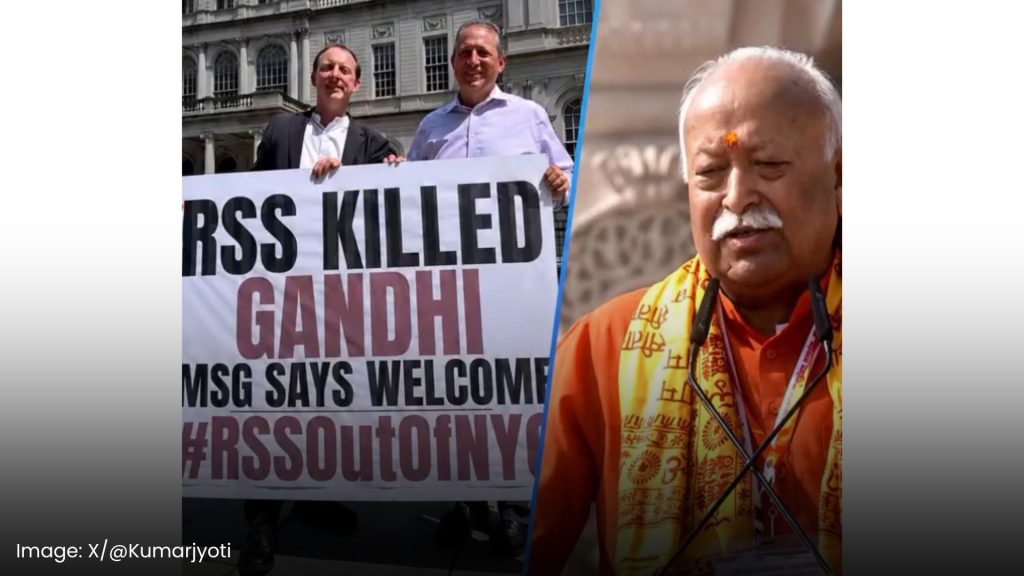
More than 5,000 people from 39 U.S. states are expected to attend, with organisers saying hundreds of Hindu-American organisations are participating. A mobile billboard truck has also been circulating through Manhattan in the days before the event, not promoting Bhagwat’s appearance but demanding Mayor Mamdani cancel it, a sign that the opposition, not the organisers, has been driving the visibility campaign around Madison Square Garden.
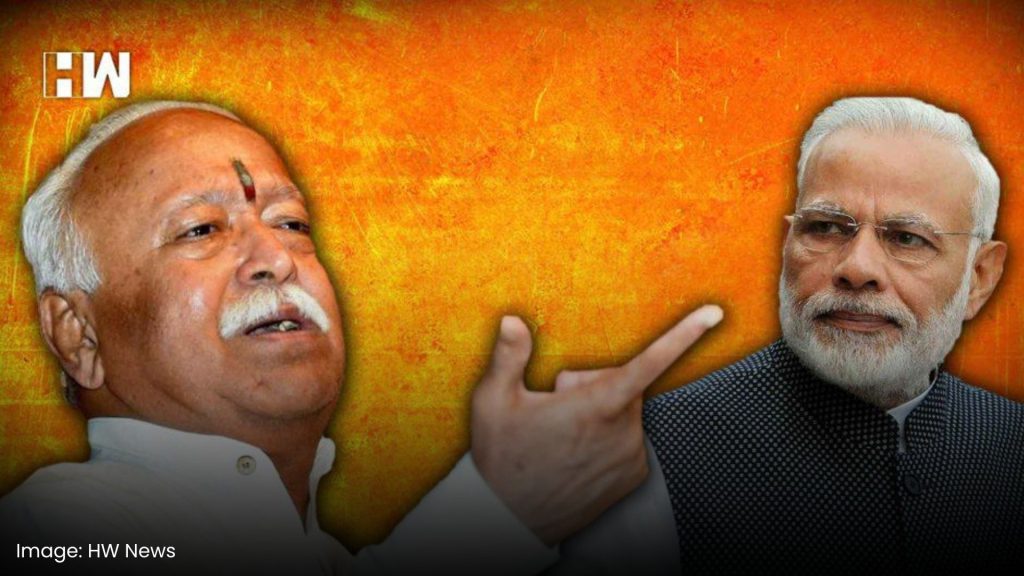
What Is the RSS and How Is It Connected to Narendra Modi and the BJP?
The Rashtriya Swayamsevak Sangh, or RSS, was founded in 1925 and has grown into one of India’s most influential Hindu nationalist organisations.
Its reach extends far beyond cultural activism.
Prime Minister Narendra Modi spent years as an RSS organiser before entering electoral politics, while his Bharatiya Janata Party, or BJP, shares longstanding ideological roots with the wider RSS movement.
Supporters describe the RSS as a cultural and volunteer organisation focused on Hindu unity, community service and national cohesion.
Critics see something very different.
They accuse the RSS and the broader Hindutva movement of advancing Hindu majoritarianism at the expense of Muslims, Christians and other minorities. The RSS rejects accusations of religious intolerance and argues that its vision is inclusive.
That dispute is now following Bhagwat directly into New York.
Why Zohran Mamdani Is Opposing the RSS Event
But Mamdani has also acknowledged an important legal reality: the city does not have jurisdiction to cancel a private, lawful event at Madison Square Garden because he disagrees with its politics.
That distinction matters.
The controversy is not about New York banning Bhagwat from speaking. It is about political leaders publicly challenging the ideology associated with the organisation he leads while the event itself goes ahead.
Why USCIRF Is Calling for Action Against RSS Figures
The U.S. Commission on International Religious Freedom hasn’t just issued a general statement of concern, it has formally urged Washington to revoke Bhagwat’s own visa and bar him from future entry into the country.
USCIRF is an advisory federal commission. It can recommend sanctions, visa restrictions and other measures, but it cannot impose them itself.
Any action would ultimately have to come from the U.S. government.
Even so, the recommendation pushes the controversy beyond street protests and local politics into a federal institutional debate over religious freedom and India.
Why the Opposition Isn’t Coming From Just One Community
Perhaps the most significant challenge to a simple religious divide is that the opposition to Bhagwat’s appearance spans far beyond any single faith. A coalition of 61 groups has mobilised against the event, including Hindu, Muslim, Jewish, Sikh, interfaith and civil-rights organisations. Some of the Hindu organisations involved argue the RSS does not represent Hinduism or Hindu Americans, framing their objection as an internal, intra-faith one rather than an outside attack.
That makes the controversy harder to reduce to Hindus on one side and everyone else on the other. It is also a battle over who gets to define Hindu identity itself.
Even the event’s own organizers haven’t escaped the fallout. AHEAD Forum’s account on the social platform X was suspended in the days before the event, and the group has said it is seeking reinstatement.
“Universal Oneness” Meets a Very Different Vision Outside Madison Square Garden
Organisers insist the event is about unity.
They say “Universal Oneness” represents dialogue across traditions and communities and reflects the principle that the world belongs to one human family.
Critics argue that putting Mohan Bhagwat at the centre of that message creates the contradiction they are protesting.
So thousands are expected inside Madison Square Garden today while protesters gather outside.
One side will be talking about unity and belonging.
The other will be asking a much harder question:
On whose terms?
And with Zohran Mamdani, a U.S. federal commission, civil-rights organisations and Hindu groups themselves now weighing in, attention is firmly on Madison Square Garden to see how that confrontation unfolds.
By Shizza Umer
Sources
Religion News Service · Al Jazeera · The Washington Times · The New Arab · Free Press Journal
Middle East Eye · Hindus for Human Rights · International News and Views · Indiablooms