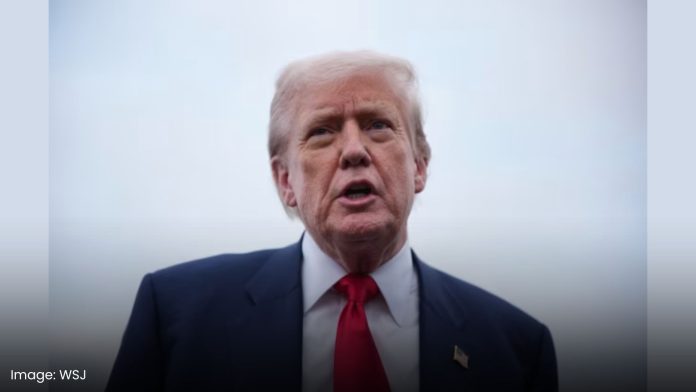
The United States is reportedly considering using its largest non-nuclear bomb against Iranian energy infrastructure and nuclear sites if President Donald Trump orders renewed combat operations. Yet the proposal raises questions that go beyond military capability. With approval ratings under pressure, fuel prices rising and the November midterm elections approaching, the reported plans invite scrutiny of the relationship between military escalation and domestic political incentives.
There is no public evidence establishing that Trump is considering the GBU-43/B Massive Ordnance Air Blast bomb solely to improve his political standing. However, reporting indicates that administration officials have discussed options for a dramatic strike that could be presented as a decisive conclusion before a US military withdrawal. This comes as the w*r faces substantial public opposition.
The Domestic Political Cost of War
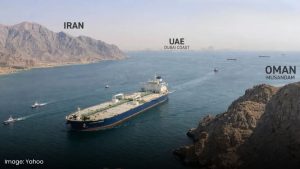
Economic concerns compound the pressure. Tensions around the Strait of Hormuz have contributed to oil-market volatility, while higher fuel prices affect transport costs and household budgets. For an administration confronting dissatisfaction over affordability, the economic consequences of war are politically significant.
These figures do not establish the president’s motives. They do, however, provide the context in which the reported strike plans are being considered. A military action that can be framed as decisive may offer a political narrative of strength. Whether it delivers the military outcome claimed is a separate question.
Can the MOAB Achieve Its Objectives?
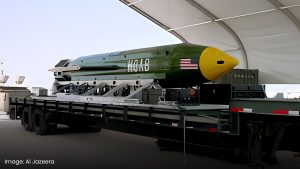
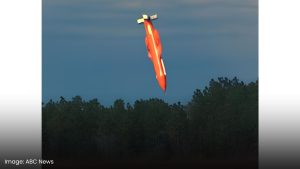
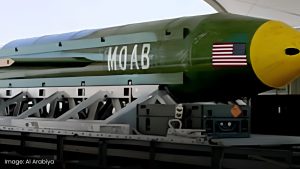
The MOAB weighs approximately 9.8 tonnes and is the largest non-nuclear bomb in the US arsenal. Its enormous blast can devastate exposed structures and positions over a broad area. But it is not a specialised deep-penetration weapon, and experts have questioned whether it could destroy heavily fortified Iranian nuclear facilities.
Even damage to a particular installation would not necessarily eliminate Iran’s technical expertise or ability to rebuild. A strike may weaken infrastructure without resolving the political dispute or guaranteeing that Iran’s nuclear capabilities are permanently removed.
The distinction matters because military spectacle can be mistaken for strategic success. If the purpose is to end the conflict, the relevant questions are whether the strike achieves a measurable objective, whether escalation follows, and whether a sustainable political arrangement becomes more likely.
Sovereignty and International Law
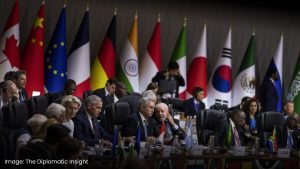
The legal questions are equally important. Article 2(4) of the UN Charter prohibits the thre*t or use of force against the territorial integrity or political independence of another state, subject to recognised legal exceptions. Article 51 preserves the right of self-defence if an armed attack occurs, subject to the applicable requirements.
The legality of renewed US attacks would therefore depend on their legal basis and the circumstances. A state’s declaration that it seeks to prevent nuclear proliferation does not, by itself, settle whether a particular use of force is lawful.
International humanitarian law imposes further constraints once an armed conflict exists. Att*cks must distinguish military objectives from civilians and civilian objects, avoid expected incidental civilian harm that would be excessive in relation to the concrete and direct military advantage anticipated, and take feasible precautions to minimise harm. Energy infrastructure is not automatically a lawful target simply because it belongs to an adversary; its status and the foreseeable effects of an attack must be assessed in the specific circumstances.
The broader issue is the credibility of the international order. If powerful states invoke international rules to constrain their rivals but treat their own threats as exempt from comparable scrutiny, the principle of equal legal obligation is weakened.

Power Is Not the Same as Victory
The reported MOAB plan could reflect an attempt to increase military pressure, create leverage or provide a dramatic endpoint to an unpopular conflict. The available evidence does not establish which objective is driving the discussions. Nor is there confirmation that the bomb will be used.
Nevertheless, the political context matters. A spectacular strike could generate images of decisive action, but it cannot guarantee lower fuel prices, the permanent destruction of nuclear capabilities or a durable peace. It could instead provoke retaliation, threaten regional infrastructure and prolong the conflict.
REFERENCES
https://www.ndtv.com/world-news/us-weighs-dropping-mother-of-all-bombs-on-iran-report-12192251
https://edition.cnn.com/2026/10/15/politics/us-considering-mother-of-all-bombs-iran
https://www.aljazeera.com/news/2026/10/15/what-is-the-mother-of-all-bombs-us-could-use-in-iran
https://www.diplomacyandlaw.com/post/mother-of-all-bombs-iran