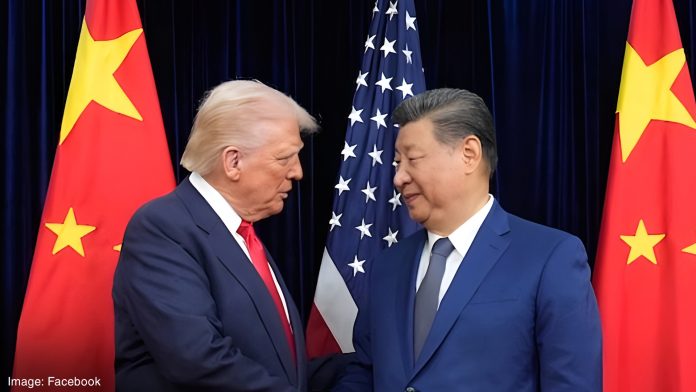
US–China Trade Truce: Stability Without Structural Resolution
Maryam Tariq
A Managed Pause in Economic Rivalry
The recent US–China economic understanding reflects a temporary stabilisation of relations rather than a fundamental shift in direction. After a period of escalating tariffs and trade restrictions, both sides have moved to reduce immediate tensions while preserving their broader strategic positions.
The arrangement includes the establishment of new communication frameworks, including “Boards of Trade” and “Investment,” designed to prevent further escalation and improve dialogue between the two economies. However, these mechanisms signal coordination of friction rather than its elimination.
Tactical Concessions, Not Structural Reform
Reported commitments include Chinese purchases of US agricultural goods, medical devices, energy products, and aircraft, alongside limited easing measures such as rare earth export delays and resumed licensing for certain US exports.
On the US side, tariff adjustments were introduced as a temporary stabilising measure while broader trade imbalances remain under review.
These moves appear tactical, designed to ease pressure points, rather than indicative of long-term restructuring of trade relations.
Decoupling Continues Beneath the Surface
Despite the appearance of cooperation, the underlying economic trajectory remains one of gradual decoupling. Trade volumes have already shifted significantly, with China’s share of US trade declining as supply chains diversify toward other partners.
This reflects a broader strategic trend: both economies are reducing vulnerability to one another while maintaining selective interdependence where necessary.
A New Phase of Managed Competition
The current phase of US–China relations can be understood as managed competition, where both sides avoid uncontrolled escalation while continuing long-term strategic repositioning.

Rather than reversing tensions, the truce functions as a mechanism to control volatility within an ongoing rivalry that is economic, technological, and geopolitical in nature.
Sources: BBC / Reuters / USTR / WBFF / ABC News