
Western health standards often fail South Asian women. Here’s why.

 Colonialism Didn’t End. South Asian Women’s Bodies Still Carry It.

The Health Crisis Many South Asian Women Recognize

South Asian women today face unusually high rates of PCOS, insulin resistance, diabetes, cardiovascular disease, hormonal imbalance, and early menopause. What confuses many doctors is that these conditions often appear in women who do not outwardly “look unhealthy.”

Researchers and physicians are now increasingly questioning whether the explanation goes beyond modern lifestyle alone.

A growing body of discussion around South Asian health suggests that colonial-era famine, starvation, and chronic stress may have permanently altered metabolic patterns across generations.

How Colonialism Changed South Asian Metabolism

During British colonial rule, South Asia experienced repeated famines and food extraction policies that devastated local populations. Millions died from starvation while agricultural resources continued being exported.

Some researchers describe the long-term result as a “thin-fat phenotype” common among South Asians today: lower muscle mass combined with higher body fat and metabolic vulnerability, even at lower body weights.

This may help explain why many South Asian women struggle with PCOS, insulin resistance, infertility, and cardiovascular risk despite appearing physically thin.

Doctors and researchers discussing epigenetics argue that trauma and starvation do not simply disappear. While genes themselves may not change, their expression can shift across generations due to prolonged stress and survival conditions.

Colonialism Also Reshaped Beauty and Womanhood

The impact was not only biological. Colonialism deeply reshaped beauty standards and social expectations.

British rule reinforced the idea that lighter skin represented power, intelligence, purity, and higher status, while darker skin became associated with labor and inferiority. The result was a long-lasting culture of colorism that still dominates beauty industries across South Asia today.

Women’s clothing and behavior were also increasingly regulated through Victorian morality standards introduced during colonial rule. Traditional expressions of femininity became redefined through ideas of modesty, respectability, and control.

Violence Written Onto Women’s Bodies

The violence reached its most horrifying form during the 1947 Partition of India and Pakistan, when women’s bodies became symbols of communal revenge and “honor.” Thousands were abducted, assaulted, mutilated, or killed during mass displacement.
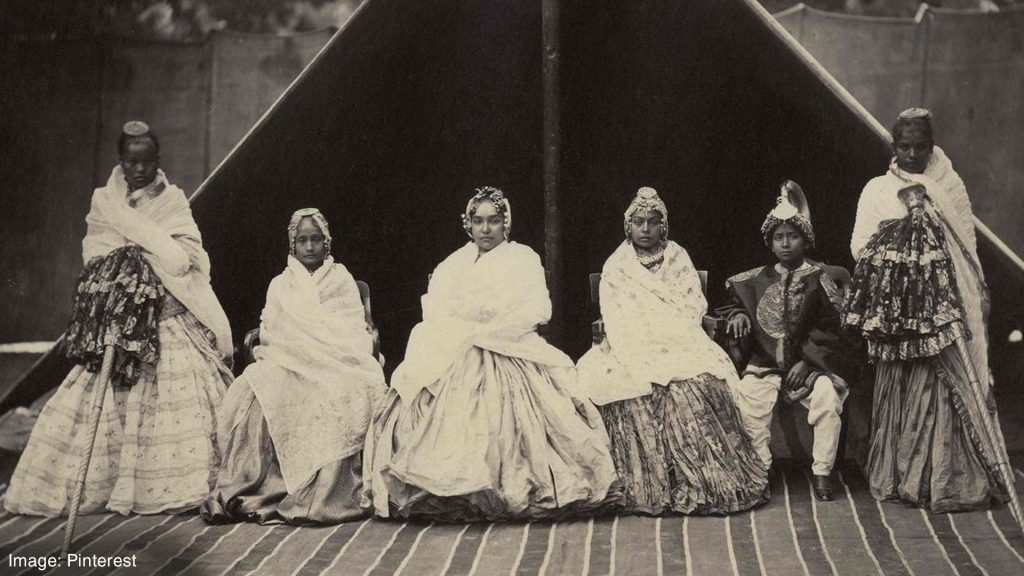

These histories are often excluded from mainstream conversations about women’s health, despite shaping generations psychologically and socially.

Why This Conversation Matters Today

For many South Asian women, understanding this history changes the way they understand their bodies.

The conversation is not about blaming history for every illness. It is about recognizing that bodies are shaped not only by individual choices, but by systems, trauma, famine, violence, and survival across generations.

And perhaps healing begins when women stop seeing themselves as personal failures for carrying burdens history placed upon them.

Sources: Dr. Mubin Syed – Healing From Our History / National Institutes of Health / UNICEF South Asia Health Reports
 Colonialism Didn’t End. South Asian Women’s Bodies Still Carry It.

The Health Crisis Many South Asian Women Recognize

South Asian women today face unusually high rates of PCOS, insulin resistance, diabetes, cardiovascular disease, hormonal imbalance, and early menopause. What confuses many doctors is that these conditions often appear in women who do not outwardly “look unhealthy.”

Researchers and physicians are now increasingly questioning whether the explanation goes beyond modern lifestyle alone.

A growing body of discussion around South Asian health suggests that colonial-era famine, starvation, and chronic stress may have permanently altered metabolic patterns across generations.

How Colonialism Changed South Asian Metabolism

During British colonial rule, South Asia experienced repeated famines and food extraction policies that devastated local populations. Millions died from starvation while agricultural resources continued being exported.

Some researchers describe the long-term result as a “thin-fat phenotype” common among South Asians today: lower muscle mass combined with higher body fat and metabolic vulnerability, even at lower body weights.

This may help explain why many South Asian women struggle with PCOS, insulin resistance, infertility, and cardiovascular risk despite appearing physically thin.

Doctors and researchers discussing epigenetics argue that trauma and starvation do not simply disappear. While genes themselves may not change, their expression can shift across generations due to prolonged stress and survival conditions.

Colonialism Also Reshaped Beauty and Womanhood

The impact was not only biological. Colonialism deeply reshaped beauty standards and social expectations.

British rule reinforced the idea that lighter skin represented power, intelligence, purity, and higher status, while darker skin became associated with labor and inferiority. The result was a long-lasting culture of colorism that still dominates beauty industries across South Asia today.

Women’s clothing and behavior were also increasingly regulated through Victorian morality standards introduced during colonial rule. Traditional expressions of femininity became redefined through ideas of modesty, respectability, and control.

Violence Written Onto Women’s Bodies

The violence reached its most horrifying form during the 1947 Partition of India and Pakistan, when women’s bodies became symbols of communal revenge and “honor.” Thousands were abducted, assaulted, mutilated, or killed during mass displacement.

These histories are often excluded from mainstream conversations about women’s health, despite shaping generations psychologically and socially.

Why This Conversation Matters Today

For many South Asian women, understanding this history changes the way they understand their bodies.

The conversation is not about blaming history for every illness. It is about recognizing that bodies are shaped not only by individual choices, but by systems, trauma, famine, violence, and survival across generations.

And perhaps healing begins when women stop seeing themselves as personal failures for carrying burdens history placed upon them.

Sources: Dr. Mubin Syed – Healing From Our History / National Institutes of Health / UNICEF South Asia Health Reports

spot_img

Explore more

spot_img
Global Affairs

FIFA 2026 Controversy:

The Dangerous Rise of Islamophobia

Why Afghanistan and Pakistan Are Fighting

Faith & Politics: How Religion Shapes Conflicts

No Aid, No Food, No Medicine

Trump Says Iran Deal Is Near

Is Democracy A Lie?

 100 DAYS OF WAR