Why does every “developed Pakistan” model look Western?

Who Told Us Development Looks Western?

Every few weeks, another video goes viral online.

“Karachi if it was developed.”

“Future Lahore.”

“Swat after modernization.”

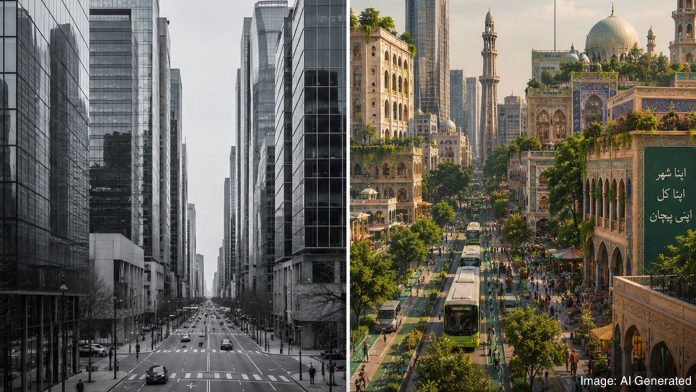
And almost every single time, the “developed” version looks strangely familiar. Very model of ‘Developed Pakistan’ looks the same. Glass skyscrapers, grey minimalism, wide highways, sterile apartment blocks, western suburbs copied and pasted into South Asia.

The transformation is always presented as aspirational, as if this is the final stage of civilization itself. But somewhere in these futuristic models, something quietly disappears:

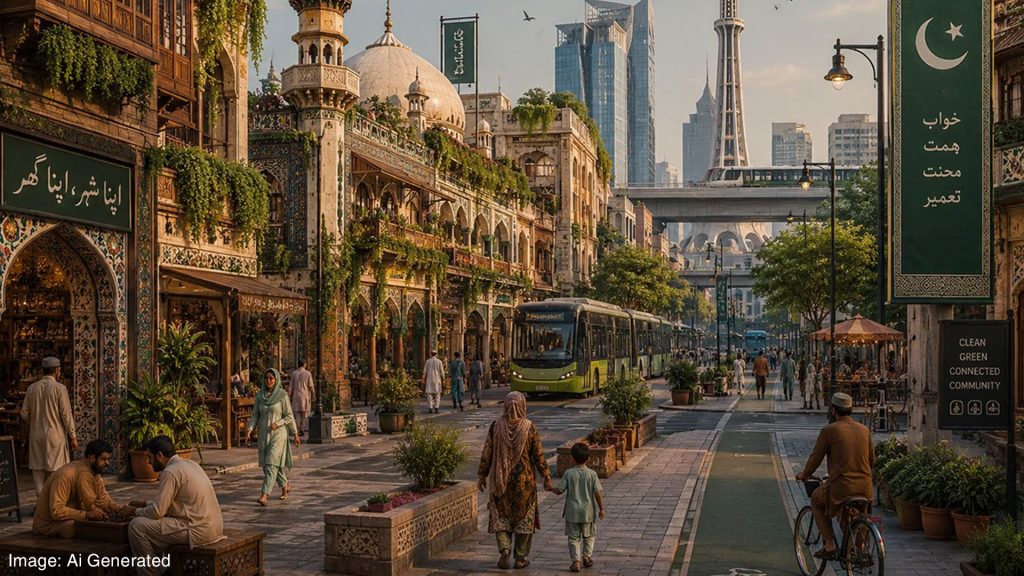
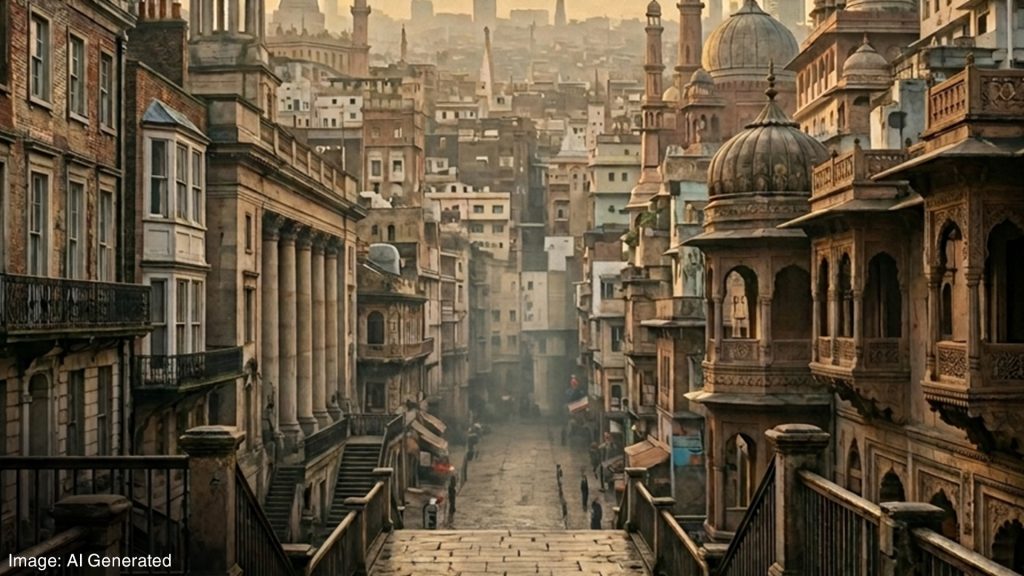
Us, our textures, our architectural memory, our climate-conscious design, our colors, our courtyards, our carved wood, intricate balconies, bustling community spaces, historical geometry, our very own aesthetics.

The moment we imagine “progress,” our own identity is erased from the picture.

And maybe that says something much deeper about postcolonial societies than we realize.

Colonialism was never only about land or resources. It was also about teaching colonized people what to admire, what to imitate, and eventually, what to reject within themselves.

Frantz Fanon wrote extensively about how colonialism reshapes the psychology of the colonized, producing a society that measures itself against the colonizer’s standards. Edward Said explored how the West positioned itself as the center of civilization while portraying the East as backward, irrational, and in need of correction.

Even after independence, many postcolonial nations continued chasing Western validation because the colonial hierarchy never fully disappeared. It simply evolved.

Today, we see it in architecture.
In fashion.

In language.

In class aspiration.

In social media aesthetics.

Even in the way we define success itself.

A “modern” house is now imagined as a white minimalist box stripped of local identity. Traditional designs are often mocked as outdated, overcrowded, or unsophisticated. Housing societies increasingly look detached from the environments they are built in, disconnected from both climate and culture.

Ironically, many traditional South Asian architectural practices were deeply intelligent. Courtyards improved airflow in extreme heat. Dense markets encouraged community interaction. Decorative elements reflected regional artistry and historical continuity. Buildings were designed not only for efficiency, but for belonging.

Now, entire urban landscapes are being rebuilt around imported aesthetics that often feel culturally hollow.

This raises an uncomfortable question:

Have postcolonial societies truly become free if they can only imagine progress through Western imagery?

To question Western hegemony is not to reject development, technology, infrastructure, or modernization. Pakistan absolutely needs better cities, public transport, sanitation, environmental planning, and functional institutions.

But development should not require cultural self-erasure.

A nation should be able to modernize while still looking and feeling like itself.

Japan industrialized without becoming Europe. Morocco preserved visual identity within modernization. Many societies have found ways to blend contemporary infrastructure with indigenous aesthetics and historical continuity.

Why do we struggle to imagine the same for ourselves?
Perhaps because colonialism trained us to associate our own traditions with inferiority. Perhaps because globalization rewards imitation more than originality. Or perhaps because generations of political instability made survival more urgent than cultural reflection.

Still, the question remains.

What does a truly postcolonial future look like?

Can Pakistan imagine cities that are technologically advanced yet rooted in local identity? Can architecture reflect both innovation and memory? Can we create definitions of success that do not rely entirely on Western approval?

And maybe the most difficult question of all:

After centuries of colonization and decades of globalization, do postcolonial nations still know how to exist comfortably in their own skin?

That may be the real crisis hiding beneath all the futuristic city models and edits online.

Who Told Us Development Looks Western?

Every few weeks, another video goes viral online.

“Karachi if it was developed.”

“Future Lahore.”

“Swat after modernization.”

And almost every single time, the “developed” version looks strangely familiar. Very model of ‘Developed Pakistan’ looks the same. Glass skyscrapers, grey minimalism, wide highways, sterile apartment blocks, western suburbs copied and pasted into South Asia.

The transformation is always presented as aspirational, as if this is the final stage of civilization itself. But somewhere in these futuristic models, something quietly disappears:

Us, our textures, our architectural memory, our climate-conscious design, our colors, our courtyards, our carved wood, intricate balconies, bustling community spaces, historical geometry, our very own aesthetics.

The moment we imagine “progress,” our own identity is erased from the picture.

And maybe that says something much deeper about postcolonial societies than we realize.

Colonialism was never only about land or resources. It was also about teaching colonized people what to admire, what to imitate, and eventually, what to reject within themselves.

Frantz Fanon wrote extensively about how colonialism reshapes the psychology of the colonized, producing a society that measures itself against the colonizer’s standards. Edward Said explored how the West positioned itself as the center of civilization while portraying the East as backward, irrational, and in need of correction.

Even after independence, many postcolonial nations continued chasing Western validation because the colonial hierarchy never fully disappeared. It simply evolved.

Today, we see it in architecture.

In fashion.

In language.

In class aspiration.

In social media aesthetics.

Even in the way we define success itself.

A “modern” house is now imagined as a white minimalist box stripped of local identity. Traditional designs are often mocked as outdated, overcrowded, or unsophisticated. Housing societies increasingly look detached from the environments they are built in, disconnected from both climate and culture.

Ironically, many traditional South Asian architectural practices were deeply intelligent. Courtyards improved airflow in extreme heat. Dense markets encouraged community interaction. Decorative elements reflected regional artistry and historical continuity. Buildings were designed not only for efficiency, but for belonging.

Now, entire urban landscapes are being rebuilt around imported aesthetics that often feel culturally hollow.

This raises an uncomfortable question:

Have postcolonial societies truly become free if they can only imagine progress through Western imagery?

To question Western hegemony is not to reject development, technology, infrastructure, or modernization. Pakistan absolutely needs better cities, public transport, sanitation, environmental planning, and functional institutions.

But development should not require cultural self-erasure.

A nation should be able to modernize while still looking and feeling like itself.

Japan industrialized without becoming Europe. Morocco preserved visual identity within modernization. Many societies have found ways to blend contemporary infrastructure with indigenous aesthetics and historical continuity.

Why do we struggle to imagine the same for ourselves?

Perhaps because colonialism trained us to associate our own traditions with inferiority. Perhaps because globalization rewards imitation more than originality. Or perhaps because generations of political instability made survival more urgent than cultural reflection.

Still, the question remains.

What does a truly postcolonial future look like?

Can Pakistan imagine cities that are technologically advanced yet rooted in local identity? Can architecture reflect both innovation and memory? Can we create definitions of success that do not rely entirely on Western approval?

And maybe the most difficult question of all:

After centuries of colonization and decades of globalization, do postcolonial nations still know how to exist comfortably in their own skin?

That may be the real crisis hiding beneath all the futuristic city models and edits online.
spot_img

Explore more

spot_img
Global Affairs

FIFA 2026 Controversy:

The Dangerous Rise of Islamophobia

Why Afghanistan and Pakistan Are Fighting

Faith & Politics: How Religion Shapes Conflicts

No Aid, No Food, No Medicine

Trump Says Iran Deal Is Near

Is Democracy A Lie?

 100 DAYS OF WAR