
China Blocks Philippine Access to Scarborough Shoal, Creating a Second Maritime Flashpoint

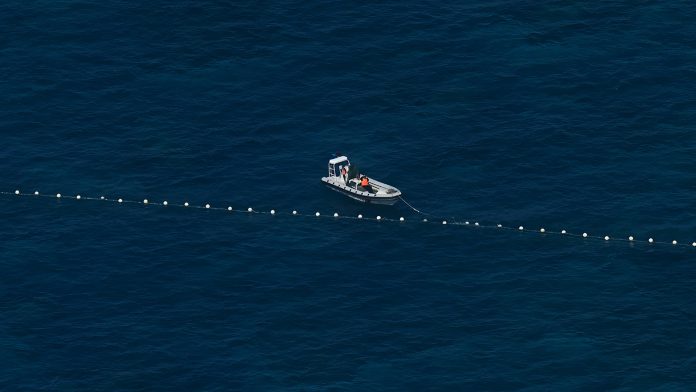
Satellite images taken April 10 and 11 confirmed a 352-meter floating barrier installed by China at the entrance to Scarborough Shoal in the South China Sea. Four fishing boats, coast guard vessels, and a naval ship were also deployed to block access. The shoal lies entirely within the Philippines’ exclusive economic zone but China has maintained de facto control since a 2012 standoff. Ten Chinese coast guard vessels were sighted at the shoal between April 5 and 12. Simultaneously, thousands of Chinese fishing boats assembled in coordinated formations spanning over 200 miles in the East China Sea, near shipping lanes between China, Taiwan, and South Korea. Analysts describe the approach as incremental, designed to stay below the threshold of armed conflict. A 2016 Permanent Court of Arbitration ruling backed the Philippines and declared the blockade a violation of international law. Up to 30% of global goods pass through these waters. The dispute carries significant geopolitical weight: any armed confrontation at the shoal could trigger the U.S.-Philippines Mutual Defense Treaty, drawing Washington into a second simultaneous maritime crisis at a time when its military resources are already heavily committed in the Middle East.

Sources: Reuters · Foundation for Defense of Democracies · Marine Insight · Rappler · Insights on India · CSIS

Satellite images taken April 10 and 11 confirmed a 352-meter floating barrier installed by China at the entrance to Scarborough Shoal in the South China Sea. Four fishing boats, coast guard vessels, and a naval ship were also deployed to block access. The shoal lies entirely within the Philippines’ exclusive economic zone but China has maintained de facto control since a 2012 standoff. Ten Chinese coast guard vessels were sighted at the shoal between April 5 and 12. Simultaneously, thousands of Chinese fishing boats assembled in coordinated formations spanning over 200 miles in the East China Sea, near shipping lanes between China, Taiwan, and South Korea. Analysts describe the approach as incremental, designed to stay below the threshold of armed conflict. A 2016 Permanent Court of Arbitration ruling backed the Philippines and declared the blockade a violation of international law. Up to 30% of global goods pass through these waters. The dispute carries significant geopolitical weight: any armed confrontation at the shoal could trigger the U.S.-Philippines Mutual Defense Treaty, drawing Washington into a second simultaneous maritime crisis at a time when its military resources are already heavily committed in the Middle East.

Sources: Reuters · Foundation for Defense of Democracies · Marine Insight · Rappler · Insights on India · CSIS

spot_img

Explore more

spot_img
Health

A Supplement Millions Trust Is Now Linked To Faster Alzheimer’s Decline.

Trump Tried To Cut China Off. China Built The Fastest Machine...

The UAE’s Great Betrayal: How Abu Dhabi Played the Muslim World

British Muslims Say They No Longer Feel Safe. The Attacks Are...

Britain Is Getting Its Seventh Prime Minister In A Decade.

Pakistan Helped Build A Peace Roadmap in Switzerland. Isr*el And Its...

The Lebanon Ceasefire Was Supposed To Stop The Strikes. It Barely...

The Plan To End Al-Aqsa Has Already Started.