When veteran photojournalist Heidi Levine travelled to Abu Falah in the occupied West Bank to cover the Palestinian olive harvest, she was documenting a familiar part of life in the territory. Instead, on October 16, she became the victim of a brutal assa.ult by masked Israeli settlers. Her account, published by The Guardian on October 21, reveals not only the severity of the atta.ck but also the extraordinary courage of the young Palestinians who intervened to save her.
Levine, a photographer for The Washington Post who has covered conflicts around the world, suffered four fractured vertebrae, two broken ribs and four puncture wounds. She said the protective vest and helmet she was wearing may have saved her life.
A peaceful harvest turned into an assa.ult
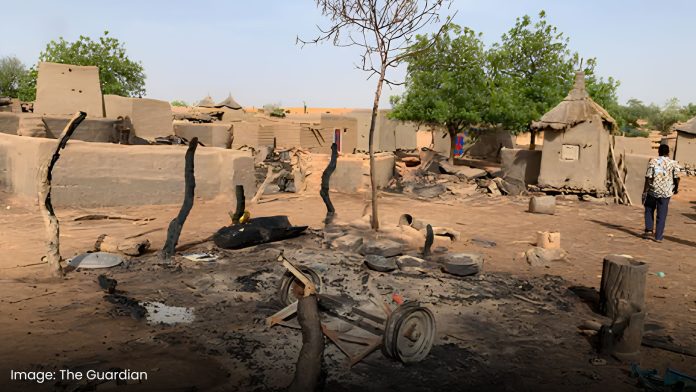
Palestinian families depend on the annual olive harvest for income, while olive trees hold deep cultural and historical significance. But harvesting has increasingly taken place amid att.acks, intimidation and damage to Palestinian land and property.
According to Levine, the gathering in Abu Falah began peacefully. A group of masked settlers appeared on a nearby hilltop, and the situation rapidly deteriorated. She described hearing gunfire and seeing tear gas before a group of men charged towards her.
She was knocked to the ground, kicked and beaten repeatedly with sticks. Levine said she tried to protect her face and at one point pretended to be dead, hoping the atta.ckers would stop. The assault continued, leaving her with serious injuries. Her camera equipment and personal belongings, including her passport, were also taken.
The young Palestinians who stepped forward
One of the most striking parts of Levine’s account is what happened while she was being atta.cked. Young Palestinian men intervened, using slingshots to force the settlers back and allowing other journalists to reach her and help her to safety.
Fellow journalist Jasper Nathaniel said the young men had risked their lives to protect her. Levine recalled how they formed a protective barrier, describing their actions as extraordinary.
Their intervention matters because it challenges the idea that people living amid prolonged violence are merely passive victims. Faced with a person in immediate danger, these young men acted. They did not know whether they would be injured themselves, yet they moved to protect someone who needed help.
Their courage deserves recognition. At the same time, it should not obscure the circumstances that made such a rescue necessary: a journalist was seriously injured while reporting, and Palestinian farmers were atta.cked during a harvest.
The question of accountability
The response to the assault has raised further concerns. Israeli President Isaac Herzog contacted Levine to express sympathy, while US Ambassador Mike Huckabee condemned the attack and called for those responsible to be prosecuted.
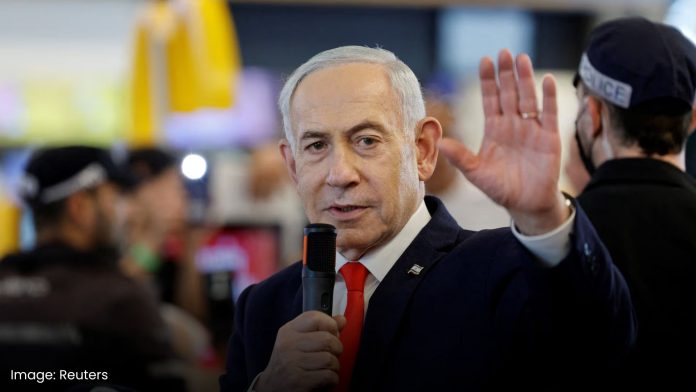
Prime Minister Benjamin Netanyahu, however, referred to the incident as an “alleged attack” and questioned aspects of the footage. Levine strongly rejected his account, explaining that she had been moved because atta.ckers had taken her belongings and that the beating had continued.
Israeli police arrested 10 suspects in connection with the incident and a separate atta.ck involving European diplomats and others in the West Bank. On October 22, however, the status of suspects had already begun to change: The Guardian reported that an Israeli court released four suspects connected with Levine’s attack under house arrest, citing insufficient evidence to keep them in custody.
A wider pattern affecting Palestinians
Levine also drew attention to the disparity between the international reaction to her attack and the long-running viole.nce faced by Palestinians. Her case received significant attention partly because she is an American journalist with a prominent international assignment. Palestinian communities, meanwhile, have repeatedly reported atta.cks on farmers, homes, property and olive groves.
Israeli human rights organisation Yesh Din has documented a longstanding problem of investigations into settler violence ending without indictments. The lack of effective accountability can leave Palestinian communities vulnerable to repeated atta.cks and deepen fears that perpetrators will not face consequences.
Protecting civilians requires credible investigations, prosecution where evidence supports it, and effective measures to prevent further violence. Journalists must be able to report without being atta.cked, and farmers must be able to harvest their land without intimidation.
Bruised, but not silenced
Despite her injuries, Levine has said she intends to return to reporting. Her determination is captured in her words: “They have bruised me, broken some bones, but they haven’t cracked my spirit.”
That resolve, alongside the courage of the young Palestinians who helped save her, offers a powerful example of solidarity in the face of violence. But their bravery should not become an excuse for the world to accept the conditions that put them in danger.
REFERENCE