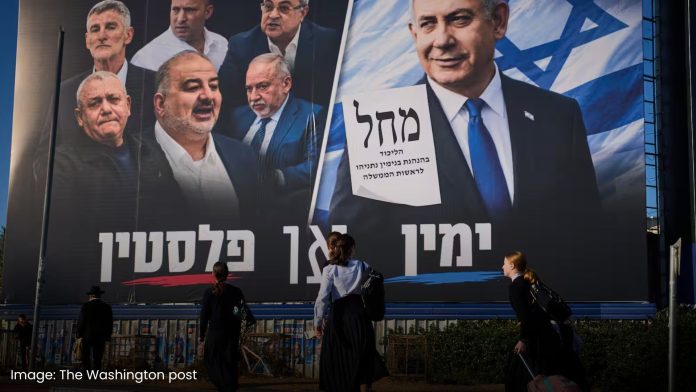
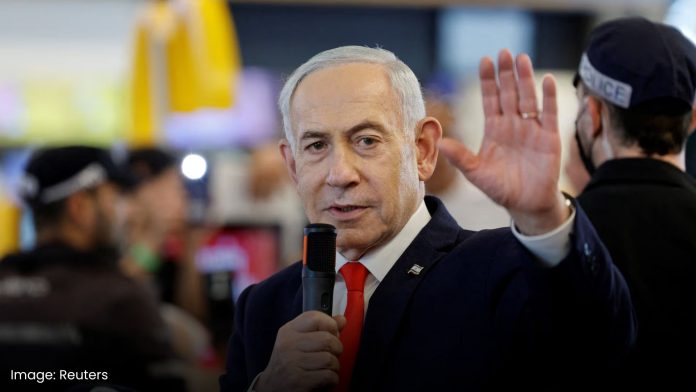
Israel’s October 27 election could end Benjamin Netanyahu’s long period in power, but a change of prime minister does not necessarily mean a change in the policies governing Palestinians. The opposition, led by former military chief Gadi Eisenkot, presents itself as an alternative to Netanyahu’s government. Yet both leaders share hard-line positions on Palestinian statehood and Gaza, raising questions about how much an election defeat would actually change.
The most consequential differences concern settlement policy, settler violence and the political coalitions that would shape the next government.
Palestinian statehood remains the central divide
Netanyahu and Eisenkot both oppose the establishment of an independent Palestinian state and argue that Israel must retain security control over the territory between the Jordan River and the Mediterranean Sea. These positions sharply limit the prospects for a negotiated two-state settlement under either leader.
This shared outlook reflects a broader shift in Israeli politics, where opposition to Palestinian statehood extends beyond Netanyahu’s far-right allies. Although some political factions still support a two-state solution, they have limited influence compared with the major parties competing to lead the next government.
The West Bank: Where differences could matter
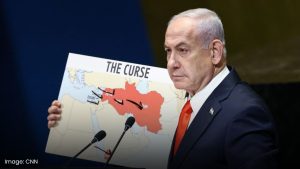
The clearest policy distinction concerns settlements in the occupied West Bank. Netanyahu’s government has overseen continued settlement expansion, including unauthorised outposts and development that critics say undermines the territorial continuity needed for a future Palestinian state. His coalition partners include far-right politicians who openly advocate annexing occupied Palestinian land.
Eisenkot supports settlements that comply with Israeli law, but opposes unauthorised outposts and has pledged to prevent violence by settlers against Palestinians. He also opposes the E1 settlement project, which could sever the West Bank’s connection with East Jerusalem and further fragment Palestinian territory.
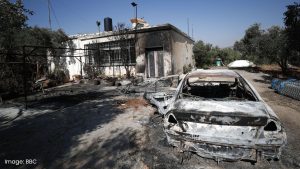
An Eisenkot-led government could therefore take a different approach to outposts and settler violence. Such changes would matter to Palestinian communities facing attacks, land loss and displacement. However, his opposition to unauthorised settlements should not be confused with opposition to the settlement enterprise as a whole. His position leaves legal settlements in place rather than proposing a comprehensive reversal of the system.
Gaza: No clear promise of withdrawal
Gaza presents another major obstacle to expectations of change. Both Netanyahu and Eisenkot insist that Hamas must disarm before Israeli troops withdraw. Both have left open the possibility of renewed military action if that objective is not achieved.
Eisenkot has criticised the continued rule of Hamas as a strategic failure and said he would seek to replace its administration within 18 months of taking office, either through a negotiated framework or military force. But this position does not amount to a promise of immediate Israeli withdrawal or a clear path towards Palestinian self-government.
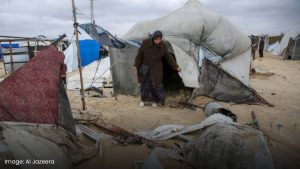
Negotiations over disarmament, Israeli withdrawal and reconstruction remain unresolved. A different government could change the way those issues are pursued, but the stated conditions for withdrawal suggest that Palestinians should not assume an election result will automatically bring an end to Israel’s military presence.
Coalition politics could shape the outcome
Israel’s parliamentary system makes coalition-building central to government policy. Netanyahu has relied on far-right nationalist and ultra-Orthodox parties, some of whose leaders support annexation and aggressive settlement expansion. These partners have helped push his government towards more hard-line positions.
An opposition government would likely rely on a different combination of right-wing and centrist parties, potentially with support from the Democrats, the only prominent Jewish-led party still advocating a two-state solution. A new coalition could limit the influence of the most extreme factions and change decisions on settlement enforcement or settler violence.
However, coalition change has limits. Eisenkot and Netanyahu have both ruled out forming a government with parties primarily representing Palestinian citizens of Israel. The opposition also contains a range of views, and its leading figures do not share a commitment to Palestinian statehood. Its ability to change policy would therefore depend on both the composition of the coalition and the priorities its members could agree upon.
A change in government is not necessarily a change in direction
A Netanyahu defeat could still produce meaningful differences. A government that acts against unauthorised outposts and settler attacks could reduce some immediate harms in the West Bank. A different diplomatic approach might also improve relations with international partners and create room for negotiations.
But these possible changes must be measured against the larger questions: Would Israel end its occupation? Would it withdraw from Gaza? Would it recognise Palestinians’ right to an independent state? The positions articulated by the leading candidates offer no clear assurance that these outcomes would follow.
The election is therefore not simply a contest between Netanyahu and his opponents. It is also a test of whether Israeli political change can reach beyond leadership and coalition arrangements to alter the policies that shape Palestinian lives.
For Palestinians, the stakes extend beyond who occupies the prime minister’s office. They concern land, freedom of movement, protection from violence, political representation and the ability to determine their own future. Unless a new government changes its approach to those underlying issues, the removal of Netanyahu may change the management of the conflict more than its fundamental direction.
REFERENCE
https://arabcenterdc.org/resource/israels-election-and-eisenkots-arab-coalition-dilemma/
https://www.theguardian.com/world/2026/oct/15/israel-gadi-eisenkot-profile-netanyahu-election