A wave of student mobilisation is spreading across different parts of the world, but it is not a single coordinated movement. From France and Belgium to Italy, Chile, Argentina and Indonesia, young people are taking to the streets over different combinations of education costs, public spending, inequality and the deteriorating conditions of schools and universities.
The latest flashpoint is Belgium, where hundreds of students took to the streets of Liège on October 7. Protests were partly inspired by the student unrest unfolding in neighbouring France. Students in the French-speaking education system are protesting rising education costs, overcrowded classrooms and difficulties accessing study materials. The unrest resulted in property damage and arson, with local reporting putting the number of arrests at 107. Authorities advised businesses to close early and temporarily shut Liège’s main train station.
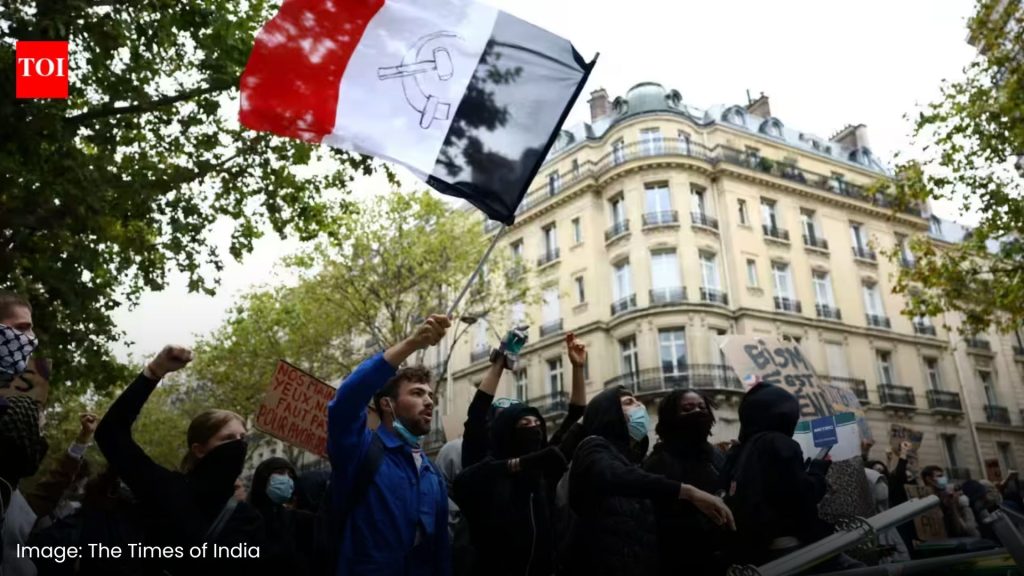
Belgium’s protests, however, did not simply appear because of France. Students had already demonstrated in Brussels in June against education reforms, including a proposed increase in tuition fees for most students in the French-speaking Community from €835 to €1,194. The current mobilisation was reignited as students watched the French movement grow. Some Belgian students told Reuters that they were in contact with French counterparts and saw similarities between their demands.
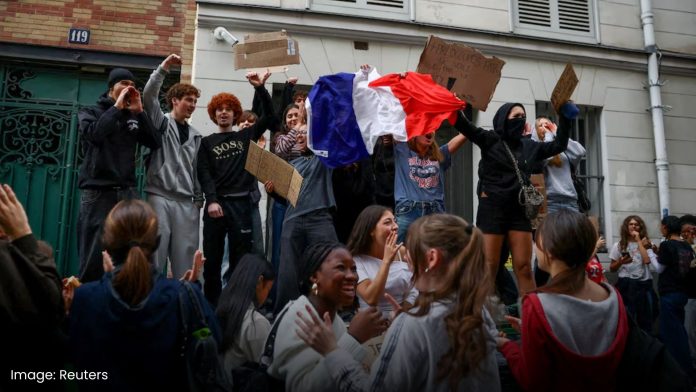
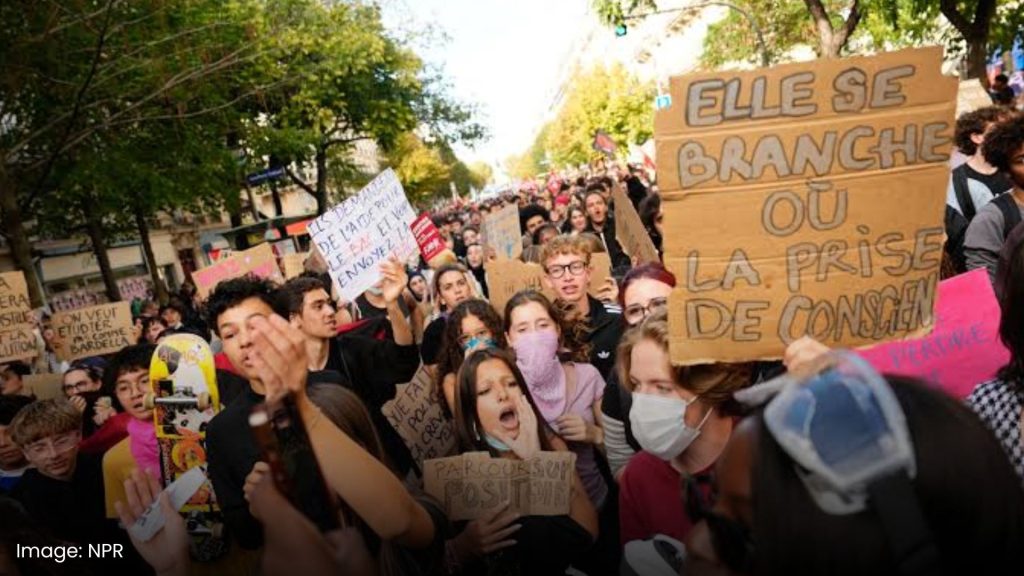
France itself has experienced the most dramatic mobilisation of the current wave. What began in September with a protest over teacher shortages at a school in the Paris region rapidly expanded into nationwide demonstrations. Students have criticised staff shortages, overcrowded classrooms, deteriorating school buildings and the country’s university admissions system. By early October, hundreds of schools had been affected, while the movement had expanded beyond students to include parents, teachers and unions.
The French protests have also become increasingly confrontational. Police have made thousands of arrests, many involving minors, while several teenagers have suffered serious injuries during clashes and the use of crowd-control weapons. The violence has become a major part of the political debate, even as the original grievances remain centred on education.
The influence of France is now visible in Italy. On October 6, students occupied schools in Turin and Rome under the slogan “Let’s do as in France.” Italian students have cited chronic underfunding, deteriorating school infrastructure and rising living costs among their concerns. Italian student groups have also travelled to Paris to express solidarity with French students.
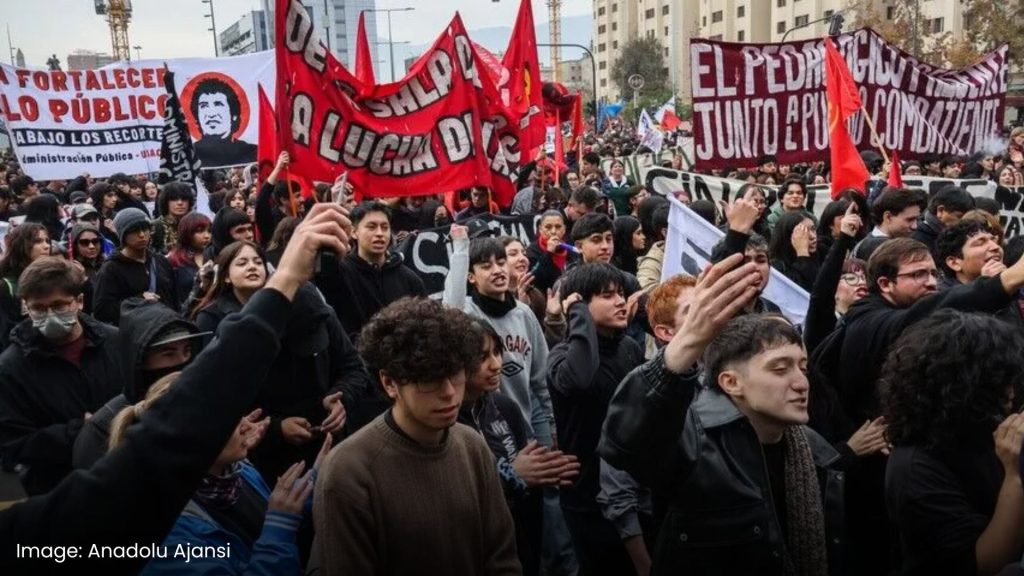
But the pattern extends beyond Europe. In Chile, approximately 6,000 people, according to police, and more than 20,000, according to organisers, took part in an October 1 demonstration against potential cuts to public education in the government’s proposed 2027 budget. The protest involved students, teachers and other social organisations, and clashes with police led to the use of tear gas and water cannons and at least 17 arrests.
In Argentina, university students and academics have repeatedly protested reductions in university funding. A major May mobilisation demanded that President Javier Milei reverse cuts and implement legislation providing additional university financing. Protesters warned that inadequate funding would affect research, scholarships and students’ ability to access higher education.
Indonesia presents another version of the same broader phenomenon. Student protests there have focused less directly on education and more on government spending, fuel prices, the cost of basic goods and the military’s role in civilian affairs. Hundreds of students rallied in Jakarta in June, while student demonstrations in August marked the anniversary of deadly protests from the previous year.
These cases should not be treated as evidence of one worldwide student organisation or a centrally coordinated movement. The demands are shaped by local political and economic circumstances. Yet the similarities are difficult to ignore: students are confronting rising costs, concerns about public investment, overcrowded or deteriorating educational institutions and fears that governments are asking younger generations to absorb the consequences of fiscal pressure.
Belgium is particularly interesting because it demonstrates how protest itself can become contagious even when the grievances are national. French students did not create Belgium’s education problems, but their mobilisation appears to have given Belgian students both a reference point and a sense that collective action could force their concerns into the political spotlight.
The larger question is therefore not whether France has created a single global student movement. It has not. The more significant question is why similar grievances are producing protests in such different societies at roughly the same time.
For a generation entering adulthood amid higher living costs, constrained public services and increasingly expensive education, the classroom is no longer separate from economic and political questions. Across countries, students are increasingly treating education not simply as a personal pathway to employment, but as a public issue worth taking to the streets for.
REFERENCE