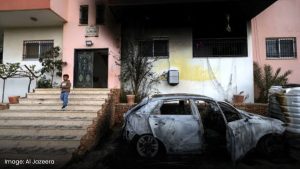
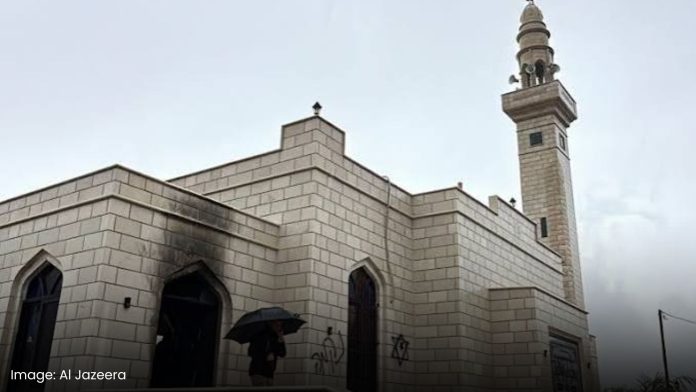
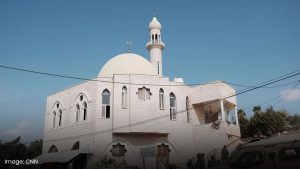
A mosque in the occupied West Bank village of Mikhmas was set on fire on 14 October 2026, in an att*ck that has renewed concerns about settler violence and the protection of Palestinian religious sites. The mosque’s exterior walls were spray-painted with Hebrew slogans, while a vehicle and an olive tree were also reportedly set on fire. The incident raises urgent questions about the security of Palestinian communities, the protection of religious freedom and whether those responsible for attacks on civilians and their property will be held accountable.
The Attack in Mikhmas
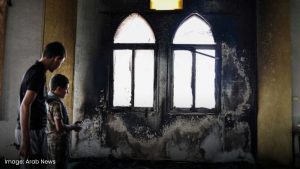
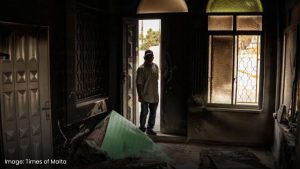
The incident occurred shortly after midnight, when local resident Atta Kanaan, who lives about 50 metres from the mosque, heard the sound of breaking glass. He rushed to the building and found it on fire. Residents called the fire brigade, while young men from the village used fire extinguishers to contain the flames before the entire building was engulfed.
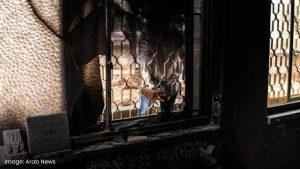
The fire destroyed the mosque’s interior carpeting and left its walls blackened by smoke. Hebrew slogans were also painted on the exterior, including the phrase, “Just because we are quiet doesn’t mean we are asleep.” The wording, combined with the damage to the building, intensified concerns about intimidation directed at the local community.
According to residents, the att*ck also involved a vehicle and an olive tree. The incident was particularly alarming because villagers had already established night-watch patrols in recent weeks, fearing that homes, especially those on the outskirts of the village could become targets.
An Unresolved Investigation
The Israeli military confirmed that soldiers had been dispatched to Mikhmas following reports of arson, graffiti and damage to a vehicle. It stated that no suspects had been identified and that an investigation had been opened.
The distinction between an investigation and accountability matters. Opening an inquiry is a necessary step, but it does not by itself reassure residents who fear further attacks. Effective protection requires credible investigations, the collection of evidence, prosecution where evidence supports charges, and measures to prevent similar incidents.
A Wider Climate of Settler Violence
Mikhmas is located in the central occupied West Bank, between Ramallah and Jerusalem, near several Israeli settlement outposts. Residents have reported attacks on the village in recent months. The latest incident therefore occurred against a background of existing fears rather than in isolation.
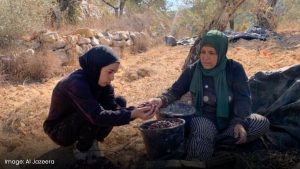
Across the occupied West Bank, reported settler violence has included physical assaults, damage to homes and religious buildings, and the destruction or theft of land and agricultural produce. Such incidents can affect entire communities even when no one is physically injured. Damage to a vehicle can undermine a family’s mobility, destruction of an olive tree can affect a livelihood, and an attack on a mosque can make worshippers fear for their safety.
The broader context is important. Israel has occupied the West Bank since 1967. Around three million Palestinians live in the territory, alongside more than 500,000 Israeli settlers, excluding occupied East Jerusalem. Israeli settlements in the occupied West Bank are widely considered illegal under international law, a position rejected by the Israeli government.
This political and territorial context does not establish the identity of the perpetrators in any individual incident. It does, however, help explain why attacks on Palestinian villages are viewed within a wider debate about land, security, settlement expansion and the rights of the occupied population.
Religious Freedom and International Law
A mosque is more than a physical structure. It is a place of worship, community gathering and religious identity. An attack on such a site can disrupt religious life and create fear among those who use it, even after the immediate damage has been contained.
International humanitarian law provides special protection for buildings dedicated to religion, alongside broader protections for civilian objects. Parties to a conflict must distinguish civilian objects from military objectives and take precautions to limit harm to civilians. A place of worship that is not being used for military purposes does not become a lawful target simply because it is located in a conflict zone. The legal assessment of a specific incident depends on the established facts and applicable law.
Protecting religious freedom therefore requires more than condemning an attack after it occurs. It requires effective prevention, impartial investigation and accountability where crimes have been committed.
Who Protects the Community?
The people of Mikhmas should not have to rely on night patrols alone to protect their homes and places of worship. Community vigilance may provide a sense of solidarity, but it cannot replace effective security measures and the enforcement of the law.
The immediate priority is to establish who carried out the arson and ensure that the investigation produces meaningful results. The broader challenge is to protect Palestinian residents from further violence, intimidation and property destruction.
The mosque fire is a reminder that civilian safety includes the right to worship, maintain a livelihood and live without fear that one’s home or community will be targeted. If these basic protections remain uncertain, the question facing Mikhmas extends beyond a single damaged building: who will ensure that Palestinian communities can live and practise their faith safely?