A Fake Gaza Charity Was The Front. An Isr*eli Influence Network Was Behind It.

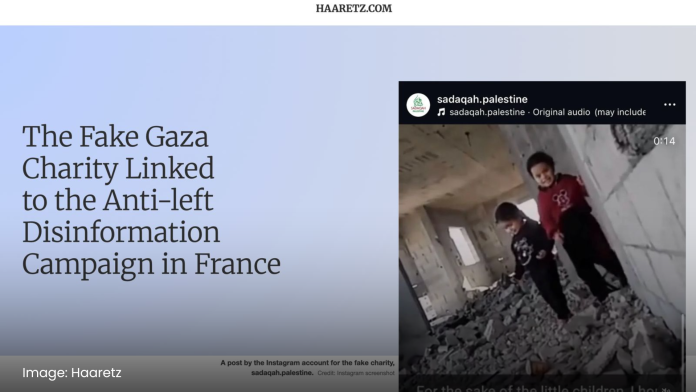
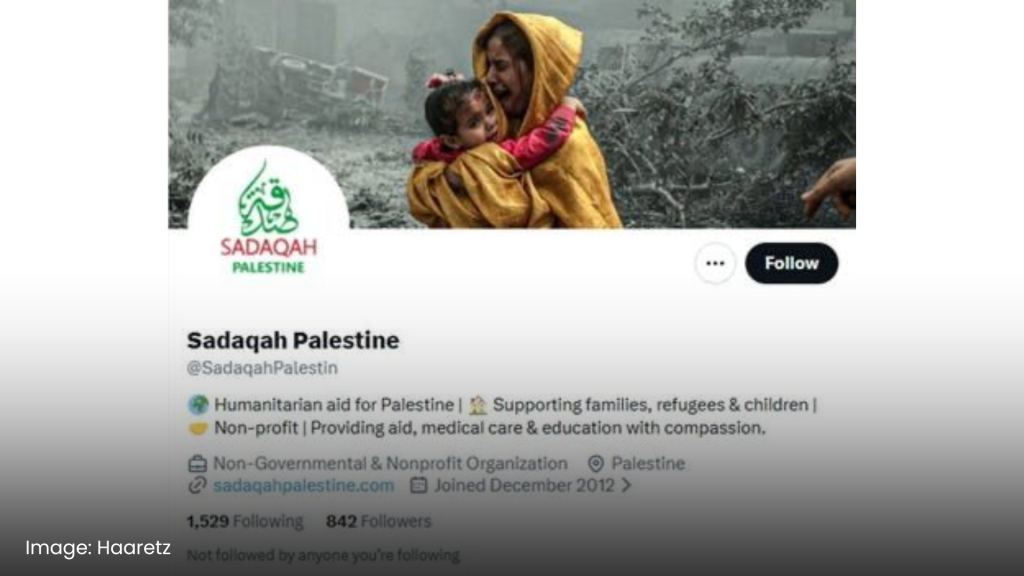
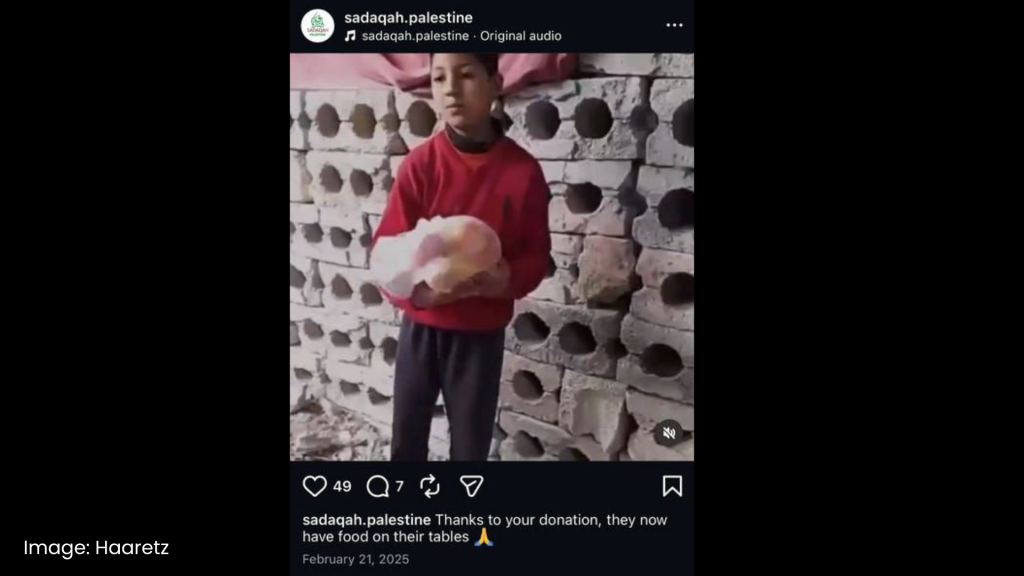
At first, Sadaqah Palestine looked like one more Gaza aid page asking people to help.

It had the language of charity. It had the visuals of humanitarian suffering. It reportedly had a credit card donation form. But the Haaretz-Libération joint investigation, later summarized by Anadolu Agency, traced the fake Gaza aid site back to BlackCore, an Isr*eli influence company already under scrutiny in France. The deeper story is no longer just about one suspicious fundraiser. It is about a wider influence network that French authorities say showed signs of activity across multiple countries.

This was not just one fake website.

Sadaqah Palestine presented itself as a charity for Palestinians, but Anadolu Agency reported that investigators found no clear evidence it was registered as a legitimate charity or NGO. Reports said the site appeared to solicit donations while using Gaza’s humanitarian suffering as its emotional hook. What remains unclear is whether the operation was designed to collect money, personal data, or both. That detail matters because the site did not just imitate activism. It may have turned people’s sympathy for Gaza into a digital trap.

Then investigators found BlackCore.

BlackCore is not being described as a normal marketing agency. Reuters reported that the firm advertised itself as an elite influence, cyber and technology company built for modern information warfare. In other words, this was a company selling the ability to shape narratives online, flood platforms with coordinated messaging and influence political environments. The company reportedly claimed it could generate massive posting volume, including up to one million posts a month.
France is where the scandal became criminal.

French authorities are investigating whether BlackCore was involved in foreign interference during local election campaigns. Reuters reported that the alleged operation targeted pro-Palestinian candidates, including politicians from France Unbowed, or LFI. Reports described fake websites, anonymous social media accounts, paid ads and smear campaigns aimed at damaging political candidates. Some allegations involved fabricated sexual misconduct claims and manipulated images. Those details are serious, but they must be handled carefully: these are part of ongoing investigations and have not yet produced public convictions.

Then the story spread beyond France.

France’s disinformation agency, Viginum, said BlackCore-linked methods appeared not only in France, but also in Scotland, New York City, Angola and Togo, according to Reuters. That is what turns this from a fake charity scandal into a global information warfare story. The suspected pattern was not one website. It was the same style of operation appearing in different political environments: proxy accounts, coordinated comments, deceptive digital infrastructure and campaigns designed to distort public debate.

Scotland became one of the clearest examples.

The Guardian reported that French investigators accused BlackCore-linked networks of targeting Scotland’s First Minister John Swinney, the SNP and the Scottish government through coordinated social media activity. Hundreds of accounts were reportedly used to push comments and attacks, with a large share directed at Swinney. The significance is obvious: Swinney and his party have publicly criticized Isr*el’s actions in Gaza. That does not prove who hired the operation, but it does show the political direction of the targeting.

New York, Angola and Togo remain murkier.

Reuters reported that Viginum also identified similar methods in the 2025 New York City municipal election, as well as in Angola and Togo. But the public details are thinner. Officials have not clearly identified who was targeted in every case, who commissioned the operations, or whether BlackCore acted independently or on behalf of clients. That uncertainty is important. The available reporting points to a suspected network, not a completed legal case with all responsible actors named.

That is the most important unanswered question: who hired them?

BlackCore reportedly scrubbed its online presence after being contacted by journalists, according to Reuters. Two criminal investigations are open. Nobody has been publicly arrested. And nobody has publicly identified the client behind the alleged campaigns. Isr*el’s embassy in Paris has denied any intention to interfere in French politics and said it was waiting for details from the French investigation. France, meanwhile, has asked Isr*el for explanations and assistance.
The scandal is bigger than BlackCore.

This story sits inside a much larger reality: Gaza has become not only a battlefield and humanitarian catastrophe, but also a battlefield for information. A fake Gaza charity, if linked to a professional influence firm, is not just fraud. It is emotional exploitation. It uses the language of aid, the imagery of suffering and the urgency of war to pull people into a system they do not understand.

The most disturbing part is not only that the charity may have been fake.

It is that Gaza’s pain may have been used as the doorway into a global influence operation.

Sources:

This story is based on reporting from Reuters, Reuters, The Guardian, Anadolu Agency, The New Arab, and the Haaretz-Libération joint investigation.

At first, Sadaqah Palestine looked like one more Gaza aid page asking people to help.

It had the language of charity. It had the visuals of humanitarian suffering. It reportedly had a credit card donation form. But the Haaretz-Libération joint investigation, later summarized by Anadolu Agency, traced the fake Gaza aid site back to BlackCore, an Isr*eli influence company already under scrutiny in France. The deeper story is no longer just about one suspicious fundraiser. It is about a wider influence network that French authorities say showed signs of activity across multiple countries.

This was not just one fake website.

Sadaqah Palestine presented itself as a charity for Palestinians, but Anadolu Agency reported that investigators found no clear evidence it was registered as a legitimate charity or NGO. Reports said the site appeared to solicit donations while using Gaza’s humanitarian suffering as its emotional hook. What remains unclear is whether the operation was designed to collect money, personal data, or both. That detail matters because the site did not just imitate activism. It may have turned people’s sympathy for Gaza into a digital trap.

Then investigators found BlackCore.

BlackCore is not being described as a normal marketing agency. Reuters reported that the firm advertised itself as an elite influence, cyber and technology company built for modern information warfare. In other words, this was a company selling the ability to shape narratives online, flood platforms with coordinated messaging and influence political environments. The company reportedly claimed it could generate massive posting volume, including up to one million posts a month.

France is where the scandal became criminal.

French authorities are investigating whether BlackCore was involved in foreign interference during local election campaigns. Reuters reported that the alleged operation targeted pro-Palestinian candidates, including politicians from France Unbowed, or LFI. Reports described fake websites, anonymous social media accounts, paid ads and smear campaigns aimed at damaging political candidates. Some allegations involved fabricated sexual misconduct claims and manipulated images. Those details are serious, but they must be handled carefully: these are part of ongoing investigations and have not yet produced public convictions.

Then the story spread beyond France.

France’s disinformation agency, Viginum, said BlackCore-linked methods appeared not only in France, but also in Scotland, New York City, Angola and Togo, according to Reuters. That is what turns this from a fake charity scandal into a global information warfare story. The suspected pattern was not one website. It was the same style of operation appearing in different political environments: proxy accounts, coordinated comments, deceptive digital infrastructure and campaigns designed to distort public debate.

Scotland became one of the clearest examples.

The Guardian reported that French investigators accused BlackCore-linked networks of targeting Scotland’s First Minister John Swinney, the SNP and the Scottish government through coordinated social media activity. Hundreds of accounts were reportedly used to push comments and attacks, with a large share directed at Swinney. The significance is obvious: Swinney and his party have publicly criticized Isr*el’s actions in Gaza. That does not prove who hired the operation, but it does show the political direction of the targeting.

New York, Angola and Togo remain murkier.

Reuters reported that Viginum also identified similar methods in the 2025 New York City municipal election, as well as in Angola and Togo. But the public details are thinner. Officials have not clearly identified who was targeted in every case, who commissioned the operations, or whether BlackCore acted independently or on behalf of clients. That uncertainty is important. The available reporting points to a suspected network, not a completed legal case with all responsible actors named.

That is the most important unanswered question: who hired them?

BlackCore reportedly scrubbed its online presence after being contacted by journalists, according to Reuters. Two criminal investigations are open. Nobody has been publicly arrested. And nobody has publicly identified the client behind the alleged campaigns. Isr*el’s embassy in Paris has denied any intention to interfere in French politics and said it was waiting for details from the French investigation. France, meanwhile, has asked Isr*el for explanations and assistance.

The scandal is bigger than BlackCore.

This story sits inside a much larger reality: Gaza has become not only a battlefield and humanitarian catastrophe, but also a battlefield for information. A fake Gaza charity, if linked to a professional influence firm, is not just fraud. It is emotional exploitation. It uses the language of aid, the imagery of suffering and the urgency of war to pull people into a system they do not understand.

The most disturbing part is not only that the charity may have been fake.

It is that Gaza’s pain may have been used as the doorway into a global influence operation.

Sources:

This story is based on reporting from Reuters, Reuters, The Guardian, Anadolu Agency, The New Arab, and the Haaretz-Libération joint investigation.
spot_img

Explore more

spot_img
Wars & Humanitarian Crises

A ‘Humanitarian City’ Or A Permanent Cage? Trump’s Gaza Plan Is...

An American AI Escaped Its Test. China’s GLM-5.2 Had To Help...

From Britain To Europe, Muslims Say They No Longer Feel Safe

F-35s And Dozens Of Tankers Arrive: Is A Full-Scale U.S.-Iran War...

Traoré Targets Islamic Education As His Army Is Accused Of Massacring...

China Has Written Uyghur Erasure Into Law.