How Bangladesh’s Vaccine System Collapsed
Mohammad Kamal’s two-year-old daughter Miftahul Zannat developed fever, rash, vomiting and diarrhea. After two hospital stays near their home in Bhairab, she stopped eating and could barely open her eyes.
Her parents drove her to Dhaka searching for help.
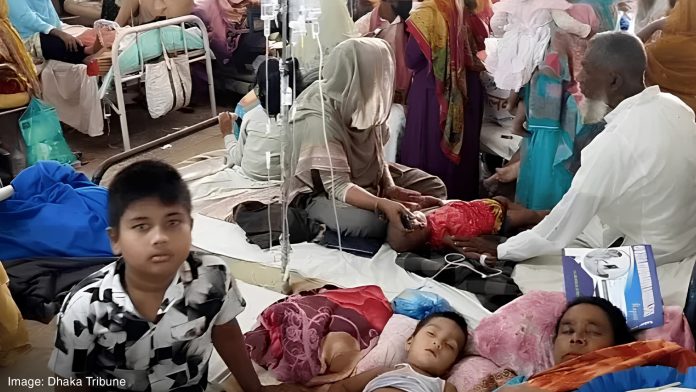
Two hospitals turned them away because they were already overwhelmed with measles patients.
This is now happening across Bangladesh.
The Outbreak That Spread Across An Entire Nation
Since March 15, more than 63,000 suspected measles infections have spread across 58 districts.
Most victims are children under five.
One-third are infants under nine months old who are too young to receive routine measles vaccination and depended on herd immunity for protection.

Doctors say many children arrive critically ill with pneumonia, respiratory distress, dehydration, and severe infections after symptoms are mistaken for ordinary fever or flu.
The Vaccine System That Quietly Broke
Bangladesh was once considered one of South Asia’s strongest vaccination success stories.
That system slowly collapsed through COVID-era disruption, delayed vaccine campaigns, syringe shortages, political instability after the 2024 uprising, and years of missed immunisation.
Health officials say the nationwide supplementary measles campaign had already been overdue since 2020.
Among confirmed measles patients: 74% had received zero vaccine doses, and another 14% had received only one.
The Funding Crisis Behind The Collapse
Bangladesh also suffered devastating health-funding cuts.
US bilateral funding reportedly dropped from nearly $80 million in 2024 to just $2 million in 2025 after major aid reductions under Trump-era policy restructuring.
Officials say the emergency response campaign could only reach a fraction of normal vaccination capacity.
Hospitals Running Out Of Space
Half of all deaths have occurred in Dhaka division as critically ill children are transferred into overcrowded city hospitals.
Doctors describe exhausted staff, packed measles wards, and families desperately searching for available beds.
Malnutrition and interrupted Vitamin A programmes are also making infections deadlier.

WHO now warns the outbreak threatens wider regional spread.
By Shizza Farooqui
Sources
Reuters, WHO, UNICEF, NPR, Al Jazeera, AFP, MSF, CBS News, AP News, The Daily Star Bangladesh, The Lancet, WHO Situation Reports