Cocaine In The Palace, Corruption In The Courts: The Insiders Dismantling Zelensky’s Image.

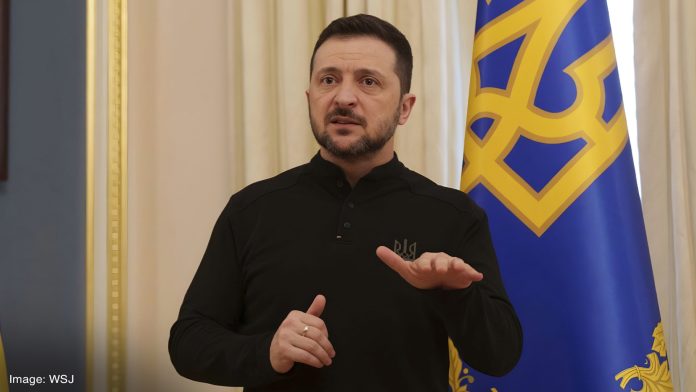
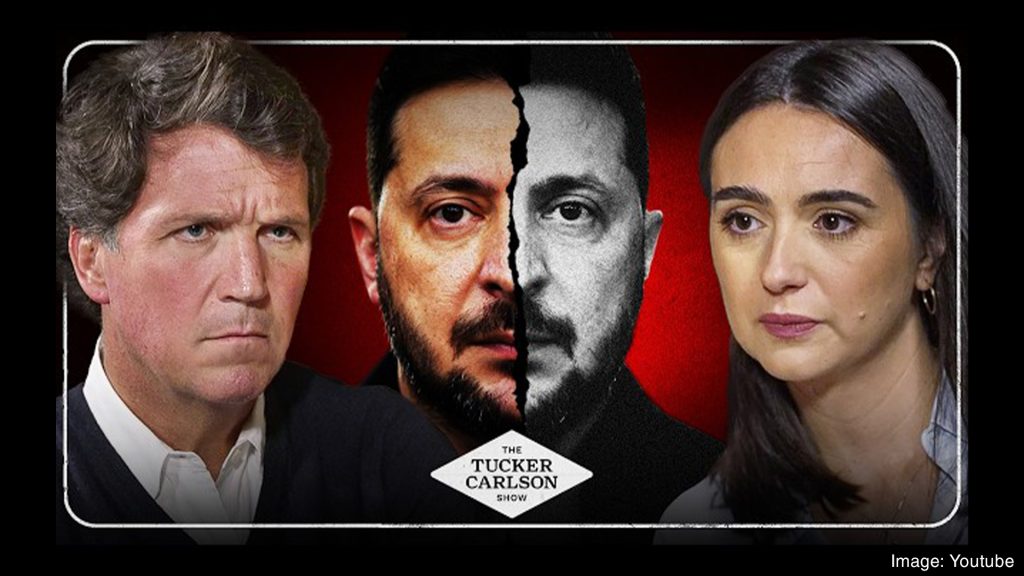
Two separate stories exploded around Ukraine’s leadership within hours of each other on May 11 and 12, and together they are creating one of the most dangerous political moments Volodymyr Zelensky has faced since Russia’s full-scale invasion began. On one side, his former press secretary Yulia Mendel appeared on Tucker Carlson’s show alleging paranoia, emotional instability and cocaine use at the highest levels of Ukraine’s wartime government. On the other, Andriy Yermak, the man widely considered the second most powerful figure in wartime Ukraine and Zelensky’s closest political ally, stood in a Kyiv courtroom facing charges connected to a widening 100 million dollar corruption investigation. Individually, both stories would have been explosive. Together, they are dismantling the image of wartime unity that Zelensky spent three years building in the West.

The Tucker Carlson Interview And The Bolshevik Label

Tucker Carlson has spent years framing Zelensky in deliberately provocative terms, at one point describing him as a Bolshevik and consistently positioning Ukraine’s leadership as a corrupt Western client state prolonging a war it could have ended. Critics have long accused Carlson of amplifying Kremlin narratives, pointing to his 2024 interview with Vladimir Putin in Moscow and his subsequent sit-down with Russian ultranationalist ideologue Aleksandr Dugin. Ukraine’s presidential office has repeatedly dismissed his coverage as hostile propaganda.

What changed with the May 11 episode is that Carlson’s guest was not a Russian official or a Western contrarian. It was Yulia Mendel, a Ukrainian woman who served as Zelensky’s own press secretary for two years and sat inside his presidential administration. That distinction matters enormously because it removes the easiest line of attack available to Kyiv: that the criticism is foreign, ideologically motivated or detached from reality.

Mendel described Zelensky as a man who constantly changes masks, has absolutely no control over his emotions, frequently becomes hysterical and treats people as disposable. She said his public empathy is a performance and that most of what he says publicly is either manipulation, facts taken out of context or outright lies. She described both Zelensky and Yermak as malicious and extremely paranoid narcissists whose political relationship had become a dangerous symbiosis.

The Cocaine Allegations

Among the most damaging claims Yulia Mendel made was her discussion of cocaine use, allegations that have circulated in anti-war media ecosystems for years but had never been raised publicly by someone with direct access to Zelensky’s inner circle.

Mendel described a pattern of behavior she said she witnessed and heard about from multiple sources. She described Zelensky disappearing into a bathroom for fifteen minutes before interviews and returning as a visibly different, more energetic person. She said she spoke to multiple people who told her directly they witnessed cocaine use at various social gatherings. She also raised questions about the pre-election drug test Zelensky submitted, noting it was taken at a friend’s clinic and that the dates did not correspond to the actual testing day.

There is no independently verified public evidence confirming Zelensky uses cocaine. Zelensky’s office has not directly addressed the specific allegations made by Mendel. But the fact that these claims are now attached to a named former insider rather than anonymous online speculation has fundamentally changed their political weight.
The Istanbul Claim That Changes Everything

The single most consequential allegation in the entire interview received the least coverage.

Mendel claimed that Ukraine’s delegation during the 2022 Istanbul peace negotiations was prepared to agree to Russian terms and end the war. She said Kyiv was pushed away from the table by pressure from the United States and the United Kingdom, who encouraged Ukraine to keep fighting rather than settle. If accurate, this means the war continued for three additional years, with hundreds of thousands more casualties on both sides, because Western governments overrode a Ukrainian decision to negotiate peace.

Zelensky’s presidential office dismissed the claim entirely, saying Yulia Mendel had no involvement in the negotiations and no access to high-level decision-making on that file. But the allegation has taken on additional weight given that the man who was Ukraine’s actual lead negotiator with Washington, Andriy Yermak, is now standing in a courtroom facing corruption charges rather than sitting at a negotiating table.

The Yermak Corruption Case

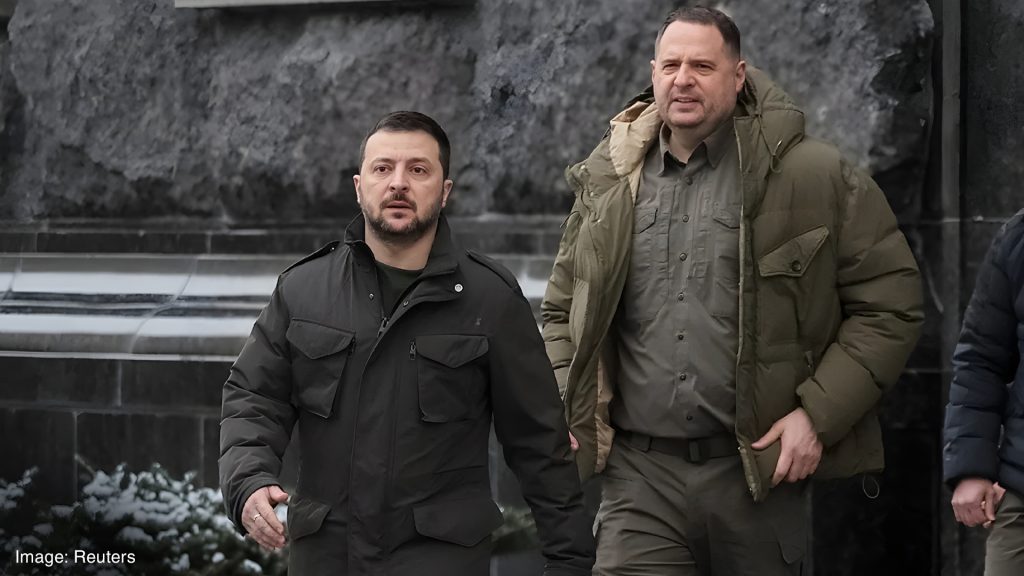
Yermak was not simply a senior official. He functioned simultaneously as Zelensky’s chief of staff and Ukraine’s primary international negotiator with the United States throughout the war, wielding influence comparable to a combined White House chief of staff and Secretary of State. He resigned in November 2025 after anti-corruption investigators raided his home as part of Operation Midas, a sweeping anti-graft investigation centered on Energoatom, Ukraine’s state nuclear energy monopoly.

The case against Yermak alleges he funnelled approximately 10.5 million dollars into a luxury housing complex called Dynasty, built outside Kyiv in one of the capital’s most expensive suburbs. Prosecutors allege the funds originated from a broader 100 million dollar kickback scheme at Energoatom. One of the four private villas in the complex was allegedly designated for Yermak himself. He appeared in court on May 12, denied all charges, and told reporters he owns only one apartment and one car.

The broader Operation Midas investigation has already ensnared former Deputy Prime Minister Oleksiy Chernyshov and former Energy Minister Herman Haluschenko, who was detained while attempting to leave the country. At its center is Timur Mindich, a businessman described in Ukrainian media as Zelensky’s wallet, who co-owned the president’s former television production studio Kvartal95 before fleeing to Israel after being charged with orchestrating the 100 million dollar scheme. He denies wrongdoing.

How Zelensky Tried To Stop The Investigation

The corruption controversy became more politically damaging after it emerged that Zelensky had previously signed legislation designed to strip NABU and SAPO, Ukraine’s independent anti-corruption bodies, of their independence while the Yermak probe was developing. The law passed Ukraine’s parliament on July 22, 2025, and Zelensky signed it the same day, giving the prosecutor general, a political appointee nominated by the president, sweeping powers to oversee and reassign corruption cases.

The move triggered the first major nationwide protests inside Ukraine since Russia’s full-scale invasion began. The EU privately warned Kyiv that failure to reverse the legislation could result in suspension of funding programs. Within 72 hours, under intense domestic and Western pressure, Zelensky reversed course and signed a new law restoring the agencies’ independence. For critics, the 72-hour sequence told its own story: a power grab abandoned only when the West threatened to cut the money Ukraine’s survival depends on.
The Kill List And The Attempt To Silence Yulia Mendel

Within hours of the Carlson interview airing, Yulia Mendel was added to the Mirotvorets database, a Ukrainian state-linked website that publishes the personal details and addresses of individuals deemed enemies of Ukraine. The platform has previously listed Tucker Carlson, US Director of National Intelligence Tulsi Gabbard, Hollywood director Woody Allen and Russian hockey star Alexander Ovechkin. Russian officials have described it as a hit list. Critics have long characterized it as a political intimidation tool used to silence dissent under the cover of wartime security.

The decision to list Yulia Mendel, a Ukrainian woman speaking in her own language about her own government, rather than engage with the substance of her allegations, drew immediate international attention and reinforced the perception that Kyiv’s instinct under pressure is to intimidate rather than answer.

What It Means For The West

Despite everything, Zelensky retains meaningful domestic support. According to the Kyiv International Institute of Sociology, approximately 58 percent of Ukrainians trusted the president as of May 4. His office continues to dismiss the week’s controversies as Russian-amplified disinformation orchestrated through hostile media ecosystems.

But the political atmosphere is shifting in ways that matter beyond Ukraine’s borders. A three-day US-brokered ceasefire that briefly reduced fighting ended on Monday with no peace settlement in sight and the war entering its fifth year. Western governments are being asked to continue writing enormous cheques for a government whose former chief negotiator is facing corruption charges, whose former press secretary is alleging cocaine use on American television and whose leader once tried to shut down the very bodies now investigating his inner circle.

The insiders who built Zelensky’s wartime image are now the ones dismantling it. And unlike attacks from foreign adversaries, that is a problem Kyiv cannot simply label as enemy propaganda and move on.

Sources: Al Jazeera, Reuters, Financial Times, Tucker Carlson Network, Kyiv Independent, Kyiv Post, NABU, SAPO, Meduza, PBS NewsHour, Ukrainska Pravda, KIIS polling, AP, Human Rights Watch.

#Ukraine #Zelensky #RussiaUkraineWar #TuckerCarlson #AndriyYermak #Corruption #Kyiv #Russia #NATO #Geopolitics #War #WorldNews #BreakingNews #PeaceTalks #OperationMidas #Verum


Two separate stories exploded around Ukraine’s leadership within hours of each other on May 11 and 12, and together they are creating one of the most dangerous political moments Volodymyr Zelensky has faced since Russia’s full-scale invasion began. On one side, his former press secretary Yulia Mendel appeared on Tucker Carlson’s show alleging paranoia, emotional instability and cocaine use at the highest levels of Ukraine’s wartime government. On the other, Andriy Yermak, the man widely considered the second most powerful figure in wartime Ukraine and Zelensky’s closest political ally, stood in a Kyiv courtroom facing charges connected to a widening 100 million dollar corruption investigation. Individually, both stories would have been explosive. Together, they are dismantling the image of wartime unity that Zelensky spent three years building in the West.

The Tucker Carlson Interview And The Bolshevik Label

Tucker Carlson has spent years framing Zelensky in deliberately provocative terms, at one point describing him as a Bolshevik and consistently positioning Ukraine’s leadership as a corrupt Western client state prolonging a war it could have ended. Critics have long accused Carlson of amplifying Kremlin narratives, pointing to his 2024 interview with Vladimir Putin in Moscow and his subsequent sit-down with Russian ultranationalist ideologue Aleksandr Dugin. Ukraine’s presidential office has repeatedly dismissed his coverage as hostile propaganda.

What changed with the May 11 episode is that Carlson’s guest was not a Russian official or a Western contrarian. It was Yulia Mendel, a Ukrainian woman who served as Zelensky’s own press secretary for two years and sat inside his presidential administration. That distinction matters enormously because it removes the easiest line of attack available to Kyiv: that the criticism is foreign, ideologically motivated or detached from reality.

Mendel described Zelensky as a man who constantly changes masks, has absolutely no control over his emotions, frequently becomes hysterical and treats people as disposable. She said his public empathy is a performance and that most of what he says publicly is either manipulation, facts taken out of context or outright lies. She described both Zelensky and Yermak as malicious and extremely paranoid narcissists whose political relationship had become a dangerous symbiosis.

The Cocaine Allegations

Among the most damaging claims Yulia Mendel made was her discussion of cocaine use, allegations that have circulated in anti-war media ecosystems for years but had never been raised publicly by someone with direct access to Zelensky’s inner circle.

Mendel described a pattern of behavior she said she witnessed and heard about from multiple sources. She described Zelensky disappearing into a bathroom for fifteen minutes before interviews and returning as a visibly different, more energetic person. She said she spoke to multiple people who told her directly they witnessed cocaine use at various social gatherings. She also raised questions about the pre-election drug test Zelensky submitted, noting it was taken at a friend’s clinic and that the dates did not correspond to the actual testing day.

There is no independently verified public evidence confirming Zelensky uses cocaine. Zelensky’s office has not directly addressed the specific allegations made by Mendel. But the fact that these claims are now attached to a named former insider rather than anonymous online speculation has fundamentally changed their political weight.

The Istanbul Claim That Changes Everything

The single most consequential allegation in the entire interview received the least coverage.

Mendel claimed that Ukraine’s delegation during the 2022 Istanbul peace negotiations was prepared to agree to Russian terms and end the war. She said Kyiv was pushed away from the table by pressure from the United States and the United Kingdom, who encouraged Ukraine to keep fighting rather than settle. If accurate, this means the war continued for three additional years, with hundreds of thousands more casualties on both sides, because Western governments overrode a Ukrainian decision to negotiate peace.

Zelensky’s presidential office dismissed the claim entirely, saying Yulia Mendel had no involvement in the negotiations and no access to high-level decision-making on that file. But the allegation has taken on additional weight given that the man who was Ukraine’s actual lead negotiator with Washington, Andriy Yermak, is now standing in a courtroom facing corruption charges rather than sitting at a negotiating table.

The Yermak Corruption Case

Yermak was not simply a senior official. He functioned simultaneously as Zelensky’s chief of staff and Ukraine’s primary international negotiator with the United States throughout the war, wielding influence comparable to a combined White House chief of staff and Secretary of State. He resigned in November 2025 after anti-corruption investigators raided his home as part of Operation Midas, a sweeping anti-graft investigation centered on Energoatom, Ukraine’s state nuclear energy monopoly.

The case against Yermak alleges he funnelled approximately 10.5 million dollars into a luxury housing complex called Dynasty, built outside Kyiv in one of the capital’s most expensive suburbs. Prosecutors allege the funds originated from a broader 100 million dollar kickback scheme at Energoatom. One of the four private villas in the complex was allegedly designated for Yermak himself. He appeared in court on May 12, denied all charges, and told reporters he owns only one apartment and one car.

The broader Operation Midas investigation has already ensnared former Deputy Prime Minister Oleksiy Chernyshov and former Energy Minister Herman Haluschenko, who was detained while attempting to leave the country. At its center is Timur Mindich, a businessman described in Ukrainian media as Zelensky’s wallet, who co-owned the president’s former television production studio Kvartal95 before fleeing to Israel after being charged with orchestrating the 100 million dollar scheme. He denies wrongdoing.

How Zelensky Tried To Stop The Investigation

The corruption controversy became more politically damaging after it emerged that Zelensky had previously signed legislation designed to strip NABU and SAPO, Ukraine’s independent anti-corruption bodies, of their independence while the Yermak probe was developing. The law passed Ukraine’s parliament on July 22, 2025, and Zelensky signed it the same day, giving the prosecutor general, a political appointee nominated by the president, sweeping powers to oversee and reassign corruption cases.

The move triggered the first major nationwide protests inside Ukraine since Russia’s full-scale invasion began. The EU privately warned Kyiv that failure to reverse the legislation could result in suspension of funding programs. Within 72 hours, under intense domestic and Western pressure, Zelensky reversed course and signed a new law restoring the agencies’ independence. For critics, the 72-hour sequence told its own story: a power grab abandoned only when the West threatened to cut the money Ukraine’s survival depends on.

The Kill List And The Attempt To Silence Yulia Mendel

Within hours of the Carlson interview airing, Yulia Mendel was added to the Mirotvorets database, a Ukrainian state-linked website that publishes the personal details and addresses of individuals deemed enemies of Ukraine. The platform has previously listed Tucker Carlson, US Director of National Intelligence Tulsi Gabbard, Hollywood director Woody Allen and Russian hockey star Alexander Ovechkin. Russian officials have described it as a hit list. Critics have long characterized it as a political intimidation tool used to silence dissent under the cover of wartime security.

The decision to list Yulia Mendel, a Ukrainian woman speaking in her own language about her own government, rather than engage with the substance of her allegations, drew immediate international attention and reinforced the perception that Kyiv’s instinct under pressure is to intimidate rather than answer.

What It Means For The West

Despite everything, Zelensky retains meaningful domestic support. According to the Kyiv International Institute of Sociology, approximately 58 percent of Ukrainians trusted the president as of May 4. His office continues to dismiss the week’s controversies as Russian-amplified disinformation orchestrated through hostile media ecosystems.

But the political atmosphere is shifting in ways that matter beyond Ukraine’s borders. A three-day US-brokered ceasefire that briefly reduced fighting ended on Monday with no peace settlement in sight and the war entering its fifth year. Western governments are being asked to continue writing enormous cheques for a government whose former chief negotiator is facing corruption charges, whose former press secretary is alleging cocaine use on American television and whose leader once tried to shut down the very bodies now investigating his inner circle.

The insiders who built Zelensky’s wartime image are now the ones dismantling it. And unlike attacks from foreign adversaries, that is a problem Kyiv cannot simply label as enemy propaganda and move on.

Sources: Al Jazeera, Reuters, Financial Times, Tucker Carlson Network, Kyiv Independent, Kyiv Post, NABU, SAPO, Meduza, PBS NewsHour, Ukrainska Pravda, KIIS polling, AP, Human Rights Watch.

#Ukraine #Zelensky #RussiaUkraineWar #TuckerCarlson #AndriyYermak #Corruption #Kyiv #Russia #NATO #Geopolitics #War #WorldNews #BreakingNews #PeaceTalks #OperationMidas #Verum
spot_img

Explore more

spot_img
Business

From Settlement Sales To Celebrity Ads: The Business Of Selling Israeli...

Bodies Of Evidence: The Explosive Al Jazeera Film Exposing Horrors Inside...

Isr*el Is Burning Lebanon From The Sky

Saudi Arabia Just Dug Up The Words Of Islam’s Second Caliph,...

The Most Hostile World Cup Ever

The Ceasefire Died Near Hormuz Last Night.

Your Closest Ally Is Spying On You.

AJK Is At A Crossroads. What Happens Next?