
The Amateur Astronomer Who Predicted a Rocket Would Hit the Moon, Down to the Second
Maryam Tariq
On August 5, a discarded upper stage from a SpaceX Falcon 9 rocket will slam into the moon near Einstein Crater at roughly 5,400 miles per hour. NASA didn’t catch this coming. The US military doesn’t track objects like this at all. The person who did is Bill Gray, an independent astronomer working with software he built himself, and his prediction has turned into one of the most precisely forecast unplanned lunar impacts in history.

Who Is Bill Gray
Gray is the creator of Guide and Project Pluto, orbital tracking tools used by both professional and amateur astronomers around the world to follow near-Earth objects, asteroids, comets, and increasingly, human made debris that official agencies have stopped monitoring. Unlike active spacecraft, which agencies like NASA’s Jet Propulsion Laboratory track closely, spent rocket stages and other leftover hardware often get abandoned by official tracking systems entirely once their mission ends. That gap is exactly where Gray’s work operates.
How He First Caught This Rocket Stage
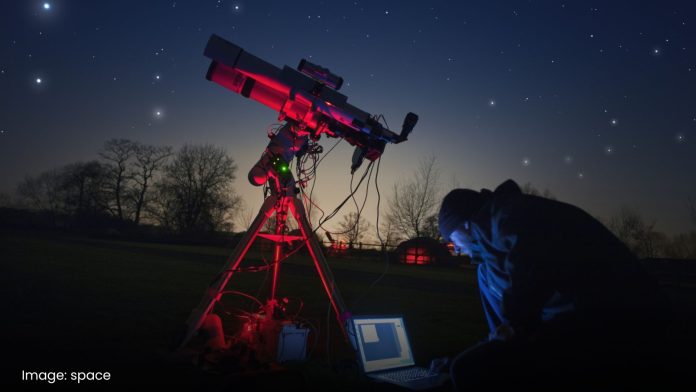
The Falcon 9 upper stage in question launched from Kennedy Space Center on January 15, 2025, carrying two lunar landers toward the moon, Firefly Aerospace’s Blue Ghost, which landed successfully, and ispace’s Resilience, which crashed after a sensor failure. Once its job was done, the spent rocket stage was expected to eventually fall back through Earth’s atmosphere and burn up. Instead, its orbit gradually drifted closer and closer to the moon over the following months. Gray first flagged the coming collision in September 2025, after his software analyzed more than 1,000 observations submitted by asteroid surveys and amateur astronomers working out of facilities in Mississippi, Utah, Beijing and England. By February 2026, that observation count had grown to 1,053 data points, and the longer the tracking baseline stretched, the more precise his prediction became.

Just How Precise the Prediction Is
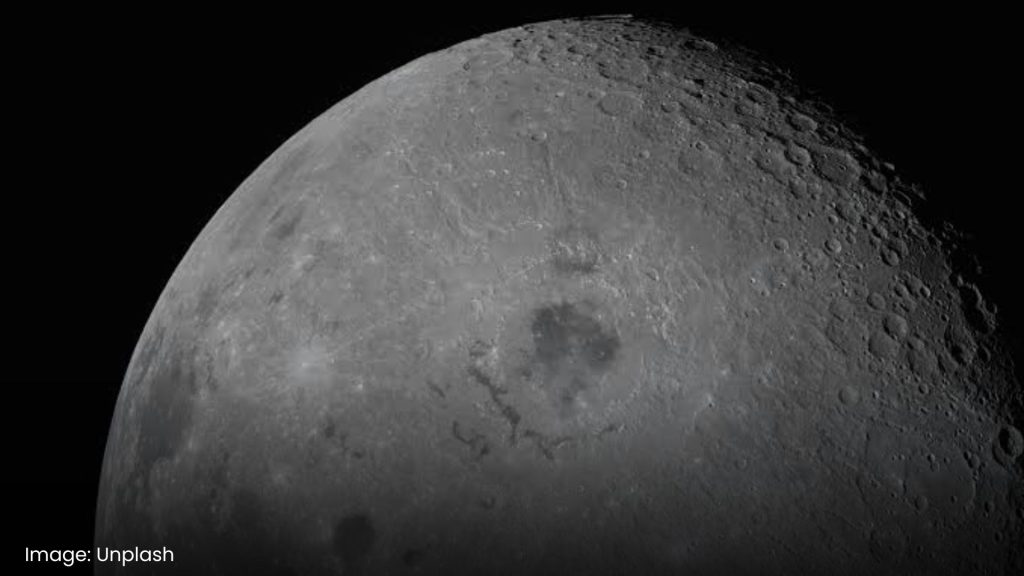
Gray’s final calculations placed the impact near lunar coordinates 19.455 degrees north, 93.594 degrees west, close to Einstein Crater on the moon’s western limb, with a margin of error described as just several kilometers and several seconds. Researchers have called this the most precisely predicted unplanned lunar impact ever recorded, precise enough that a coordinated campaign of professional and amateur astronomers across three continents is now organizing to observe it directly, hoping to catch either the impact flash or the resulting debris plume through telescopes.
A History of Careful, Public Detective Work
This isn’t Gray’s first rodeo tracking space debris headed for the moon, and it isn’t the first time his identification process has been tested either. In 2022, Gray initially identified a different piece of drifting space junk as leftover SpaceX debris, based on what he described as strong circumstantial evidence, its brightness, timing and orbit all lined up with expectations. Days later, after a colleague at NASA’s Jet Propulsion Laboratory pointed out inconsistencies in the object’s trajectory, Gray publicly corrected himself, concluding the object was actually debris from a Chinese lunar mission instead. He described this kind of work candidly at the time, noting that identifying high flying space junk often requires genuine detective work, and that sometimes an object’s true identity is never fully solved.


Why This Kind of Tracking Matters
Gray has been direct about what this particular event does and doesn’t represent scientifically. It doesn’t pose any danger to anyone, he’s noted, but it does highlight a certain carelessness about how leftover space hardware gets disposed of. With both the US and China targeting crewed lunar landings before 2030, and an increasing amount of hardware being sent moonward, incidents like this are likely to become more common, not less, making independent tracking efforts like Gray’s increasingly important for a domain official trackers still don’t fully monitor.
What Happens Next
NASA’s Lunar Reconnaissance Orbiter, which has circled the moon since 2009, passed over the predicted impact site on July 29 and will pass again on August 12, allowing scientists to compare before and after images and measure the crater the impact leaves behind, a crater Gray predicts will stretch more than 50 feet across, all traceable back to a prediction one independent astronomer made nearly a year in advance.
Sources:
· A SpaceX Rocket Is About to Crash Into the Moon, Here’s Everything You Need to Know — TIME: https://time.com
· Falcon 9 Upper Stage Hits Moon Aug. 5, Set Your Alarm for Rare Lunar Impact — Tech Times: https://www.techtimes.com/articles/321265/20260722/falcon-9-upper-stage-hits-moon-aug-5-set-your-alarm-rare-lunar-impact.htm
· SpaceX rocket debris could slam into the moon, here’s what you need to know — Space.com: https://www.space.com/space-exploration/launches-spacecraft/a-stray-spacex-rocket-stage-could-slam-into-the-moon-this-august-amateur-astronomer-says
· A piece of a SpaceX rocket is about to hit the moon — ABC News: https://abcnews.com/US/piece-spacex-rocket-hit-moon/story?id=135225250