
THE QUIET TALKS ARE REAL. THE RUMOURED DEAL IS NOT YET CONFIRMED
India and Pakistan are quietly talking again through unofficial channels after one of the most dangerous years in South Asia’s recent history. Serving foreign ministry officials from both countries, alongside former diplomats, retired military officers and politicians from both ruling alliances, held a rare Track 1.5 dialogue in Colombo this week, with separate meetings also held in Bangkok. The talks covered water, terrorism, crisis management and airspace, and participants explored ways to feed ideas from these discussions into formal Track 1 channels between the two governments. (Express Tribune | Newswire.lk)
Pakistan’s Foreign Office spokesman, when asked about the meetings at his weekly briefing, said “Track 2 is not meant to be public.” He did not confirm or deny the Colombo talks. That response alone tells the story: both governments know the talks are happening. Neither can say so officially. (Arab News)
The most explosive claim circulating is that India may be willing to restore the Indus Waters Treaty framework if Pakistan reopens its airspace to Indian airlines. That would be a major breakthrough. But for now, the specific water-for-airspace bargain remains unverified, and at least one reported participant has directly denied that India made such an offer in Colombo. (Arab News)
That is what makes this story so sensitive: the talks appear real, the pressure points are real, but the deal itself is still only a rumour.
WHY AIRSPACE MATTERS TO INDIA
Pakistan closed its airspace to Indian-owned or operated airlines after India suspended the Indus Waters Treaty following the 2025 Kashmir attack. That move forced Indian carriers onto longer routes, adding fuel costs, flight time, crew pressure and operational strain. (Reuters)
Air India estimated the Pakistan airspace ban could cost it around $600 million over 12 months if it continued. For India, reopening Pakistani airspace would not just be symbolic. It would reduce aviation costs, restore more efficient routes and ease pressure on airlines already strained by regional disruptions. (Reuters)
That gives Pakistan leverage.
WHY WATER MATTERS TO PAKISTAN
For Pakistan, the Indus Waters Treaty is not just a diplomatic file. It is tied to food security, farming, power generation and survival. The treaty is vital to water supply for 80% of Pakistan’s farms. Signed in 1960 and brokered by the World Bank, it has survived wars and decades of hostility between the two countries. (Reuters | Reuters Explainer)
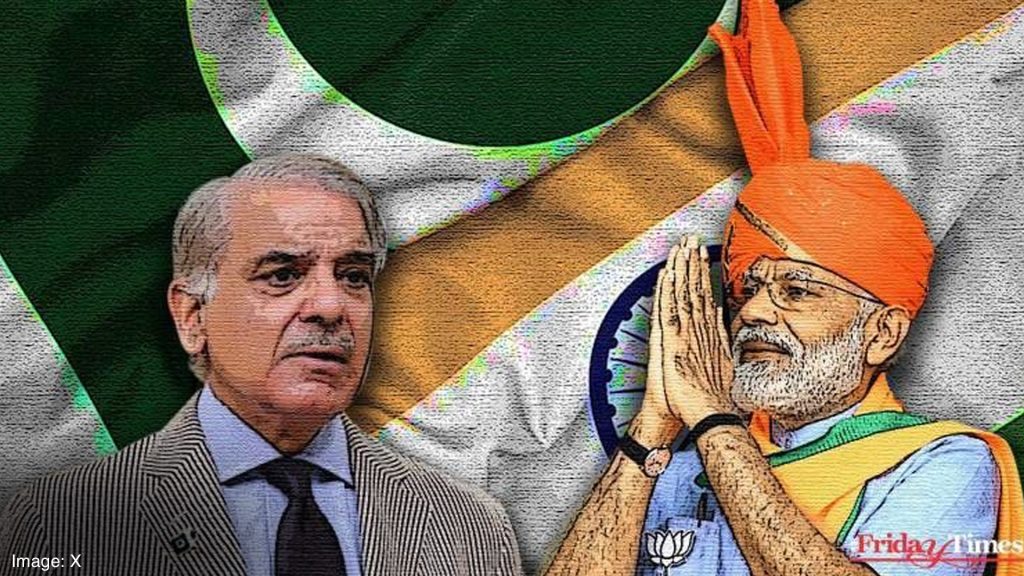
India’s decision to suspend the treaty after the Pahalgam attack turned water into one of the most dangerous fronts in the India-Pakistan standoff. Pakistan says India cannot unilaterally suspend the treaty. India says its position is justified by national security and cross-border terrorism. The result is a frozen treaty between two nuclear-armed neighbours, both applying legal, diplomatic and strategic pressure while neither wants to appear weak. (Reuters)
PAKISTAN IS RAISING THE ALARM OVER INDIAN WATER PROJECTS
Pakistan has escalated its diplomatic campaign significantly. Deputy Prime Minister and Foreign Minister Ishaq Dar warned that around 17 Indian projects were designed to alter the Indus River system, naming reservoirs and infrastructure including Sawalkot, Kirthai, Kwar, Baglihar and Salal, along with diversion projects on the Indus, Chenab and Ravi rivers. (Dawn | Business Recorder)
Dar accused India of seeking “hydro-hegemony” and warned that river systems are not just waterways but lifelines for millions of people. Pakistan has taken the issue to the UN Security Council, arguing that India’s actions threaten water security, regional stability and international peace. (Dawn | Business Recorder)
This is why water is not a side issue. It is becoming the centre of the next India-Pakistan crisis.
A YEAR AFTER OPERATION SINDOOR, THE WAR HAS NOT REALLY ENDED
One year after India’s Operation Sindoor and the four-day conflict that followed, missiles are no longer flying between the two countries. But the underlying confrontation has not been resolved.
The Indus Waters Treaty remains suspended. India continues to frame Pakistan through terrorism and national security. Pakistan continues to frame India’s water policy as a threat to its survival. Pakistan’s Defence Minister Khawaja Asif has warned that Islamabad could consider military action if Pakistan’s water security is threatened. (Reuters | Times of India)
That is the danger: the next India-Pakistan crisis may not begin with a border incident. It may begin with a river.
KASHMIR REMAINS THE POLITICAL FAULT LINE
The water dispute is also unfolding while Kashmir remains politically unstable. Pakistan-administered Kashmir recently saw deadly protests over political representation, with more than 20 people killed during unrest. That unrest was not simply about India or the Indus Treaty, but it shows how combustible the wider Kashmir question remains. (Reuters)
Any India-Pakistan backchannel has to sit on top of that reality: water, airspace, Kashmir, terrorism, domestic politics and nuclear deterrence are all connected. One issue can quickly pull the others into the fire.
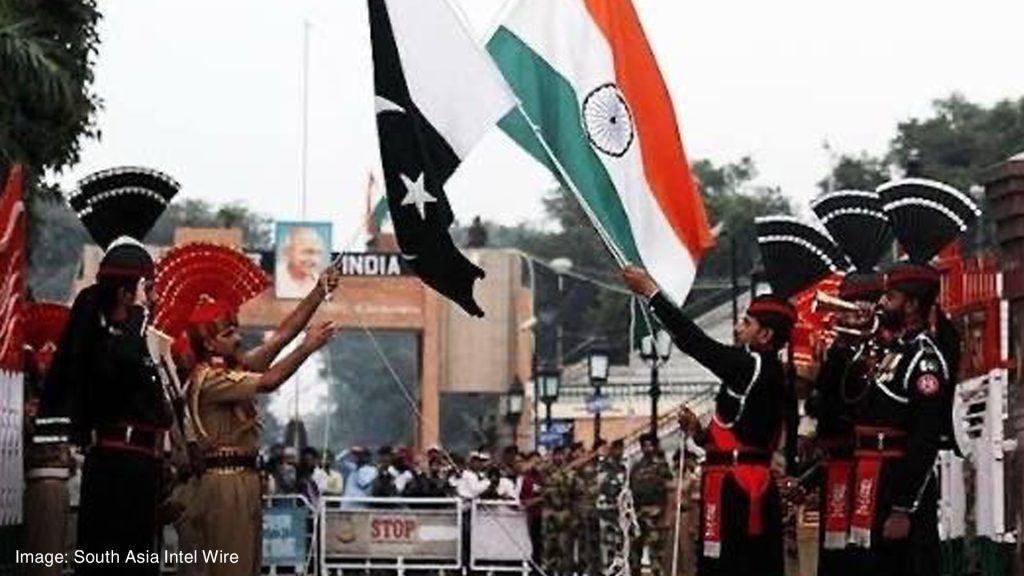
THE BACKCHANNEL IS WHERE A DEAL COULD BEGIN
The reason these talks matter is not because a deal has been confirmed. It has not. They matter because both countries have something they want.
India wants airspace access. Pakistan wants water security restored. Both want to avoid another military crisis spiralling into something neither side can control. Track 1.5 talks are where ideas can be tested before governments admit they are negotiating.
That is why the subcontinent is holding its breath. Not because peace is here, but because the first quiet shape of a possible bargain may finally be forming.
If it fails, the region returns to the same dangerous equation: two nuclear powers, one disputed river system, and a crisis that keeps waiting for the next spark.
*By Verity Quill | verumnetwork.com*
SOURCES
Express Tribune | WION | Arab News | CNBC | Dawn | Geopolitical Monitor | Newswire.lk | Reuters | Business Recorder | Times of India