In Manipur, families are once again waiting for bodies, answers and revenge.
Two people from the Kuki community have been killed in fresh attacks in India’s northeastern state of Manipur, according to Reuters, which cited senior police officials. The killings came just after authorities found the bodies of six Naga men who had reportedly been abducted nearly a month earlier. That sequence has left Manipur bracing for something it knows too well: grief turning into anger, anger turning into retaliation, and retaliation turning into another round of ethnic violence.
Manipur’s crisis did not begin this week.
The conflict exploded in May 2023 after tensions between the majority Meitei community and the Kuki-Zo tribal communities turned into widespread violence. The Meiteis are concentrated largely in the Imphal Valley, while Kuki-Zo and Naga tribal communities live mainly in the surrounding hill districts. The original trigger was tied to a court order asking the state government to consider extending Scheduled Tribe-style benefits, including quotas in government jobs and education, to the Meitei community. Kuki groups feared that would weaken protections and increase Meitei access to hill land and state benefits.
But the roots run deeper than one court order.
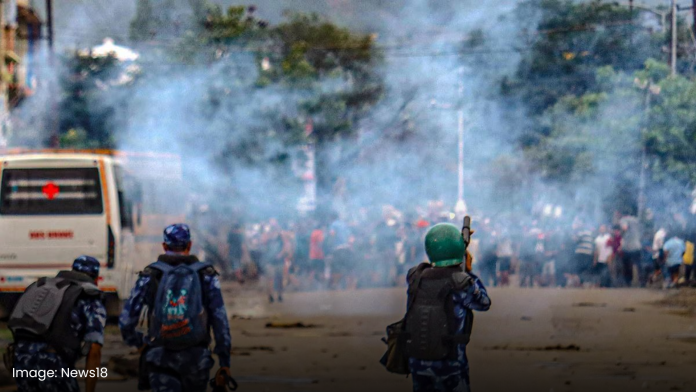
Manipur has long been divided by geography, ethnicity and political power. The valley is smaller but politically dominant. The hills cover most of the state’s land but are home to tribal communities that have historically demanded protection over land, identity and autonomy. When the Meitei-Kuki violence began in 2023, it quickly became more than a protest over legal status. Homes were burned. Villages were attacked. Communities separated. Armed groups became more visible. Thousands fled into relief camps, and many never returned.
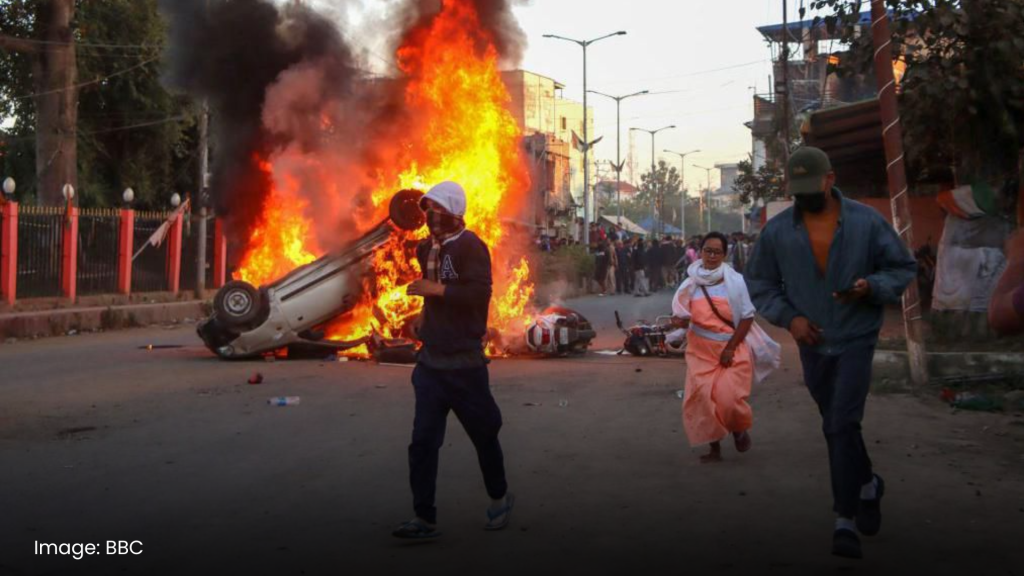
Reuters has reported that the wider Manipur conflict has killed around 260 people and displaced more than 60,000 since 2023. Amnesty International has also called for urgent rehabilitation of displaced people, warning that fear and insecurity continue to prevent communities from returning home.
The latest danger is that the conflict is widening.
At first, the main fault line was usually described as Meitei versus Kuki-Zo. But the newest violence involves Kuki and Naga communities, two predominantly Christian tribal groups in the hill districts. That makes the situation even more dangerous. It suggests Manipur’s conflict is no longer limited to its original divide. It is splintering into new fronts, with old grievances, land disputes and armed-group rivalries feeding fresh cycles of violence.
Reuters reported that six Naga men were found dead after reportedly being abducted by an armed group. The Economic Times reported that the United Naga Council called a shutdown after the bodies were recovered, while Times of India reported the bodies were discovered after the release of 14 Kuki hostages.
First came hostages. Then came bodies. Now comes fear.
Amnesty International warned before the latest deaths that hostage-taking had become part of Manipur’s deepening human rights crisis. The group said civilians were being held by armed groups and called for their immediate release, warning that the authorities had failed to protect people from escalating ethnic violence.
That warning now reads like a forecast. In a conflict like Manipur’s, abduction is not just a crime. It becomes a political message. A body becomes a trigger. A funeral becomes a flashpoint.
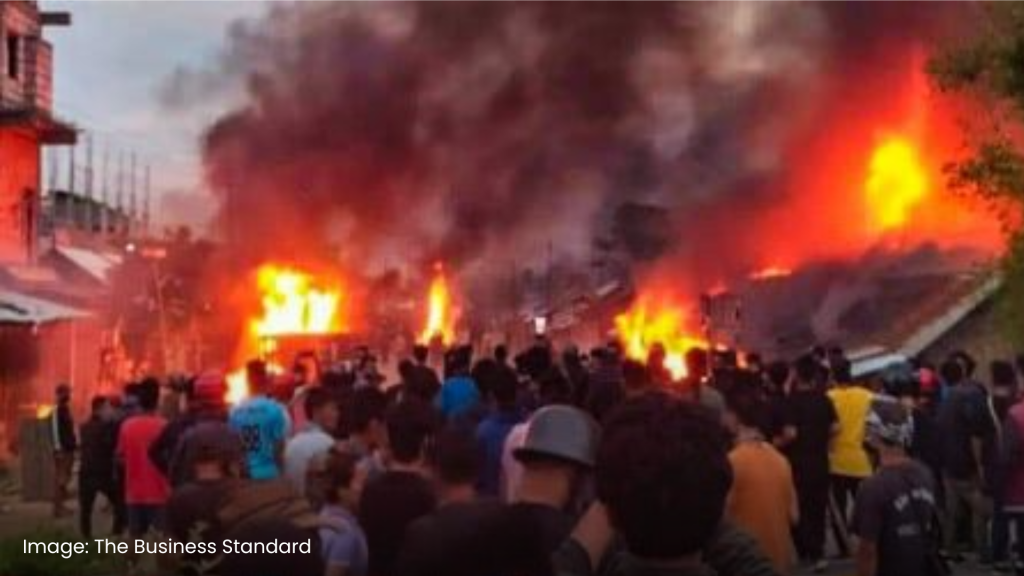
India’s forgotten internal war is still burning.
For much of the world, Manipur disappeared from the headlines after the worst violence of 2023. But the people living there never left the crisis. Families remain displaced. Villages remain divided. Communities remain armed. Trust remains broken.
The latest killings show that Manipur has not moved past its ethnic war.
It has found another front.
Sources:
This story is based on reporting from Reuters, Reuters, Amnesty International, Amnesty International, The Economic Times, and Times of India.