Iran Draws Blood in the Strait While Trump Talks Peace

On Thursday morning, Donald Trump did something he had promised he would never do. He extended the ceasefire with Iran, reversing his own firm position after Pakistani mediators, Field Marshal Asim Munir and Prime Minister Shehbaz Sharif, asked him to give Tehran more time to produce a unified peace proposal. Iran’s leadership was fractured, they said. The logic was reasonable. The gesture was significant. And within hours of that announcement, Iran’s Revolutionary Guard had seized two commercial ships in the Strait of Hormuz and attacked a third.

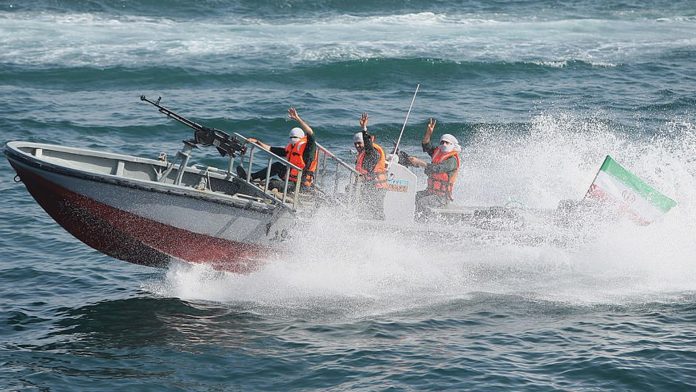
If Trump was expecting goodwill in return for his restraint, he did not get it. The Revolutionary Guard boarded and seized two container ships, transferring them to Iranian shores, while a third vessel was fired upon roughly eight nautical miles off the Iranian coast. The UK Maritime Trade Operations center issued warnings of high levels of activity in the strait. The crew of the fired-upon ship survived, but the broader signal Iran sent to the world could not have been clearer. A ceasefire on paper means nothing if Tehran decides it means nothing on water.

The White House was quick to dismiss the seizures as a non-issue. Press Secretary Karoline Leavitt told reporters that Trump does not consider the incidents a ceasefire violation because the ships were not American or Israeli. That framing may be politically convenient, but it offers cold comfort to the international shipping community that has watched the Strait of Hormuz transform into one of the most dangerous maritime corridors in modern history. The question of whose ships get to matter is one the world will be asking for a long time.

To understand why Iran is behaving this way, you have to understand what the United States has been doing on its end. Since April 13, the US Navy has maintained a full blockade of Iranian ports, turning away any vessel attempting to enter or exit Iranian coastal waters. Thirty-one ships have been turned around so far, the majority of them oil tankers. Washington frames this as economic pressure designed to bring Tehran to the negotiating table. Iran frames it as a blatant ceasefire violation, and its chief negotiator Mohammed Bagher Qalibaf has stated plainly that it is impossible for others to pass freely through the Strait of Hormuz while Iran cannot access its own ports. That single statement is the key to understanding every Iranian action you are watching unfold in real time.

There is another layer to this crisis that has not received nearly enough attention. Iran planted mines in the Strait of Hormuz in the early weeks of the conflict and has since lost track of where many of them are. This means that even if Tehran genuinely wanted to reopen the strait tomorrow, it is physically unable to guarantee safe passage. Roughly 20 percent of the world’s crude oil and liquefied natural gas moves through this 21-mile-wide chokepoint every single day. The International Energy Agency has described the current disruption as the largest in the history of the global oil market. Brent crude briefly crossed $100 a barrel on Thursday before pulling back to around $99.

The economic damage is already spreading far beyond oil prices. Major insurance companies have pulled coverage for vessels transiting the region. The world’s largest container shipping lines abandoned these routes weeks ago. Hundreds of fully loaded oil tankers are sitting anchored in the Persian Gulf, going nowhere. The IMF has downgraded global growth to 3.1 percent for 2026, citing the Middle East war as the primary shock to the world economy. American consumers felt it almost immediately, with gas prices jumping roughly 60 cents per gallon in the first weeks of the conflict alone. The ceasefire exists in name, but the war continues in practice, and the Strait of Hormuz has stopped being a shipping lane and started being the place where the fate of this conflict will ultimately be decided.

Sources: NBC News, CNBC, NPR, Al Jazeera
On Thursday morning, Donald Trump did something he had promised he would never do. He extended the ceasefire with Iran, reversing his own firm position after Pakistani mediators, Field Marshal Asim Munir and Prime Minister Shehbaz Sharif, asked him to give Tehran more time to produce a unified peace proposal. Iran’s leadership was fractured, they said. The logic was reasonable. The gesture was significant. And within hours of that announcement, Iran’s Revolutionary Guard had seized two commercial ships in the Strait of Hormuz and attacked a third.

If Trump was expecting goodwill in return for his restraint, he did not get it. The Revolutionary Guard boarded and seized two container ships, transferring them to Iranian shores, while a third vessel was fired upon roughly eight nautical miles off the Iranian coast. The UK Maritime Trade Operations center issued warnings of high levels of activity in the strait. The crew of the fired-upon ship survived, but the broader signal Iran sent to the world could not have been clearer. A ceasefire on paper means nothing if Tehran decides it means nothing on water.

The White House was quick to dismiss the seizures as a non-issue. Press Secretary Karoline Leavitt told reporters that Trump does not consider the incidents a ceasefire violation because the ships were not American or Israeli. That framing may be politically convenient, but it offers cold comfort to the international shipping community that has watched the Strait of Hormuz transform into one of the most dangerous maritime corridors in modern history. The question of whose ships get to matter is one the world will be asking for a long time.

To understand why Iran is behaving this way, you have to understand what the United States has been doing on its end. Since April 13, the US Navy has maintained a full blockade of Iranian ports, turning away any vessel attempting to enter or exit Iranian coastal waters. Thirty-one ships have been turned around so far, the majority of them oil tankers. Washington frames this as economic pressure designed to bring Tehran to the negotiating table. Iran frames it as a blatant ceasefire violation, and its chief negotiator Mohammed Bagher Qalibaf has stated plainly that it is impossible for others to pass freely through the Strait of Hormuz while Iran cannot access its own ports. That single statement is the key to understanding every Iranian action you are watching unfold in real time.

There is another layer to this crisis that has not received nearly enough attention. Iran planted mines in the Strait of Hormuz in the early weeks of the conflict and has since lost track of where many of them are. This means that even if Tehran genuinely wanted to reopen the strait tomorrow, it is physically unable to guarantee safe passage. Roughly 20 percent of the world’s crude oil and liquefied natural gas moves through this 21-mile-wide chokepoint every single day. The International Energy Agency has described the current disruption as the largest in the history of the global oil market. Brent crude briefly crossed $100 a barrel on Thursday before pulling back to around $99.

The economic damage is already spreading far beyond oil prices. Major insurance companies have pulled coverage for vessels transiting the region. The world’s largest container shipping lines abandoned these routes weeks ago. Hundreds of fully loaded oil tankers are sitting anchored in the Persian Gulf, going nowhere. The IMF has downgraded global growth to 3.1 percent for 2026, citing the Middle East war as the primary shock to the world economy. American consumers felt it almost immediately, with gas prices jumping roughly 60 cents per gallon in the first weeks of the conflict alone. The ceasefire exists in name, but the war continues in practice, and the Strait of Hormuz has stopped being a shipping lane and started being the place where the fate of this conflict will ultimately be decided.

Sources: NBC News, CNBC, NPR, Al Jazeera

spot_img

Explore more

spot_img
Global Affairs

Trump Cut Off Cuba’s Oil. Now Its People Are Preparing For...

A French Company Paid Terrorists To Keep A Factory Running. Now...

They Were Burned Alive In Their Sleep. Police Say Their Classmates...

Musk Amplified The Rage. AI Made The Hitlist. Belfast Burned.

From Settlement Sales To Celebrity Ads: The Business Of Selling Israeli...

Bodies Of Evidence: The Explosive Al Jazeera Film Exposing Horrors Inside...

Isr*el Is Burning Lebanon From The Sky