Isr*el is fighting across the region. But now the fight is coming home.
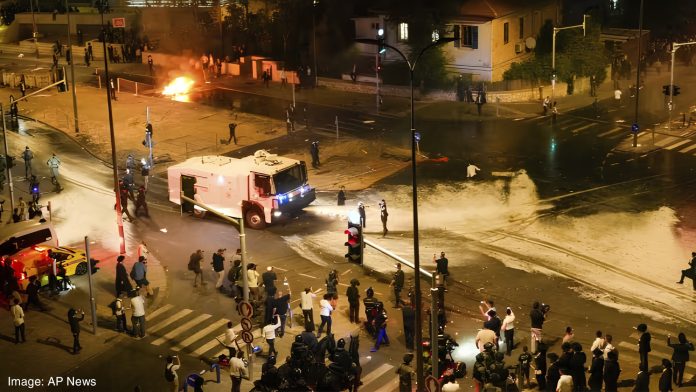
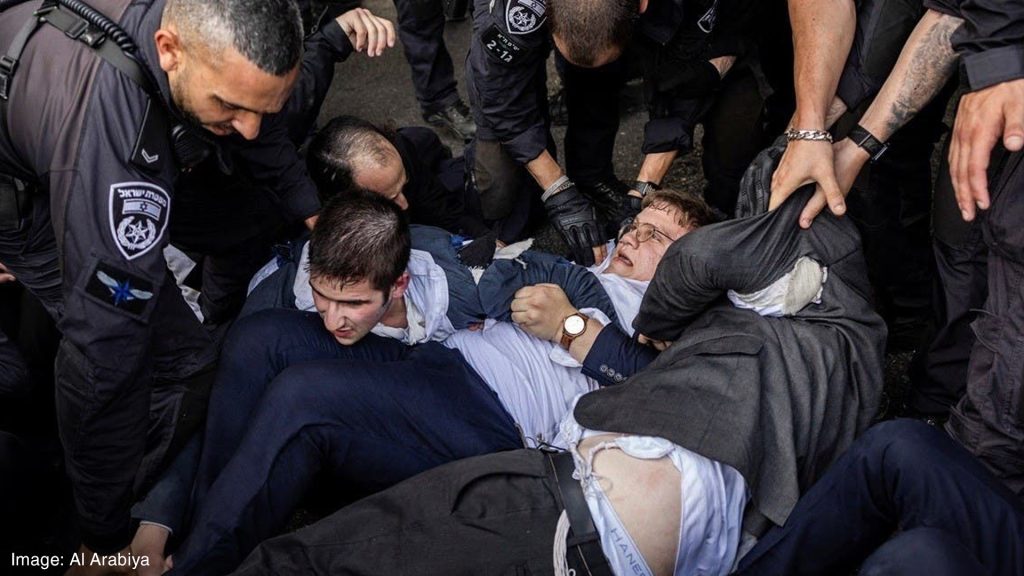
On June 1, tens of thousands of ultra-Orthodox Jewish men flooded the streets to protest military conscription. Cars were set on fire. A uniformed soldier was attacked near a bus stop by protesters demonstrating against the very service he was performing. Roads were blocked, train lines disrupted, and central Isr*el was paralysed by anger over one question: who has to fight for the state? The Associated Press reported that protesters blocked transport in Jerusalem and the Tel Aviv area, while police used water cannons, horses and other crowd-control measures to disperse crowds.
This is not just a domestic protest. It is a crack inside Isr*el’s wartime system.
The Army Needs More Soldiers
Most Jewish Isr*elis are required to serve in the military. But ultra-Orthodox men, also known as Haredim, have long received exemptions while studying in religious seminaries. These exemptions date back to Isr*el’s founding in 1948, when they were originally created for a small number of religious students after the Holocaust.
Now the contradiction is much harder to hide.
Isr*el is operating across Gaza, Lebanon, southern Syria, and Iran-linked fronts. The UN Security Council’s monthly Syria report confirmed that Isr*eli military activities in southern Syria included incursions, arrests, and road closures in the Quneitra governorate as recently as April 2026. The military is stretched, reservists are carrying a heavy burden, and the state says it needs more manpower.
One reserve soldier, speaking to Isr*eli media this week, said he had been called up four times in eighteen months. His neighbour, he said, has never served a single day.
Yet every year, roughly 13,000 ultra-Orthodox men reach draft age, and less than 10 percent enlist, according to a Knesset committee cited by the Times of Isr*el. That means fewer than 1,300 of those 13,000 men serve each year. The rest study in seminaries while others fight.
The Draft Rebellion Is Political Too
The legal fight has been dragging on for years. Isr*el’s Supreme Court ruled against the exemption system in 2017, but political delays kept the arrangement alive. In 2024, the Supreme Court again ordered the state to begin drafting ultra-Orthodox men under standard conscription law. The Associated Press reported the full legal history of the dispute and its growing political consequences.
Since then, the issue has become a direct threat to Netanyahu’s survival.
Al Jazeera reported in May that Isr*el’s ruling coalition submitted a call for early elections after fractures over ultra-Orthodox conscription, warning that the dispute could send the country to polls earlier than planned.
So this is no longer only about religion. It is about Netanyahu’s coalition, the army’s manpower crisis, and a society asking why some families must send their sons to war while others can still refuse.
Two Isr*els: One That Fights, One That Doesn’t
The Haredi protesters say military service threatens their religious way of life. Some see the army as a secularising institution that could pull young men away from Torah study and their community’s strict religious structure. That is why the protests are so intense.
But for many other Isr*elis, the exemption has become intolerable during wartime. Reservists are being called again and again. Families are carrying the cost of long deployments. Soldiers are fighting in Gaza while the state escalates in Lebanon and prepares for Iran-linked threats. In that context, draft exemptions no longer look like a side issue. They look like a fracture in the state’s basic bargain.
A country cannot demand permanent mobilisation from one part of society while another politically powerful bloc fights to remain outside the burden.
That is why this story matters.
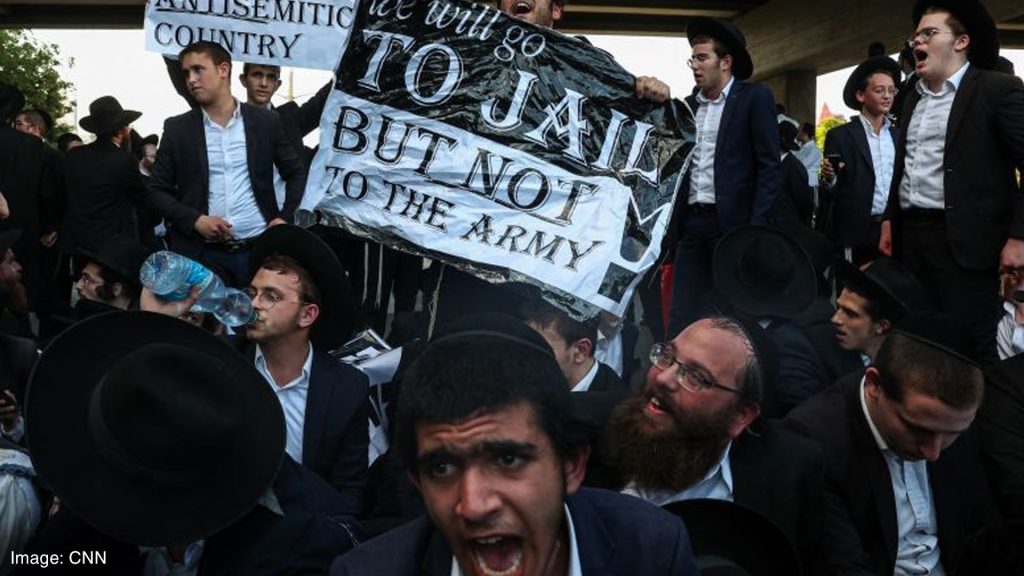
The cars on fire were not just protest images. They were a symbol of something deeper: Isr*el is projecting force outward while cracking inward.
The war is no longer only outside Isr*el.
It is now inside the politics, streets, army and social contract.
By Shizza Farooqui
Sources
1. Associated Press – ultra-Orthodox protest June 1, legal history of draft dispute: https://www.apnews.com
2. Al Jazeera – Isr*el coalition early election call over conscription: https://www.aljazeera.com
3. Times of Isr*el – Knesset committee enlistment figures: https://www.timesofisrael.com
4. UN Security Council Report – Isr*eli military activities southern Syria April 2026: https://www.securitycouncilreport.org
5. The Guardian – wider context of Isr*el’s wartime political crisis: https://www.theguardian.com
6. Reuters – Isr*el military manpower and reserve deployment: https://www.reuters.com