

What’s happening
Two men broke two hours on the same day. The second one almost went unnoticed.
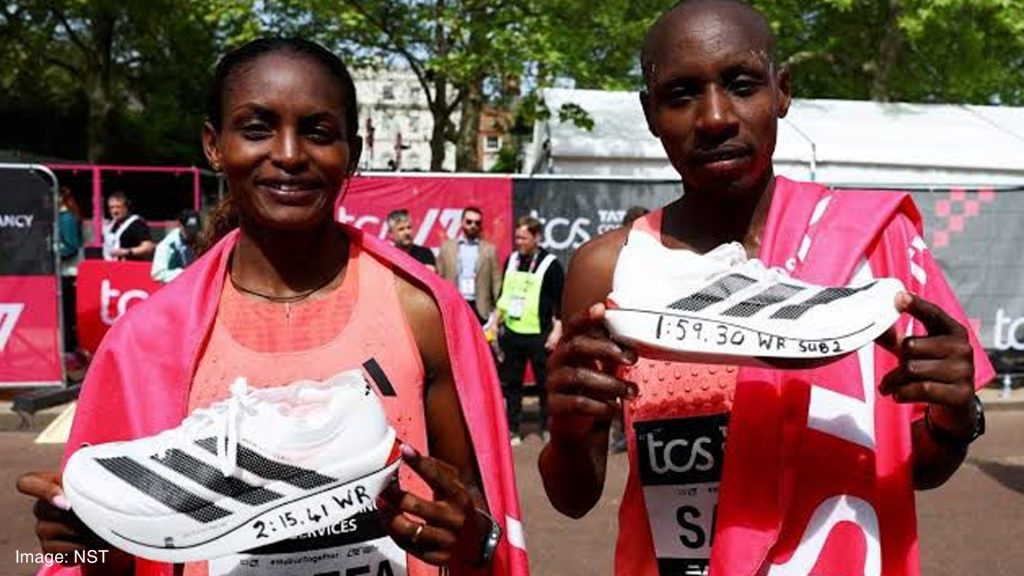
Everyone was watching Sebastian Sawe cross the line at 1:59:30, becoming the first man in history to break the two-hour marathon barrier in an official race. What followed quietly behind him was just as staggering. Another runner crossed under that same mark minutes later, on the same course, in the same race.
Two sub-two finishes. One afternoon. One city.
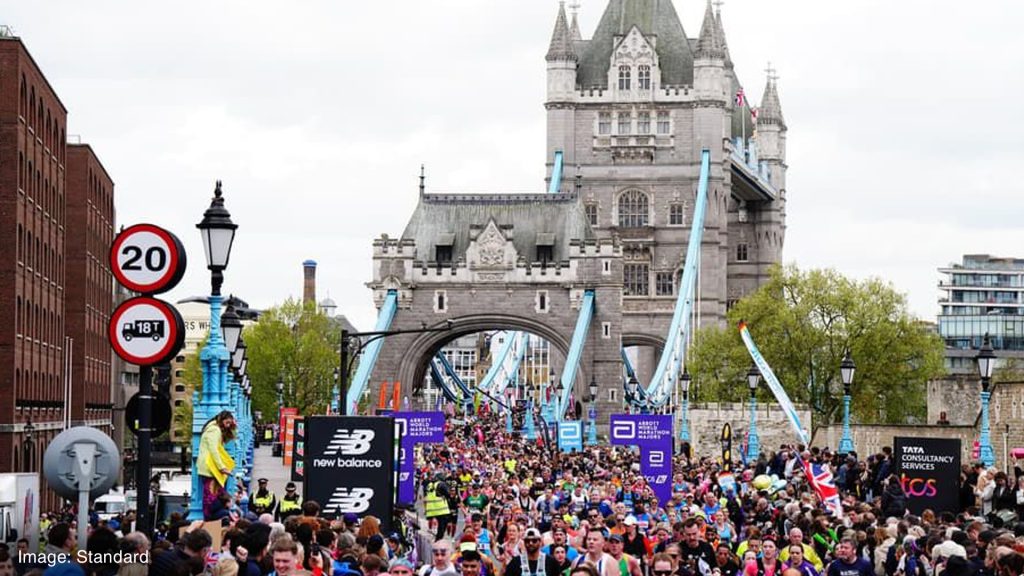
In the women’s race, Tigst Assefa broke the women-only world record again. Nearly 60,000 people finished that day, making it the largest marathon in history.
But even as the celebrations were still happening, a quieter conversation had already started.
Why it matters
Nike and Adidas engineers were on that podium too. They just weren’t wearing medals.
The top finishers were running in carbon-plated super shoes, built specifically to return energy, reduce fatigue, and improve efficiency across long distances. These are not standard racing shoes. They are precision-engineered performance tools, and they have been getting faster every season.
Over the last few years, marathon records have started falling at a rate that has no modern precedent. Margins that used to take decades to close are shrinking within seasons.
London felt like the tipping point.
So the achievement stands. Sawe ran every step. The effort was real and the performance was extraordinary. But so does the question standing right beside it. Where does human performance end and engineered advantage begin? Sport has never had a clean answer to that. London just made it impossible to keep ignoring.
Bigger picture
This is how limits fall.
First they feel permanent. Then someone gets close. Then one breakthrough happens and everything that follows accelerates.
The four-minute mile followed this exact pattern. Bannister broke it in 1954. Within a year, others had followed. Within a decade, it was no longer the headline. It was the baseline.
The two-hour marathon was never just a number. It shaped how athletes trained, how races were designed, how endurance itself was understood and taught. London broke that frame on Sunday.
But the deeper argument is already forming on two sides.
On one side: records are records. Technology has always been part of sport. Shoes, nutrition, pacing science, altitude training. None of it is new. Sawe still had to run every step.
On the other: when the shoe becomes this central to the outcome, the podium stops being purely about the athlete. At some point, the engineering starts winning races.
Sport has never paused long enough to properly answer that question. It just moves forward.
What next
Sub-two is no longer the headline. It is the starting point.
Every major marathon will now chase what comes next. Berlin. Chicago. New York. The conversation about shoe technology will grow louder with every record that falls. Should there be standardised limits on carbon plate construction? Are times from different eras even comparable anymore?
Athletics governing bodies have been slow to act. That is unlikely to change quickly. The commercial interests behind super shoe technology are enormous, and the sport’s biggest sponsors are the same companies building the shoes.
So the line will keep moving. Records will keep falling. And the argument about what exactly is being measured will keep getting harder to ignore.
London did not just break a record on Sunday.
It broke the argument wide open.
Sources: Reuters, BBC, The Guardian, The Times UK, Olympics.com, London Marathon Events