
Luxury Watches Are Entering The Space Age
For more than a century, the fantasy sold by luxury watchmakers was earthbound. Pilots slicing through clouds, divers descending into dark water, racing drivers chasing tenths of a second. The ocean, the racetrack and the cockpit defined what a serious watch was supposed to mean.
That era is ending.
At Watches and Wonders 2026 in Geneva, one of the luxury industry’s most important annual events, Swiss and British watchmakers signaled clearly that the next frontier for high-end timekeeping is not a deeper ocean or a faster car. It is orbit.
Built For 16 Sunrises A Day
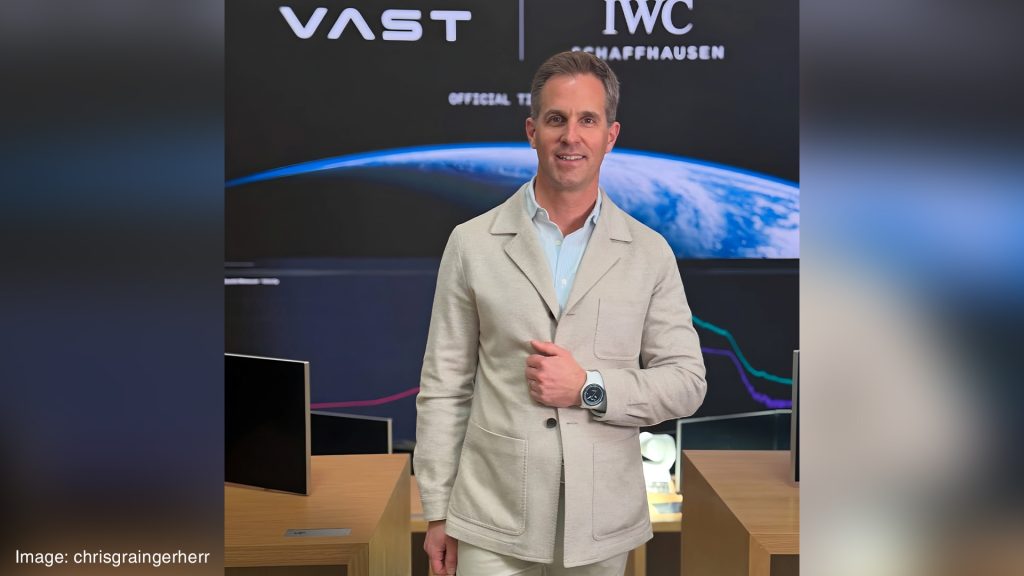
The clearest statement came from IWC Schaffhausen, which unveiled the Pilot’s Venturer Vertical Drive at a price of 28,900 euros, approximately $34,000. It is the first watch the brand has ever engineered from a blank sheet specifically for human spaceflight, rather than adapting an existing aviation model for orbital use. That distinction matters more than it sounds. Every watch that has traveled to space before this one was fundamentally a terrestrial instrument modified for an extreme environment. This one was conceived entirely around the reality of life in orbit.
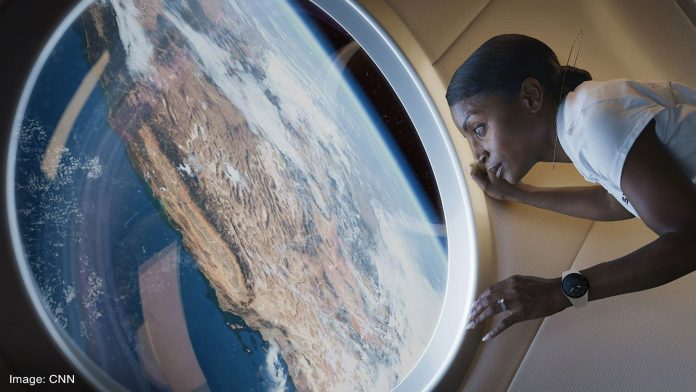
That reality is stranger than most people imagine. Because a space station circles Earth roughly every 90 minutes, astronauts aboard experience around 16 sunrises and sunsets within a single 24-hour period. The watch was built around that disorientation. It displays mission time on a full 24-hour scale, allowing astronauts to maintain the GMT rhythm that governs work and sleep schedules aboard the station, while a second time zone tracks home time anywhere on Earth.
The engineering decisions follow from that environment with precise logic. There is no crown on the watch, because a traditional crown can snag on pressurized suit components or station equipment during spacewalks. Instead, a patent-pending rotating bezel system controls all functions and can be operated with gloved hands. The case is built from white zirconium oxide ceramic and IWC’s proprietary Ceratanium material, a compound combining the lightness of titanium with the scratch resistance of ceramic. It withstands temperatures ranging from minus 150 degrees Celsius in shadow to over 100 degrees Celsius in direct sunlight, and was tested under forces of up to 10g, exceeding the vibration loads astronauts typically experience during rocket launch.
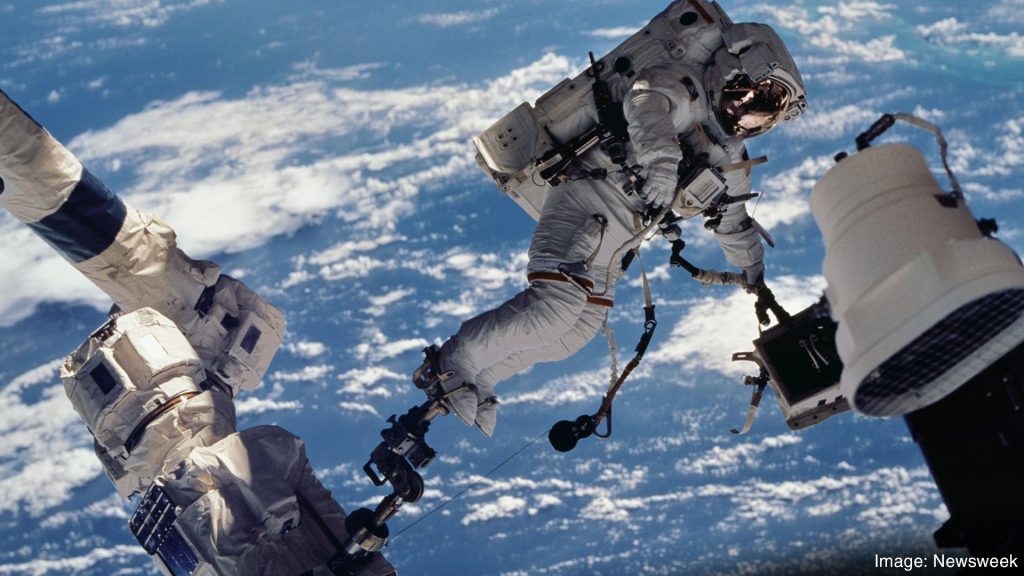
The watch carries official spaceflight certification from Vast, the California aerospace company building Haven-1, which is expected to become the world’s first commercial space station when it launches in 2027. Haven-1 is itself the foundation for Haven-2, a proposed continuously crewed orbital station viewed as a long-term successor to the aging International Space Station.
The Industry’s Honest Problem
The space push is arriving during one of the most difficult periods the luxury watch industry has faced in years. Swiss watch exports have fallen sharply as prices have climbed. Critics argue that too many brands spent the past decade producing cosmetically adjusted versions of existing watches while depending on a shrinking pool of ultra-wealthy buyers. Smartwatches now handle everyday timekeeping with ease, which means traditional mechanical watches are no longer competing on utility. They are competing on storytelling, craftsmanship, engineering spectacle and emotional weight.
Space exploration delivers all of those simultaneously. It offers heritage brands a legitimate reason to push engineering boundaries while giving consumers something genuinely new to desire. The result is an industry increasingly borrowing the language of aerospace to stay culturally relevant.
AI Is Entering The Swiss Workshop
The transformation at Watches and Wonders was not only pointed toward orbit. Audemars Piguet, one of the most traditional names in Swiss watchmaking, confirmed that artificial intelligence is now being used to recover and restore historic designs and component references dating back nearly 150 years. The brand is also using AI to build a comprehensive digital inventory of the thousands of references it has produced since 1875. For an industry that has historically defined itself by resistance to industrialization, the shift is quietly significant.
Bremont Is Leaving A Watch On The Moon
IWC is not the furthest from Earth at this year’s show. British watchmaker Bremont has partnered with Astrolab, the American space rover company, and later this year Astrolab’s FLIP lunar rover is expected to carry a Bremont Supernova Chronograph to the moon’s surface, where it will remain permanently.
That detail is worth sitting with. A mechanical watch, built by hand in England, left on the moon indefinitely. It is the most extreme durability test in the history of watchmaking, with no possibility of retrieval if something goes wrong.
For decades, luxury brands sold the fantasy of exploration. They sponsored expeditions, named watches after mountains and named collections after oceans. What is happening now is different. The watches are not sponsoring the journey. They are going themselves, and in Bremont’s case, not coming back.
The luxury watch industry spent a century designing for the world’s most extreme places on Earth. It has run out of Earth.
Sources: CNN, IWC Schaffhausen press release, WatchPro, Monochrome Watches, Dmarge, Watches and Wonders Geneva, Vast
#Verum #LuxuryWatches #Space #IWC #WatchesAndWonders #SwissWatches #SpaceTourism #Technology #Future #BreakingNews