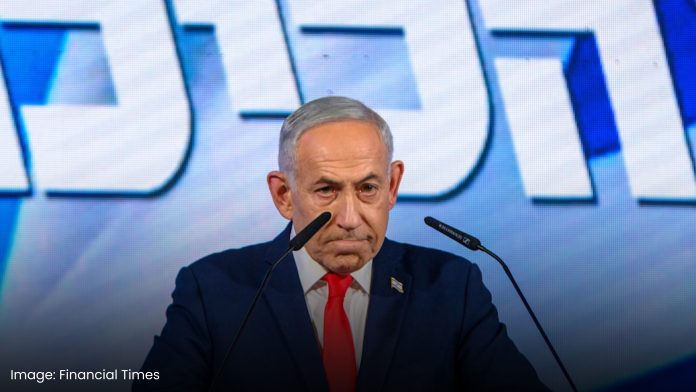
Israel’s October 27 parliamentary election has created a political crisis that reaches beyond the contest between Prime Minister Benjamin Netanyahu and his main challenger, Gadi Eisenkot. Netanyahu’s governing bloc has lost its majority, one of his longstanding ultra-Orthodox allies has refused to endorse him, and Arab-led parties have emerged as potentially decisive players in forming the next government.
But there is a contradiction at the centre of Israel’s political deadlock: although parties opposed to Netanyahu collectively hold a majority of parliamentary seats, they remain divided over how to use it. Their disagreements could determine whether Netanyahu is replaced or gets another opportunity to remain in power.
Netanyahu’s traditional alliance is breaking apart
Netanyahu’s Likud won 27 seats, but the wider nationalist-religious bloc aligned with him secured only 53 of the Knesset’s 120 seats. That leaves it short of the 61 required for a parliamentary majority.
The most significant setback came from United Torah Judaism (UTJ), a seven-seat ultra-Orthodox party that has been a longstanding partner in Netanyahu’s governments. On November 5, the party declined to recommend any candidate to President Isaac Herzog, withholding its endorsement from Netanyahu.
The dispute centres on military-service exemptions for ultra-Orthodox Jewish men studying in religious institutions. UTJ wants legislation protecting these exemptions, while parties in Eisenkot’s opposition bloc have made broader military conscription a central political demand.
The disagreement has exposed the fragility of Netanyahu’s relationship with religious parties. Their support has been essential to his governing arrangements, but their demands have also become a major obstacle to coalition negotiations.
UTJ has not formally endorsed Eisenkot either. Its decision to remain uncommitted gives it room to negotiate with either side and potentially secure concessions in return for parliamentary support.

Arab parties could decide who governs
One of the most consequential outcomes of the election was the combined 19 seats won by Arab-led parties, a record parliamentary representation.
Eisenkot’s four-party opposition bloc holds 48 seats. Ra’am, an Arab-led party with eight seats, has endorsed him, bringing the number of lawmakers recommending him to 56. The Joint List, which holds 11 seats, has not formally announced its position. Its support or abstention could become crucial to the formation of an alternative government.
This creates an uncomfortable political dilemma for several opposition leaders. During the campaign, some rejected the idea of depending on Arab parties to form a government. Yet without their cooperation, the opposition’s route to a majority becomes much more difficult.
A possible arrangement would be a minority government led by Eisenkot, with Arab parties supporting it from outside the coalition. Such an arrangement could allow a government to take office without all supporting parties joining the cabinet. However, it would require political compromises and could leave the government vulnerable to future parliamentary challenges.
Netanyahu’s election-fraud allegations add another controversy
The dispute has also expanded into a confrontation over the legitimacy of the election.
Netanyahu and his allies raised allegations of vote tampering and accused Arab-led parties of stealing votes. These claims became particularly controversial because they targeted the very parties whose parliamentary support could determine the next government.
However, Israel’s Central Elections Committee said its investigation found no evidence of irregularities that compromised the integrity or results of the election. President Isaac Herzog accepted the certified results and urged political leaders to recognise the outcome.
The opposition’s majority is not necessarily a functioning government
Parties opposed to Netanyahu collectively hold 67 seats, compared with 53 for his nationalist-religious bloc. Yet this numerical advantage does not automatically translate into a stable governing coalition.
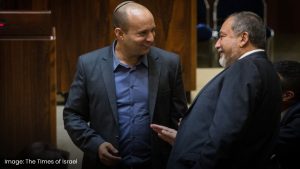
The opposition is divided over cooperation with Arab parties, the future of ultra-Orthodox military exemptions and the distribution of political power. Leaders such as Eisenkot, Naftali Bennett and Avigdor Liberman must negotiate their differences before they can establish a workable government.
The Times of Israel has outlined several possible routes: an Eisenkot-led minority government supported by Arab parties, an arrangement involving ultra-Orthodox lawmakers, or a broader political agreement. Each option carries significant political costs.
This is where Netanyahu may still have an opportunity. If his opponents cannot agree on a common arrangement, the country could face another election, potentially in early 2027. A new vote would give Netanyahu another chance to seek a parliamentary majority.
What happens next?
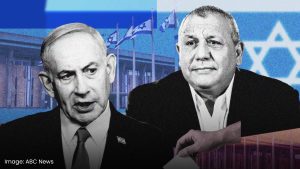
President Isaac Herzog is expected to decide by November 11 which candidate has the best chance of forming a government. The nominee would normally receive 28 days to assemble a coalition, with a possible 14-day extension.
Until a new government is formed, Netanyahu remains caretaker prime minister. If coalition negotiations fail, another election could follow.
The coming days will therefore test not only Netanyahu’s remaining political support but also the ability of his opponents to overcome their differences. His traditional alliance is under strain, but replacing him requires more than a shared opposition to his leadership.
REFERENCE