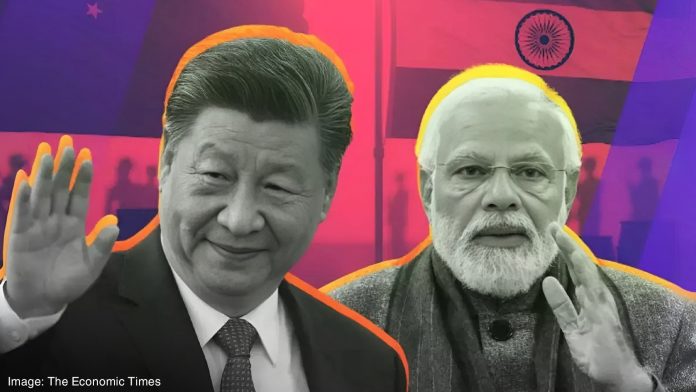
India’s rupee hit 95.8525 to the dollar on Thursday. China’s yuan simultaneously touched its strongest level since February 2023. The same war drove both moves. The outcomes could not be more different.
While India’s currency collapses under the weight of rising oil prices and capital flight, China’s yuan is climbing to its strongest levels in years as investors read the Trump-Xi summit in Beijing as a signal of stability. One war is accelerating a divergence between Asia’s two largest economies that neither government can ignore.
India’s Economy Is Under Growing Pressure
India imports nearly 90% of its oil needs and around half of its natural gas requirements, making it one of the world’s most exposed major economies during an energy crisis. Since the Iran war began, India’s foreign exchange reserves have fallen by roughly $38.5 billion, dropping from a record $728.49 billion in February to around $690 billion by early May. The rupee has declined 1.4% this week alone, hitting a record low in each of the three trading sessions between Tuesday and Thursday. It is Asia’s worst-performing currency this year, down 6% against the dollar.
The pressure runs deeper than the exchange rate. India’s state-owned oil companies are losing nearly Rs 1,000 crore, roughly $120 million, every single day by keeping petrol and diesel prices artificially frozen despite soaring global crude costs. Those losses are becoming increasingly unsustainable. India’s merchandise trade deficit has already crossed $330 billion, the IMF expects the current account deficit to widen to $84 billion this year, and UBS has already downgraded India’s growth forecast for the coming financial year from 6.7% to 6.2%.
Modi Is Preparing Indians For Economic Pain
In a highly unusual public appeal during a speech in Hyderabad, Prime Minister Narendra Modi urged Indians to avoid buying gold, reduce unnecessary foreign travel, use public transport, carpool, and even cut cooking oil consumption, describing the latter as both healthy and patriotic. The comments triggered immediate debate across a country where gold is not merely jewelry. It is how families save. It is how weddings happen. It is generational security passed from parents to children. When a prime minister asks you to skip gold, he is asking you to rethink how you live.
Indians imported gold worth $72 billion in the last fiscal year, second only to China globally. That number tells you why Modi singled it out. Gold and oil together account for roughly a third of India’s entire import bill. Every rupee spent on imported gold is a rupee India cannot use to defend its currency.
Gold Jumped 7% The Day India Raised Its Import Duty
Three days after Modi’s Hyderabad speech, the Finance Ministry raised import duties on gold and silver from 6% to 15%, effective immediately. Markets responded instantly. Domestic gold futures surged 7.2% to Rs 1,64,497 per 10 grams. In Chennai, 22-karat gold jumped by nearly Rs 1,300 per gram in two days. Shares in major jewellery companies fell by as much as 10%, with Tata-owned Titan dropping nearly 6% in early trade. Airline stocks also fell as investors responded to Modi’s warnings about reducing overseas travel.
The All India Gems and Jewellery Council warned the duty hike will severely hurt the country’s Rs 5 lakh crore jewellery industry and, more troublingly, drive consumers toward smuggled gold that bypasses import controls entirely. A policy designed to protect the rupee may end up feeding criminal supply chains.
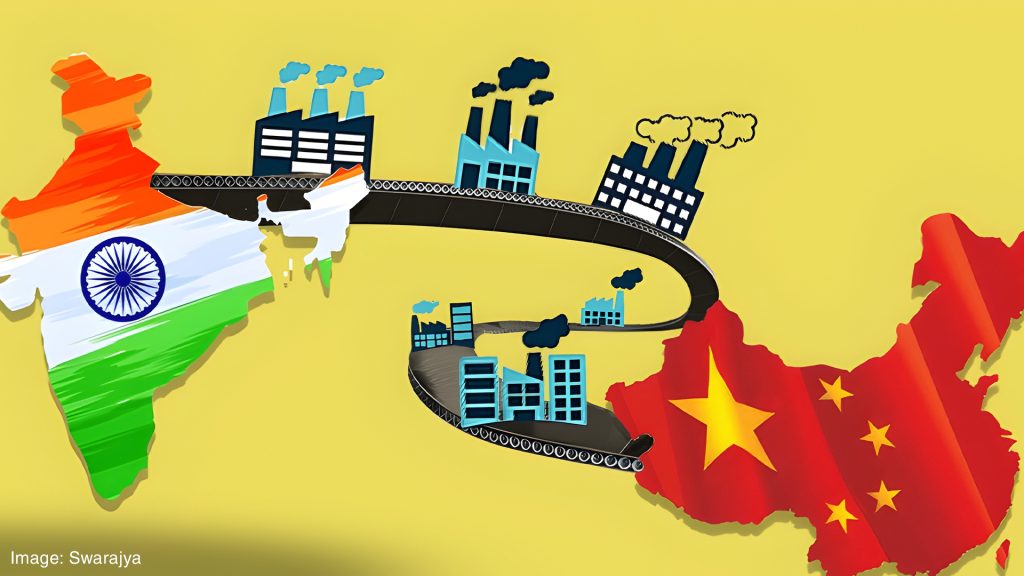
China’s Currency Is Moving In The Opposite Direction
While India absorbs this pressure, China’s yuan is strengthening. The currency rose to its highest levels since February 2023 during the Trump-Xi summit in Beijing, where the Iran war and trade negotiations were both high on the agenda. The People’s Bank of China set its official guidance rate at 6.8401 per dollar, its firmest since March 2023. Markets are betting that improving US-China relations could stabilize trade tensions and deliver a managed trade mechanism covering roughly $30 billion worth of goods on which both sides could reduce tariffs.
Goldman Sachs has argued the yuan is more than 20% undervalued and expects it to keep rising over the coming year. JPMorgan Asset Management said a productive summit could push the yuan to 6.50 per dollar. The onshore yuan is already Asia’s top-performing currency over the past three months, up 1.7% against the dollar.
The Gap Is Widening
The gap between these two economies is now visible in the simplest numbers. India’s rupee at an all-time low. China’s yuan at a three-year high. India’s state oil companies losing $120 million every single day. China’s investors projecting calm. The Iran war did not create this divergence but it is accelerating it at a pace that neither government can ignore.
The question nobody in New Delhi is answering publicly: how long can India absorb this before petrol prices rise and 1.4 billion people feel it at the pump?
#Verum #India #China #Rupee #Yuan #Modi #TrumpXi #IranWar #GoldPrices #IndianRupee #INRvsUSD
Sources: Reuters, CNBC, Al Jazeera, Business Today, The Week, Invezz, Business Standard, Nikkei Asia, Advisor Perspectives, ActionForex.