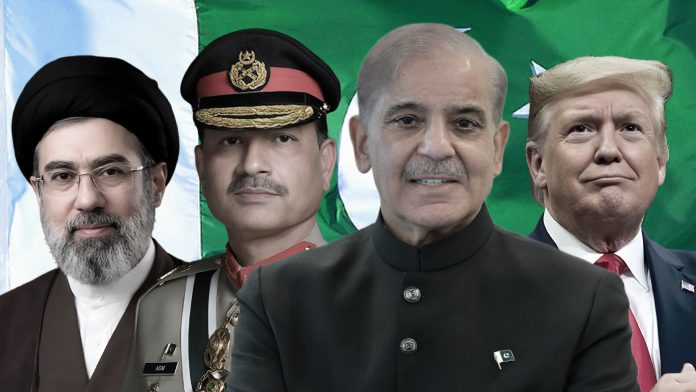
Let’s start with the fact that should make everyone stop scrolling. Pakistan, a country that has never recognized Israel, that has clashed repeatedly with Donald Trump, and that is itself living through one of the worst food crises on earth right now, has become the single most important diplomatic address in the world. Not Washington. Not Geneva. Not Brussels. Islamabad. If that does not tell you how completely the old order has broken down, nothing will.
Iran’s Foreign Minister Abbas Araghchi arrived in Pakistan today. His government says he is here to meet Pakistani officials, to pass Iran’s position through Islamabad’s hands rather than place it directly across a table from the Americans. Foreign Ministry spokesperson Esmaeil Baghaei was blunt: “No meeting is planned to take place between Iran and the US.” Slow, indirect, and soaked in the kind of distrust that shuttle diplomacy alone cannot fix.
Washington is telling a different story. Jared Kushner and Steve Witkoff are flying to Islamabad tomorrow. The White House says they are going to “move the ball forward towards a deal.” And then there is Russia. Lavrov called Pakistan’s Foreign Minister Mohammad Ishaq Dar this week, praised Islamabad’s role, and said Moscow is “ready to contribute.” That call was not courtesy. Russia has reportedly been feeding Iran real-time intelligence on the locations and movements of US troops, ships, and aircraft. For Moscow, every day this war continues is another day of elevated oil prices propping up its wartime economy. Russia wants to look like a peacemaker. It is also quietly making sure the war does not end too soon. Pakistan is now being pulled in three directions at once, by Washington’s urgency, Tehran’s suspicion, and Moscow’s calculated patience. That is the room Islamabad has been asked to hold together.
The mistrust between the US and Iran is not just diplomatic friction. It is structural. Trump has said if no deal materialises, he will strike “the remaining 25% of targets” militarily. Iranian officials told Axios this week that Tehran fears the Americans could use the resumption of talks as cover for launching new strikes. Two sides in the same city, through different doors, each convinced the other is negotiating in bad faith. That is not a peace process. That is a fuse being lit in slow motion.
At sea, the blockade is grinding on. Since April 13, the US has redirected at least 33 ships near Iranian ports. USS Rafael Peralta intercepted an Iranian-flagged vessel at the Strait of Hormuz on April 24. A tanker called the Tifani was seized by US forces under the directive to cut off Iranian oil. Iran claims 54 tankers have passed through regardless. But the USS George H.W. Bush carrier group is sitting in the region, and Washington has given every indication it is prepared to tighten the net further.
Lebanon was supposed to be the one place in this crisis where things were not actively getting worse. It isn’t. Trump announced a three-week ceasefire extension between Israel and Hezbollah after White House talks. Israel launched fresh strikes in southern Lebanon within hours. Hezbollah called the ceasefire “meaningless.” Satellite imagery from this week shows the town of Bint Jbeil, a living community just eleven days ago, completely levelled. Lebanese journalist Amal Khalil was killed in an Israeli airstrike, medics blocked from reaching her as she lay in the rubble. Lebanon’s Prime Minister Nawaf Salam has made his position clear: no deal without full Israeli withdrawal from the seized buffer zone. Israel has not blinked.
This is the pattern now. Agreements are announced and broken within hours. Ceasefires are declared and ignored before the ink dries. And in Islamabad, the world’s most complicated city this weekend, three powers with three different agendas are circling a negotiation that one of the parties insists is not even happening. The ceasefire has expired. The blockade holds. The bombs are still falling in Lebanon. Whatever comes next will not be decided in Washington or Tehran. It will be decided, somehow, in Pakistan.
Sources: CNN, NPR, Al Jazeera, Dawn, The Washington Post, CENTCOM