Pope Leo’s Darkest Warning Yet

The Girl Who Carried Her Schoolbooks Through A War

On October 7, 2023, Nada Rahim Jouda was 17 years old. She was supposed to sit a history test that morning.

The war started instead.

She did not return to formal education for nearly two years.

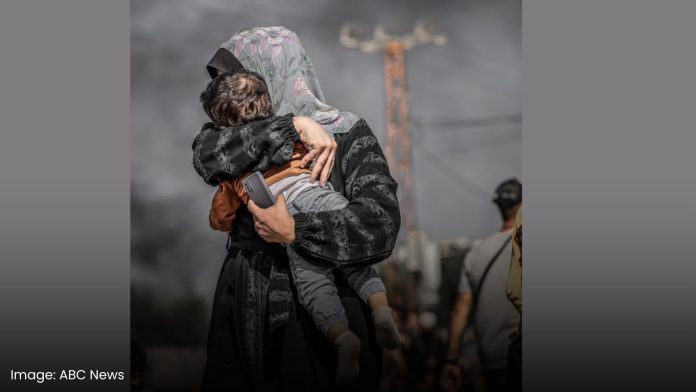
Over the course of the genocide in Gaza, Nada’s family was displaced four times. At one point they sheltered beneath wooden boards placed over the roof of a temporary structure. As the eldest child, Nada carried water from aid distribution points back to the family shelter. Through every single displacement, through every move, she carried her schoolbooks.

Her father died in 2023. After his death, Nada, her mother, and her two younger sisters were left to face the war entirely alone.

“We were struggling very much because we were a small family and had nobody to rely on,” she said.

Her mother, a former kindergarten director, lost her job when the war began. She had previously suffered from leukaemia. She has not been able to receive medical treatment for years.

“There are no hospitals left,” Nada said quietly. “I worry very much about her.”

Two days before meeting Pope Leo XIV, Nada arrived in Rome through a humanitarian corridor programme. Seventy-two Palestinian students from Gaza arrived in Italy this week to continue their studies. Four of them, including Nada, are enrolled at La Sapienza University. The university provided full scholarships, free housing until March 2029, academic tutoring, healthcare assistance, and psychological support for every student admitted through the programme.

Nada looked at Rome and called it “like heaven for me.”

“Everything here is green,” she said. “It’s not gray and troubles everywhere and miserable people in the streets.”

Her mother and younger sisters, aged 17 and 13, remain in Gaza.

“They all rely on me,” Nada said. “I’m the only hope that they have.”

And then, two days after arriving in a city she had never seen, Nada stood beside the Pope.

Pope Leo’s Warning At Europe’s Largest University

Pope Leo XIV delivered one of the most consequential speeches of his papacy at Rome’s La Sapienza University on May 14, warning that modern warfare and artificial intelligence are pushing humanity into what he described as a “spiral of annihilation.”

The speech immediately drew international attention not only because of its message, but because of who delivered it. Leo XIV is the first American pope in history. This address is already being interpreted by Vatican observers as an early blueprint for the themes that will define his papacy.

The visit itself carried historical weight. It was the first time a pope had set foot on the La Sapienza campus since 2008, when Pope Benedict XVI cancelled a planned speech after faculty and students protested his views on science and Galileo. Leo arrived at the same campus to a warm welcome. He met the Gaza students twice during his visit: first during a brief greeting at the campus chapel, and again after his speech in the main lecture hall of the university, which was founded by Pope Boniface VIII in 1303.

“What is happening in Ukraine, in Gaza and the Palestinian territories, in Lebanon, and in Iran illustrates the inhuman evolution of the relationship between war and new technologies in a spiral of annihilation,” Leo said.

Why The Pope’s Warning Landed So Hard This Week

Leo’s speech focused heavily on the growing role of AI in modern conflict. He warned that technology must never “absolve humans of responsibility” for the decisions made during war and political crisis.

He condemned rising military spending across the world, particularly in Europe, arguing that governments are prioritising weapons over healthcare, education, and public welfare while enriching elites who “care nothing for the common good.”

His warning landed in a week when world leaders were openly treating AI as a weapon of trade leverage and military dominance. While Beijing hosted high-level geopolitical meetings centred around technology competition and chip sales, the Pope in Rome was warning that humanity risks losing control of the moral consequences of that same technological race.

Nada was standing in the room when he said it.

She had carried her schoolbooks through four displacements. She had watched hospitals disappear. She had buried her father. She had arrived in Rome two days earlier calling it heaven.

And she stood there while the most powerful religious leader in the world described, in precise language, the machinery that had destroyed her life.

What Comes Next

With Leo expected to release his first major encyclical in the coming weeks, this speech is already being read as a preview of the moral framework he intends to place at the centre of his papacy. An encyclical is a formal letter sent to the entire Catholic Church and is considered one of the most significant documents a pope can issue.

Vatican observers believe the themes from La Sapienza, AI in warfare, military spending at the expense of human welfare, and the moral responsibility of technology, will form the foundation of that document.

For Nada, the next chapter is simpler and harder at the same time.

She wants to study. She wants to make her mother proud. She wants the world to know what Palestinians have been through.

“I want everybody to know what we have been through,” she said. “I want to become someone my mother and my sisters can be proud of.”

Her sisters are still in Gaza. Her mother has not seen a doctor in years. And Nada is in Rome, carrying the weight of all of it, the same way she carried her schoolbooks.

Through everything.

By Shizza Farooqui

Sources

AP, NPR, PBS NewsHour, Fortune, America Magazine, Vatican News, OPB, Washington Times, WPSU, WGCU
The Girl Who Carried Her Schoolbooks Through A War

On October 7, 2023, Nada Rahim Jouda was 17 years old. She was supposed to sit a history test that morning.

The war started instead.

She did not return to formal education for nearly two years.

Over the course of the genocide in Gaza, Nada’s family was displaced four times. At one point they sheltered beneath wooden boards placed over the roof of a temporary structure. As the eldest child, Nada carried water from aid distribution points back to the family shelter. Through every single displacement, through every move, she carried her schoolbooks.

Her father died in 2023. After his death, Nada, her mother, and her two younger sisters were left to face the war entirely alone.

“We were struggling very much because we were a small family and had nobody to rely on,” she said.

Her mother, a former kindergarten director, lost her job when the war began. She had previously suffered from leukaemia. She has not been able to receive medical treatment for years.

“There are no hospitals left,” Nada said quietly. “I worry very much about her.”

Two days before meeting Pope Leo XIV, Nada arrived in Rome through a humanitarian corridor programme. Seventy-two Palestinian students from Gaza arrived in Italy this week to continue their studies. Four of them, including Nada, are enrolled at La Sapienza University. The university provided full scholarships, free housing until March 2029, academic tutoring, healthcare assistance, and psychological support for every student admitted through the programme.

Nada looked at Rome and called it “like heaven for me.”

“Everything here is green,” she said. “It’s not gray and troubles everywhere and miserable people in the streets.”

Her mother and younger sisters, aged 17 and 13, remain in Gaza.

“They all rely on me,” Nada said. “I’m the only hope that they have.”

And then, two days after arriving in a city she had never seen, Nada stood beside the Pope.

Pope Leo’s Warning At Europe’s Largest University

Pope Leo XIV delivered one of the most consequential speeches of his papacy at Rome’s La Sapienza University on May 14, warning that modern warfare and artificial intelligence are pushing humanity into what he described as a “spiral of annihilation.”

The speech immediately drew international attention not only because of its message, but because of who delivered it. Leo XIV is the first American pope in history. This address is already being interpreted by Vatican observers as an early blueprint for the themes that will define his papacy.

The visit itself carried historical weight. It was the first time a pope had set foot on the La Sapienza campus since 2008, when Pope Benedict XVI cancelled a planned speech after faculty and students protested his views on science and Galileo. Leo arrived at the same campus to a warm welcome. He met the Gaza students twice during his visit: first during a brief greeting at the campus chapel, and again after his speech in the main lecture hall of the university, which was founded by Pope Boniface VIII in 1303.

“What is happening in Ukraine, in Gaza and the Palestinian territories, in Lebanon, and in Iran illustrates the inhuman evolution of the relationship between war and new technologies in a spiral of annihilation,” Leo said.

Why The Pope’s Warning Landed So Hard This Week

Leo’s speech focused heavily on the growing role of AI in modern conflict. He warned that technology must never “absolve humans of responsibility” for the decisions made during war and political crisis.

He condemned rising military spending across the world, particularly in Europe, arguing that governments are prioritising weapons over healthcare, education, and public welfare while enriching elites who “care nothing for the common good.”

His warning landed in a week when world leaders were openly treating AI as a weapon of trade leverage and military dominance. While Beijing hosted high-level geopolitical meetings centred around technology competition and chip sales, the Pope in Rome was warning that humanity risks losing control of the moral consequences of that same technological race.

Nada was standing in the room when he said it.

She had carried her schoolbooks through four displacements. She had watched hospitals disappear. She had buried her father. She had arrived in Rome two days earlier calling it heaven.

And she stood there while the most powerful religious leader in the world described, in precise language, the machinery that had destroyed her life.

What Comes Next

With Leo expected to release his first major encyclical in the coming weeks, this speech is already being read as a preview of the moral framework he intends to place at the centre of his papacy. An encyclical is a formal letter sent to the entire Catholic Church and is considered one of the most significant documents a pope can issue.

Vatican observers believe the themes from La Sapienza, AI in warfare, military spending at the expense of human welfare, and the moral responsibility of technology, will form the foundation of that document.

For Nada, the next chapter is simpler and harder at the same time.

She wants to study. She wants to make her mother proud. She wants the world to know what Palestinians have been through.

“I want everybody to know what we have been through,” she said. “I want to become someone my mother and my sisters can be proud of.”

Her sisters are still in Gaza. Her mother has not seen a doctor in years. And Nada is in Rome, carrying the weight of all of it, the same way she carried her schoolbooks.

Through everything.

By Shizza Farooqui

Sources

AP, NPR, PBS NewsHour, Fortune, America Magazine, Vatican News, OPB, Washington Times, WPSU, WGCU
spot_img

Explore more

spot_img
Global Affairs

Burkina Faso Just Ended a Bill Gates-Funded Science Experiment on Africans

Maldives “Death Cave” Claims Six Lives

Why Is The Pentagon Releasing UFO Files Now?

The Files Came Out. The TRUTH Didn’t.

They Dissolved A Prime Minister In Acid

Lahore Restores History As India Renames Cities

The World’s Silent Psychological Collapse

The Image Isr*el Can’t Escape