

The Algorithm Now Decides Life Or Death

What’s happening

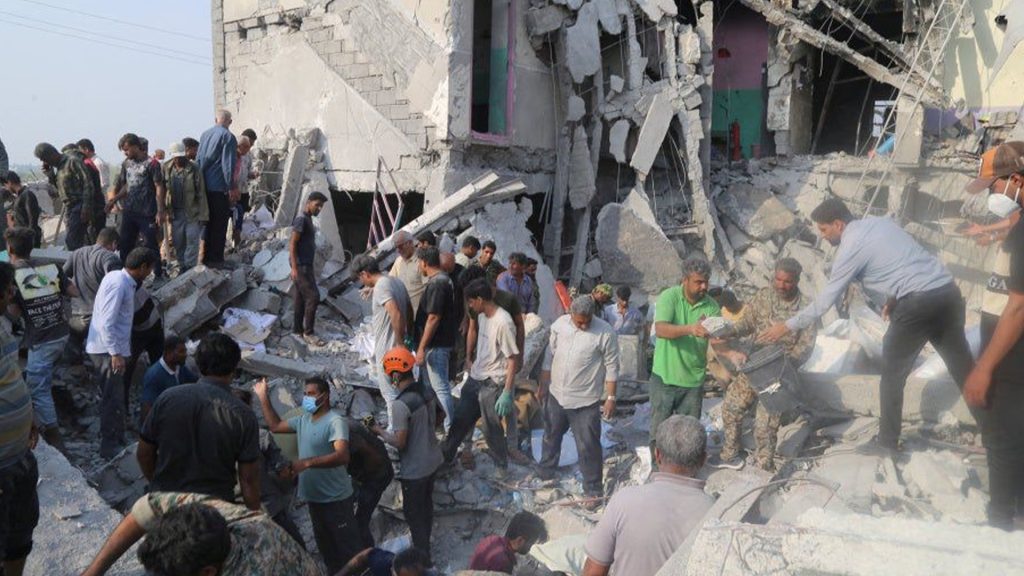
On the first morning of Operation Epic Fury, February 28, 2026, American forces struck the Shajareh Tayyebeh primary school in Minab, in southern Iran, hitting the building at least twice during the morning session, killing between 175 and 180 people, most of them girls between the ages of seven and twelve.

The school was on a US target list and may have been mistaken for a military site, raising questions about whether the military’s use of AI to identify targets was a factor.

The system at the center of this is Maven Smart System, a targeting infrastructure built by Palantir Technologies. It pulls together satellite imagery, signals intelligence, and sensor data to identify targets and carry them through every step from first detection to the order to strike. It generated hundreds of strike coordinates in the first 24 hours of the Iran campaign, enabling the US to hit more than 1,000 targets in that opening period.

The building had been classified as a military facility in a Defense Intelligence Agency database that had not been updated to reflect that the school had separated from the adjacent IRGC compound by 2016 at the latest. The school appeared in Iranian business listings. It was on Google Maps. It had a website. None of that was in the database. And at the speed the system was operating, no one verified it.
Why it matters

The immediate media response was to ask whether the AI did it. Congress wrote to Defense Secretary Pete Hegseth about AI use in the strikes. Major outlets asked whether Claude could be trusted in combat.

As one analysis put it, the real culprit was not a rogue algorithm. It was choices made by human beings over many years that produced this outcome. Bad data, built up over a decade, fed into a system too fast to catch the error.

But that framing, while accurate, is incomplete.

The reason the bad data was never caught is precisely because of how the system was designed. Speed was the objective. Compressing the time between detection and strike was the entire point. When the human link fails, whether through bad data, gutted oversight, or compressed timelines, the machine executes the error with precision.

This is the real danger. Not an AI making rogue decisions. An AI executing human decisions so fast that the humans responsible for checking them cannot keep up. The accountability does not disappear. It just becomes impossible to exercise in real time.

Bigger picture

The Minab strike is not an isolated incident. It is the clearest example yet of what happens when targeting systems are optimized for speed over verification.

Militaries may use AI to select targets that would be considered war crimes if struck deliberately, and blame the AI when they are. The real choices are made at the front end, by those who set the criteria the AI operates within.

That is the accountability problem in its sharpest form. An institution can deploy a system, set its parameters, and then claim the outcome was a machine error. The legal and moral architecture of warfare has no established answer for this.

Meanwhile, the race continues. The US, China, Russia, and others are all investing in faster, more autonomous targeting systems. The lesson most militaries are drawing from early AI-assisted operations is not to slow down. It is to improve the data.

That is a necessary fix. It is not a sufficient one.

What next

A school in Minab was on a target list for years. It was visible on Google Maps. It had a website. More than a hundred children went there every morning.

A former senior government official asked the obvious question: the building was on a target list for years, and yet this was missed. How?

The answer is not that the AI failed.

The answer is that the system worked exactly as designed. Fast. Precise. Uninterrupted.

And that is what makes it so dangerous.

Even the AI had guardrails built in. Hesitation coded by engineers who understood the weight of these decisions.

The system those engineers built their tools into had no such hesitation at all.

SOURCES

Washington Post (Tara Copp, Souad Mekhennet, Meg Kelly, Alex Horton, Susannah George), Military Times, The Guardian (Kevin T. Baker), Al Jazeera, Bulletin of the Atomic Scientists (Gary Marcus), CNN, Reuters

What’s happening

On the first morning of Operation Epic Fury, February 28, 2026, American forces struck the Shajareh Tayyebeh primary school in Minab, in southern Iran, hitting the building at least twice during the morning session, killing between 175 and 180 people, most of them girls between the ages of seven and twelve.

The school was on a US target list and may have been mistaken for a military site, raising questions about whether the military’s use of AI to identify targets was a factor.

The system at the center of this is Maven Smart System, a targeting infrastructure built by Palantir Technologies. It pulls together satellite imagery, signals intelligence, and sensor data to identify targets and carry them through every step from first detection to the order to strike. It generated hundreds of strike coordinates in the first 24 hours of the Iran campaign, enabling the US to hit more than 1,000 targets in that opening period.

The building had been classified as a military facility in a Defense Intelligence Agency database that had not been updated to reflect that the school had separated from the adjacent IRGC compound by 2016 at the latest. The school appeared in Iranian business listings. It was on Google Maps. It had a website. None of that was in the database. And at the speed the system was operating, no one verified it.

Why it matters

The immediate media response was to ask whether the AI did it. Congress wrote to Defense Secretary Pete Hegseth about AI use in the strikes. Major outlets asked whether Claude could be trusted in combat.

As one analysis put it, the real culprit was not a rogue algorithm. It was choices made by human beings over many years that produced this outcome. Bad data, built up over a decade, fed into a system too fast to catch the error.

But that framing, while accurate, is incomplete.

The reason the bad data was never caught is precisely because of how the system was designed. Speed was the objective. Compressing the time between detection and strike was the entire point. When the human link fails, whether through bad data, gutted oversight, or compressed timelines, the machine executes the error with precision.

This is the real danger. Not an AI making rogue decisions. An AI executing human decisions so fast that the humans responsible for checking them cannot keep up. The accountability does not disappear. It just becomes impossible to exercise in real time.

Bigger picture

The Minab strike is not an isolated incident. It is the clearest example yet of what happens when targeting systems are optimized for speed over verification.

Militaries may use AI to select targets that would be considered war crimes if struck deliberately, and blame the AI when they are. The real choices are made at the front end, by those who set the criteria the AI operates within.

That is the accountability problem in its sharpest form. An institution can deploy a system, set its parameters, and then claim the outcome was a machine error. The legal and moral architecture of warfare has no established answer for this.

Meanwhile, the race continues. The US, China, Russia, and others are all investing in faster, more autonomous targeting systems. The lesson most militaries are drawing from early AI-assisted operations is not to slow down. It is to improve the data.

That is a necessary fix. It is not a sufficient one.

What next

A school in Minab was on a target list for years. It was visible on Google Maps. It had a website. More than a hundred children went there every morning.

A former senior government official asked the obvious question: the building was on a target list for years, and yet this was missed. How?

The answer is not that the AI failed.

The answer is that the system worked exactly as designed. Fast. Precise. Uninterrupted.

And that is what makes it so dangerous.

Even the AI had guardrails built in. Hesitation coded by engineers who understood the weight of these decisions.

The system those engineers built their tools into had no such hesitation at all.

SOURCES

Washington Post (Tara Copp, Souad Mekhennet, Meg Kelly, Alex Horton, Susannah George), Military Times, The Guardian (Kevin T. Baker), Al Jazeera, Bulletin of the Atomic Scientists (Gary Marcus), CNN, Reuters

spot_img

Explore more

spot_img
Business

From Settlement Sales To Celebrity Ads: The Business Of Selling Israeli...

Bodies Of Evidence: The Explosive Al Jazeera Film Exposing Horrors Inside...

Isr*el Is Burning Lebanon From The Sky

Saudi Arabia Just Dug Up The Words Of Islam’s Second Caliph,...

The Most Hostile World Cup Ever

The Ceasefire Died Near Hormuz Last Night.

Your Closest Ally Is Spying On You.

AJK Is At A Crossroads. What Happens Next?