
Robert Kagan helped build the intellectual architecture that sent America to war in Iraq. He spent decades arguing that US military supremacy was the only guarantee of global stability. He is the co-founder of the Project for the New American Century, the think tank that made the case for reshaping the Middle East through force. He is a senior fellow at the Brookings Institution, the most centrist and establishment foreign policy address in Washington. His wife, Victoria Nuland, helped design US policy in Ukraine. His brother helped design the Iraq surge. Dick Cheney’s circle reportedly turned to him for strategic reassurance during the darkest days of that conflict.
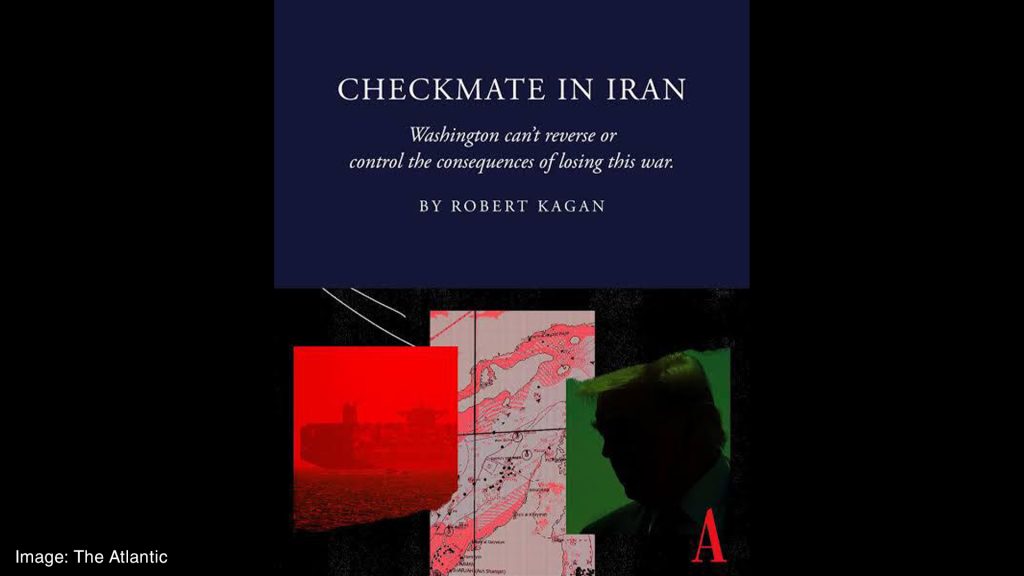
On May 10, 2026, he published an article in The Atlantic titled “Checkmate in Iran.” In it, he declared America a paper tiger. Then he proposed invading Iran.
There is a simple way to understand why this article matters. When Ronald McDonald tells you the burgers are not great, the burgers are really, really not great.
Kagan Says America Suffered A “Total Defeat”
Kagan writes that the United States suffered a “total defeat” in Iran that “can neither be repaired nor ignored.” He argues the outcome is fundamentally different from Vietnam or Afghanistan because those wars, while costly, did not permanently damage America’s global position. This one, he says, has. There will be no return to the status quo, no ultimate American triumph, and no easy reversal of the damage. The conflict has exposed the United States as unreliable, overstretched and incapable of finishing what it started.
The Strait Of Hormuz Became The Trap
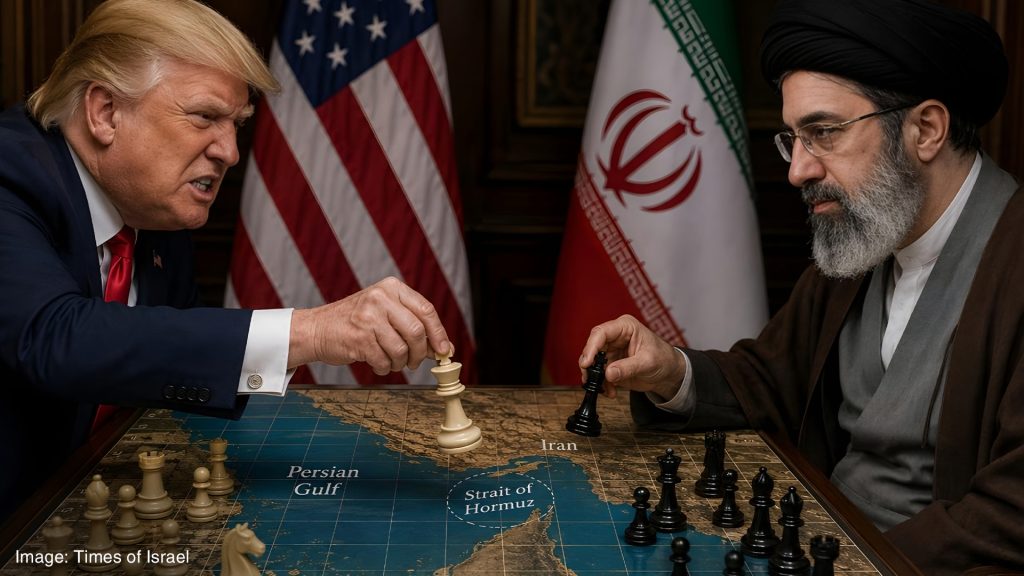
At the center of Kagan’s argument is the Strait of Hormuz. Iran’s ability to threaten or control the waterway has fundamentally changed the geopolitical balance of the Gulf. Kagan writes that the US no longer appears capable of guaranteeing free passage through one of the world’s most critical energy routes despite 37 days of bombing campaigns that destroyed significant Iranian military infrastructure and killed senior Iranian leaders. Iran did not capitulate. On PBS, Kagan was blunt: the United States likely lacks the practical ability to fully reopen the strait without a ground invasion of Iran itself. If Iran retains that leverage, Tehran effectively emerges as the dominant power in the Gulf. “With control of the strait, Iran emerges as the key player in the region and one of the key players in the world,” he wrote.
The Ras Laffan Moment — When The War Turned
Kagan identifies Iran’s strike on Qatar’s Ras Laffan gas complex as the moment the conflict definitively shifted. After weeks of US bombing, Iran retaliated by hitting one of the Gulf’s most critical energy facilities. Shortly afterward, Trump halted the bombing campaign. Kagan describes Iran’s subsequent negotiating position — demanding sanctions relief, war reparations and formal recognition of its leverage over Hormuz — as “a slap in Trump’s face.” That is the position of a country that knows it won.
Trump has reportedly asked US intelligence agencies to assess how Iran would respond if he simply retreated and declared victory. Kagan’s verdict in the article is direct: “Declaring victory does not make it so.”
A Paper Tiger With Depleted Weapons
Kagan also warns that just 37 days of war against what he himself describes as a “second-rank power” reduced American weapons stockpiles to perilously low levels with no quick remedy in sight. The implications extend far beyond Iran. Kagan argues Gulf states will increasingly accommodate Iran rather than Washington. He warns China may feel emboldened to move on Taiwan. He suggests Russia may reassess what it can do in Europe. And he writes that US allies everywhere must now wonder whether American security guarantees mean anything at all.
Kagan Still Wants A Bigger War
Despite calling the situation “checkmate,” Kagan’s proposed solution is a full-scale ground invasion, regime change and long-term occupation of Iran. Critics noted the dark irony immediately. The arsonist’s solution to the fire is a bigger fire.
What the article reveals, beneath its strategic analysis, is something more fundamental. Parts of the American foreign policy establishment still cannot imagine solutions outside military escalation even after openly acknowledging that military escalation produced the defeat they are describing. Kagan also warned on PBS that the war could end “in a very disastrous way for Israel” — precisely the opposite of what Netanyahu promised when he lobbied Trump into launching it.
The Obituary Beneath The Analysis
The deeper significance of “Checkmate in Iran” is not simply that Robert Kagan believes America lost. It is that one of the defining intellectual architects of American post-Cold War military supremacy is now warning the world may be entering what he calls a “post-American” era. For decades, figures like Kagan argued that American military power guaranteed global order. One of those same voices is now writing that the order has broken.
The men who built the architecture of American power are now writing its autopsy. The question they still cannot answer is the one that matters most: what comes after?
#Verum #IranWar #RobertKagan #TheAtlantic #Neocon #MiddleEast #Geopolitics #Trump #Hormuz #CheckmateinIran
Sources: The Atlantic, PBS NewsHour, Middle East Eye, Times of Israel, Kashmir Observer, Joe Cirincione Substack, Press TV, Al-Quds, The Diplomat.