The Death Toll From This War Will Haunt Us for Generations

Nearly 3,400 people have been killed in Iran since the United States and Israel launched their strikes on February 28. More than 2,200 are dead in Lebanon, among them 177 children. Thirty-two lives have been lost in Gulf states. Thirteen American service members are not coming home. These numbers are not the collateral detail of a geopolitical crisis. They are the crisis. And they are still climbing, because the war that produced them has no end date, no clear negotiating path, and according to Donald Trump himself, no time frame for resolution whatsoever.

What is becoming increasingly difficult to ignore is the nature of what the United States and Israel have chosen to target. More than 20 Iranian universities have been damaged or destroyed since the strikes began. Scientists have been killed. Academics have been deliberately targeted in what Tehran describes as a calculated effort to dismantle the country’s intellectual and cultural foundations from the inside out. Iran’s vice president for science and technology, Hossein Afshin, announced that the country is now compiling a legal case to pursue in international forums, arguing that attacks on universities and scientific centers are not merely destruction of property but an assault on the foundations of knowledge itself. You can agree or disagree with Iran’s government on almost everything, but the targeted destruction of a nation’s universities is a particular kind of violence. It does not end when the bombs stop. It echoes through generations of students who will never be taught, research that will never be conducted, and knowledge that will simply cease to exist.

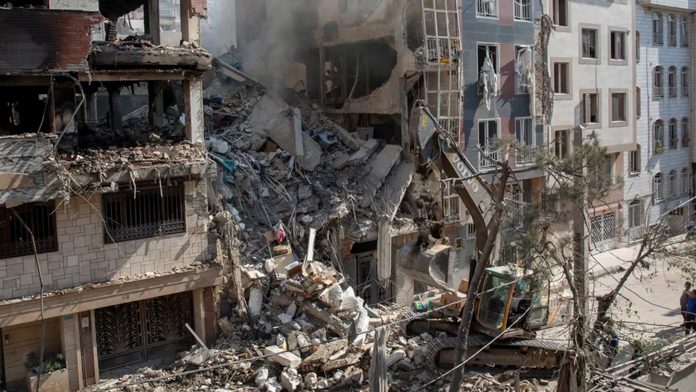
Then there is Lebanon, a country that has paid an almost incomprehensible price for a war that was brought to the region by American and Israeli aggression. More than 2,200 Lebanese have been killed, over 1.2 million people have been displaced, and entire neighborhoods in Beirut’s southern suburbs have been reduced to rubble. On Thursday, a journalist from Lebanon’s Al-Akhbar newspaper, Amal Khalil, was killed in an Israeli airstrike in southern Lebanon, her name added to a list that the world has largely stopped reading. A French UN peacekeeper, Florian Montorio, was also killed recently, prompting French President Emmanuel Macron to describe it as an attack on the very idea of international peacekeeping. Lebanon did not start this war. It is simply one of the places where the consequences of someone else’s decisions are being written in blood.

Back in Washington, the language around all of this remains remarkably detached from the reality of what is happening on the ground. Ceasefire extensions are announced. Naval blockades are enforced. Peace talks collapse and are rescheduled and collapse again. Trump says there is no time frame. His spokesperson says the seizure of international ships in the Strait of Hormuz does not violate the ceasefire because they were not American or Israeli vessels. The clinical precision of that framing, the careful boundaries drawn around whose lives and whose ships count in this calculus, says everything about how this war is being conducted and by whom.

The morgues in Tehran and Beirut are not waiting for the diplomats to find the right language. They are full. And every day that this war continues without a genuine resolution, without a real accounting of what has been unleashed on the people of this region, is another day that the world moves slightly further from being able to claim it did not know what was happening here.

Sources: NBC News, NPR, Al Jazeera, Dawn
Nearly 3,400 people have been killed in Iran since the United States and Israel launched their strikes on February 28. More than 2,200 are dead in Lebanon, among them 177 children. Thirty-two lives have been lost in Gulf states. Thirteen American service members are not coming home. These numbers are not the collateral detail of a geopolitical crisis. They are the crisis. And they are still climbing, because the war that produced them has no end date, no clear negotiating path, and according to Donald Trump himself, no time frame for resolution whatsoever.

What is becoming increasingly difficult to ignore is the nature of what the United States and Israel have chosen to target. More than 20 Iranian universities have been damaged or destroyed since the strikes began. Scientists have been killed. Academics have been deliberately targeted in what Tehran describes as a calculated effort to dismantle the country’s intellectual and cultural foundations from the inside out. Iran’s vice president for science and technology, Hossein Afshin, announced that the country is now compiling a legal case to pursue in international forums, arguing that attacks on universities and scientific centers are not merely destruction of property but an assault on the foundations of knowledge itself. You can agree or disagree with Iran’s government on almost everything, but the targeted destruction of a nation’s universities is a particular kind of violence. It does not end when the bombs stop. It echoes through generations of students who will never be taught, research that will never be conducted, and knowledge that will simply cease to exist.

Then there is Lebanon, a country that has paid an almost incomprehensible price for a war that was brought to the region by American and Israeli aggression. More than 2,200 Lebanese have been killed, over 1.2 million people have been displaced, and entire neighborhoods in Beirut’s southern suburbs have been reduced to rubble. On Thursday, a journalist from Lebanon’s Al-Akhbar newspaper, Amal Khalil, was killed in an Israeli airstrike in southern Lebanon, her name added to a list that the world has largely stopped reading. A French UN peacekeeper, Florian Montorio, was also killed recently, prompting French President Emmanuel Macron to describe it as an attack on the very idea of international peacekeeping. Lebanon did not start this war. It is simply one of the places where the consequences of someone else’s decisions are being written in blood.

Back in Washington, the language around all of this remains remarkably detached from the reality of what is happening on the ground. Ceasefire extensions are announced. Naval blockades are enforced. Peace talks collapse and are rescheduled and collapse again. Trump says there is no time frame. His spokesperson says the seizure of international ships in the Strait of Hormuz does not violate the ceasefire because they were not American or Israeli vessels. The clinical precision of that framing, the careful boundaries drawn around whose lives and whose ships count in this calculus, says everything about how this war is being conducted and by whom.

The morgues in Tehran and Beirut are not waiting for the diplomats to find the right language. They are full. And every day that this war continues without a genuine resolution, without a real accounting of what has been unleashed on the people of this region, is another day that the world moves slightly further from being able to claim it did not know what was happening here.

Sources: NBC News, NPR, Al Jazeera, Dawn

spot_img

Explore more

spot_img
Global Affairs

Trump Cut Off Cuba’s Oil. Now Its People Are Preparing For...

A French Company Paid Terrorists To Keep A Factory Running. Now...

They Were Burned Alive In Their Sleep. Police Say Their Classmates...

Musk Amplified The Rage. AI Made The Hitlist. Belfast Burned.

From Settlement Sales To Celebrity Ads: The Business Of Selling Israeli...

Bodies Of Evidence: The Explosive Al Jazeera Film Exposing Horrors Inside...

Isr*el Is Burning Lebanon From The Sky