

The car is electric.
The battery is clean.
The coral reef it destroyed is not coming back.
The clean future is not always clean.
Electric cars, batteries, turbines and solar grids are sold as the future of saving the planet. And in many ways, the world does need to move beyond fossil fuels. But the hidden problem is that the green transition still runs on extraction.

Your EV battery needs lithium, nickel, cobalt, manganese and graphite. Your wind turbine needs rare earth magnets. Your power grid needs copper and aluminium. Every one of those materials has to come from somewhere. And somewhere is always a place, with people, with water, with forests, with coral reefs. The International Energy Agency identifies these minerals as central to batteries, wind turbines, EV motors and electricity networks.
Raja Ampat Is The Warning
In Raja Ampat, Indonesia, that contradiction is now impossible to ignore.
Raja Ampat is one of Earth’s richest marine ecosystems. The Associated Press reports that the region is home to around 75 percent of the world’s coral species, and it sits inside a UNESCO Global Geopark. But the same region is now under pressure from nickel mining, driven partly by rising demand for electric vehicle batteries.
This is where the clean-energy story gets uncomfortable.

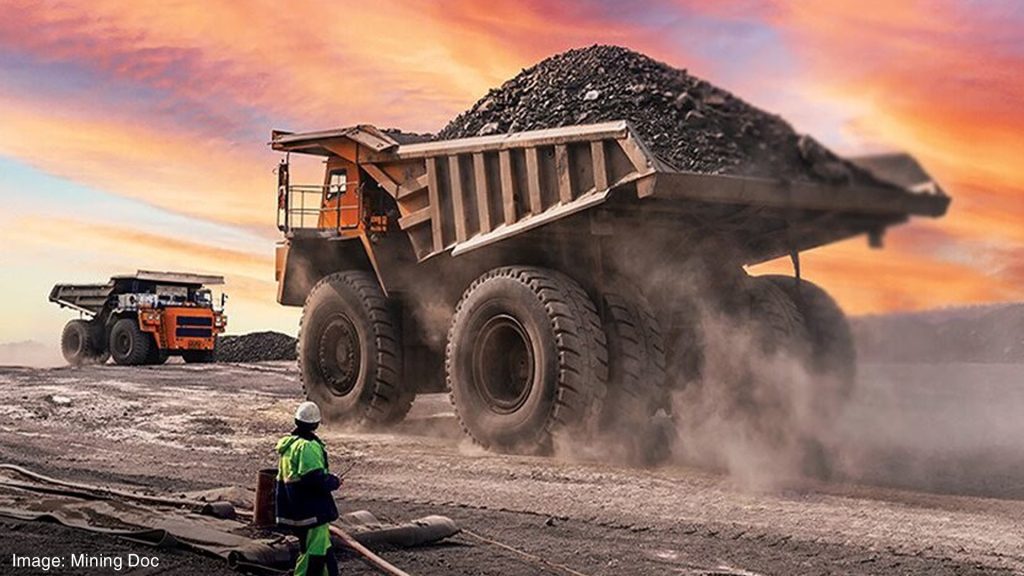
Nickel is central to many EV battery supply chains. Indonesia is the world’s largest nickel producer, and its mining boom has become deeply tied to the global battery economy. But in Raja Ampat, the cost is not abstract. Environmental groups have warned of deforestation, sediment runoff and damage to coral reefs, with the Associated Press reporting that mining on Gag Island has continued while conservationists warn of threats to reefs and marine species.
Syafri Tuharea, the head of the Raja Ampat Marine Conservation Area, put the danger plainly: “In the end, it will cause coral reefs to die.” The quote was reported by the Associated Press.
That line should stop anyone who still thinks this is only a supply-chain issue.
Raja Ampat is not the exception. It is the warning.
The Damage Is Not Just Underwater
The damage is not only about coral.
Earth Insight and Auriga Nusantara have warned that more than 22,000 hectares of nickel concessions threaten Raja Ampat, with potential impacts on coral reefs, forest cover and the livelihoods of more than 64,000 Indigenous and local residents.
That number matters because Raja Ampat is not just a postcard. It is food, income, culture, fishing, tourism, identity and survival for people who have lived with those waters long before the world started calling nickel “critical.”
When mining expands on small islands, the damage moves fast. Forest is cleared. Soil is exposed. Rain carries sediment into the sea. Coral reefs, which depend on clean water and sunlight, can be smothered. Fish habitats can shift. Local communities are left to absorb the damage while the final product is marketed somewhere else as clean, futuristic and responsible.
The Government Acted, But The Threat Remains
Indonesia did respond after public pressure.
Reuters reported that the Indonesian government revoked permits for four nickel companies in Raja Ampat in June 2025 after environmental concerns triggered protests. But Reuters also reported that PT Gag Nikel, a subsidiary of state-owned Aneka Tambang, remained intact because it operated outside the geopark, with a quota to mine 3 million metric tons annually.
Three million metric tons. Every year. From an island inside one of the most biodiverse marine ecosystems on Earth.
That is why activists say the issue is not over.
Mongabay reported that Indonesia halted most nickel mining in Raja Ampat but allowed one controversial permit to remain. Environmental groups have continued to call for stronger protection because partial action does not fully remove the threat to the wider ecosystem.
The World Has Not Escaped Extraction
The same contradiction appears across the clean-energy supply chain.
Lithium extraction can put pressure on water systems. Cobalt mining has long raised human rights and environmental concerns. Rare earth processing can create toxic waste. Copper mining cuts into land because modern power grids need enormous amounts of it. Wind turbines, solar panels, EVs and batteries may reduce fossil-fuel dependence, but they still require a material world underneath them.
That is the part often missing from the branding.

Some technical estimates put the mined rock needed for EV battery production in the tens to hundreds of tonnes depending on battery chemistry and mineral source. The exact number varies, but the point does not: every “clean” battery begins with extraction somewhere.
The green transition may be necessary. But if it destroys reefs, forests, rivers and communities, then the world has not escaped extraction. It has only rebranded it.
This is not an anti-EV story.
It is an anti-greenwashing story.
A future cannot be called clean if the damage is simply moved out of sight.
By Shizza Farooqui
Sources
1. Associated Press – Raja Ampat biodiversity and nickel mining pressure: https://apnews.com
2. Reuters – Indonesia revoked four Raja Ampat nickel permits: https://www.reuters.com
3. International Energy Agency – critical minerals for clean energy: https://www.iea.org/topics/critical-minerals
4. Earth Insight – Raja Ampat nickel concessions and community impact: https://www.earth-insight.org
5. Auriga Nusantara – environmental warnings on Raja Ampat mining: https://auriga.or.id
6. Mongabay – Indonesia halted most mining but allowed one permit to remain: https://news.mongabay.com