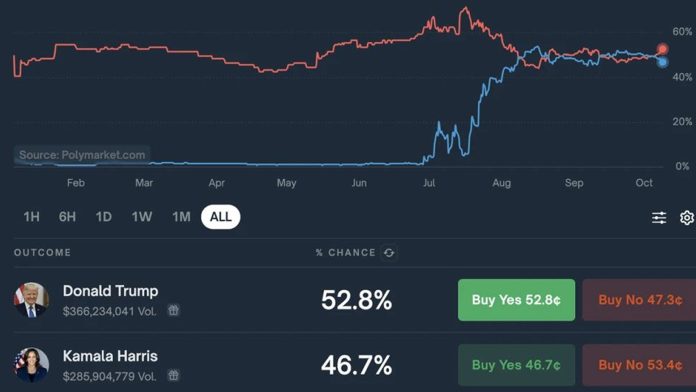
The Iran War Is the Biggest Insider Trading Scandal in History and Almost Nobody Is Talking About It

On March 23, traders placed $580 million in oil futures bets exactly 15 minutes before Donald Trump posted on social media that the United States was having productive talks with Iran. Oil prices plummeted. The traders made a fortune. Fifteen minutes. That is not a lucky guess. That is not sophisticated analysis of publicly available information. That is someone who knew what Trump was about to post before he posted it, and who used that knowledge to make an enormous amount of money from a war that has killed thousands of people.

That single trade is the clearest window into what has been happening on prediction market platforms like Polymarket and Kalshi since the United States and Israel launched their war on Iran in late February. On the night before the initial strikes, around 150 accounts on Polymarket placed bets that the US would strike Iran the following day, pocketing more than $855,000 when the bombs fell exactly on schedule. Moments before an Israeli airstrike killed Supreme Leader Ayatollah Ali Khamenei, a single anonymous account called “Magamyman” bet that he would be removed from power and walked away with over $553,000. On April 7, at least 50 newly created Polymarket accounts bet heavily on a ceasefire hours before Trump announced it on Truth Social, at a moment when his own public statements were signaling escalation. Those accounts made roughly $550,000. And on that same day, traders spent $950 million on oil futures betting that prices would fall, hours before the ceasefire was public knowledge. They did.

A Harvard University research paper that screened more than 200,000 suspicious wallet-market pairs on Polymarket found that traders in this group achieved a nearly 70 percent win rate, making $143 million in well-timed bets across events ranging from the capture of Venezuelan leader Nicolas Maduro to Taylor Swift’s engagement to Travis Kelce. One anonymous trader identified by blockchain analytics firm Bubblemaps had an overall win rate of 83 percent and a 93 percent win rate specifically on trades over $10,000, netting nearly $967,000 in total. Todd Phillips, a finance professor at Georgia State University and former CFTC advisory board member, reviewed those numbers and was unambiguous: having win rates in the 80 to 90 percent range is just too good to be true. At a certain point the math stops being explainable by anything other than foreknowledge, and foreknowledge of unannounced military operations means classified information. That is the conclusion this trail of numbers leads to, no matter how uncomfortable it is.

Now consider who has ties to the platform at the center of all of this. Donald Trump Jr. is an adviser to Polymarket. His venture capital firm has invested millions into the company. The Trump administration dropped two federal investigations into Polymarket that were opened under President Biden. And the current head of the Commodity Futures Trading Commission, the agency responsible for regulating these markets, was appointed by Trump at the end of 2025 and has positioned himself as openly friendly toward prediction market platforms. Senator Chris Murphy said it plainly: people around Trump are profiting off war and death. The White House denied it. But the connections are not alleged. They are documented. And the investigations that might have followed them have been quietly buried.

The regulatory response to all of this has been exactly as inadequate as you would expect given those connections. The CFTC has reportedly launched investigations into specific trades but has not publicly confirmed doing so. Jurisdictional battles between federal and state regulators have left the legal landscape around these platforms unresolved. Columbia law professor Joshua Mitts described the situation as a law that cannot really be enforced effectively given the technological limitations, because the trading occurs through blockchain and other anonymized means that make it extraordinarily difficult to identify who is actually placing the bets. Senator Richard Blumenthal went further, describing Polymarket as an illicit market to sell and exploit national security secrets unlike any in history. What Blumenthal understands, and what deserves far more attention than it is getting, is that if anonymous traders can use insider knowledge of US military operations to profit on a betting app, then foreign intelligence services can watch those exact same bets to anticipate what Washington is planning next. The same information that made someone millions could be telling America’s adversaries where the bombs are going to fall before they fall. This is not just a financial scandal. It is a national security crisis that has been allowed to grow in plain sight, protected by political connections, regulatory capture, and the comfortable anonymity of the blockchain.

Sources: The Guardian, NPR, CNN, Bloomberg, Financial Times
On March 23, traders placed $580 million in oil futures bets exactly 15 minutes before Donald Trump posted on social media that the United States was having productive talks with Iran. Oil prices plummeted. The traders made a fortune. Fifteen minutes. That is not a lucky guess. That is not sophisticated analysis of publicly available information. That is someone who knew what Trump was about to post before he posted it, and who used that knowledge to make an enormous amount of money from a war that has killed thousands of people.

That single trade is the clearest window into what has been happening on prediction market platforms like Polymarket and Kalshi since the United States and Israel launched their war on Iran in late February. On the night before the initial strikes, around 150 accounts on Polymarket placed bets that the US would strike Iran the following day, pocketing more than $855,000 when the bombs fell exactly on schedule. Moments before an Israeli airstrike killed Supreme Leader Ayatollah Ali Khamenei, a single anonymous account called “Magamyman” bet that he would be removed from power and walked away with over $553,000. On April 7, at least 50 newly created Polymarket accounts bet heavily on a ceasefire hours before Trump announced it on Truth Social, at a moment when his own public statements were signaling escalation. Those accounts made roughly $550,000. And on that same day, traders spent $950 million on oil futures betting that prices would fall, hours before the ceasefire was public knowledge. They did.

A Harvard University research paper that screened more than 200,000 suspicious wallet-market pairs on Polymarket found that traders in this group achieved a nearly 70 percent win rate, making $143 million in well-timed bets across events ranging from the capture of Venezuelan leader Nicolas Maduro to Taylor Swift’s engagement to Travis Kelce. One anonymous trader identified by blockchain analytics firm Bubblemaps had an overall win rate of 83 percent and a 93 percent win rate specifically on trades over $10,000, netting nearly $967,000 in total. Todd Phillips, a finance professor at Georgia State University and former CFTC advisory board member, reviewed those numbers and was unambiguous: having win rates in the 80 to 90 percent range is just too good to be true. At a certain point the math stops being explainable by anything other than foreknowledge, and foreknowledge of unannounced military operations means classified information. That is the conclusion this trail of numbers leads to, no matter how uncomfortable it is.

Now consider who has ties to the platform at the center of all of this. Donald Trump Jr. is an adviser to Polymarket. His venture capital firm has invested millions into the company. The Trump administration dropped two federal investigations into Polymarket that were opened under President Biden. And the current head of the Commodity Futures Trading Commission, the agency responsible for regulating these markets, was appointed by Trump at the end of 2025 and has positioned himself as openly friendly toward prediction market platforms. Senator Chris Murphy said it plainly: people around Trump are profiting off war and death. The White House denied it. But the connections are not alleged. They are documented. And the investigations that might have followed them have been quietly buried.

The regulatory response to all of this has been exactly as inadequate as you would expect given those connections. The CFTC has reportedly launched investigations into specific trades but has not publicly confirmed doing so. Jurisdictional battles between federal and state regulators have left the legal landscape around these platforms unresolved. Columbia law professor Joshua Mitts described the situation as a law that cannot really be enforced effectively given the technological limitations, because the trading occurs through blockchain and other anonymized means that make it extraordinarily difficult to identify who is actually placing the bets. Senator Richard Blumenthal went further, describing Polymarket as an illicit market to sell and exploit national security secrets unlike any in history. What Blumenthal understands, and what deserves far more attention than it is getting, is that if anonymous traders can use insider knowledge of US military operations to profit on a betting app, then foreign intelligence services can watch those exact same bets to anticipate what Washington is planning next. The same information that made someone millions could be telling America’s adversaries where the bombs are going to fall before they fall. This is not just a financial scandal. It is a national security crisis that has been allowed to grow in plain sight, protected by political connections, regulatory capture, and the comfortable anonymity of the blockchain.

Sources: The Guardian, NPR, CNN, Bloomberg, Financial Times
spot_img

Explore more

spot_img
Global Affairs

Trump Cut Off Cuba’s Oil. Now Its People Are Preparing For...

A French Company Paid Terrorists To Keep A Factory Running. Now...

They Were Burned Alive In Their Sleep. Police Say Their Classmates...

Musk Amplified The Rage. AI Made The Hitlist. Belfast Burned.

From Settlement Sales To Celebrity Ads: The Business Of Selling Israeli...

Bodies Of Evidence: The Explosive Al Jazeera Film Exposing Horrors Inside...

Isr*el Is Burning Lebanon From The Sky